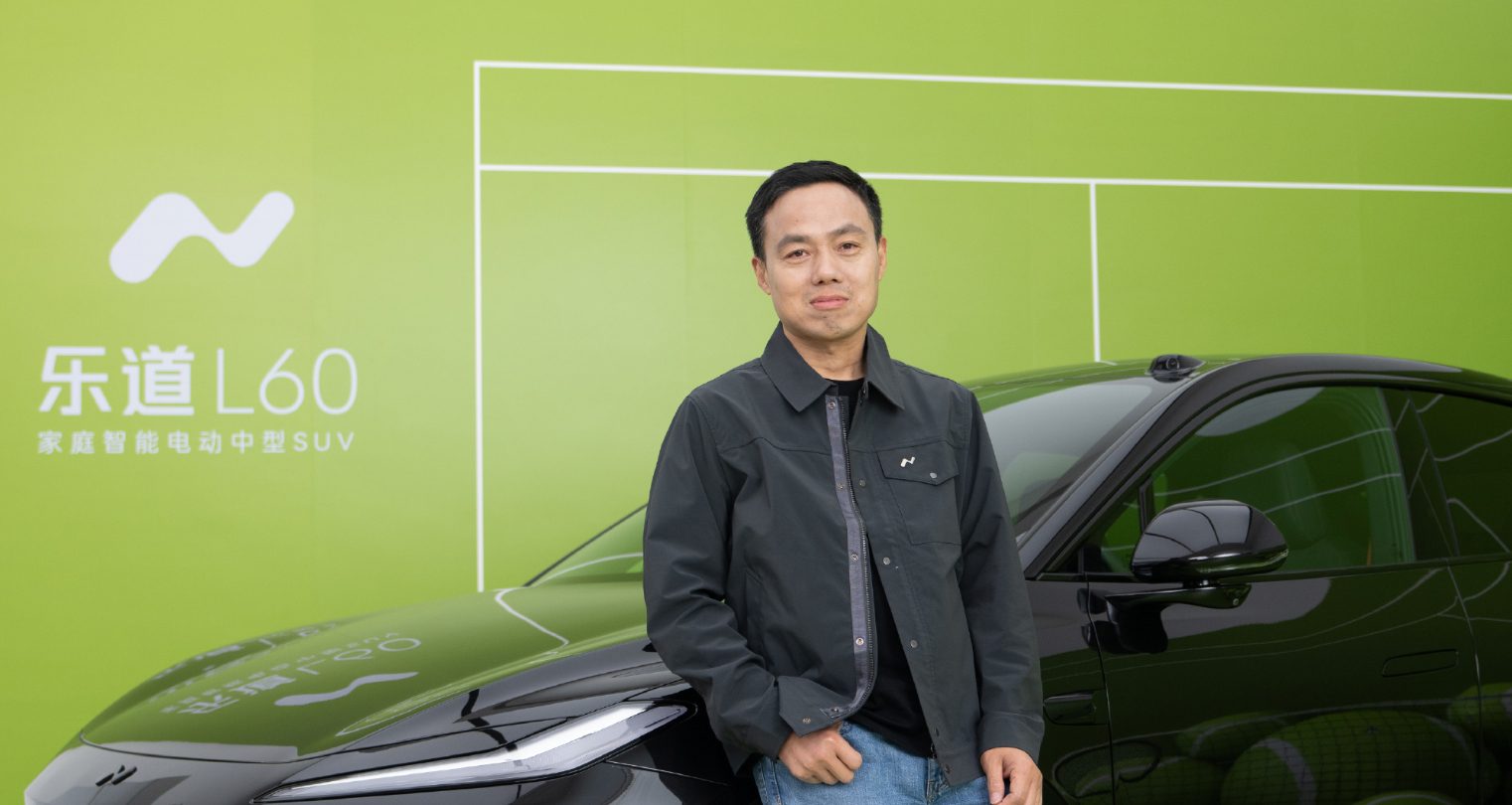

Nio‘s sub-brand Onvo and tech giant Xiaomi are heating up the rivalry between extended-range electric vehicles (EREV) and fully electric vehicles in the Chinese auto market.
Onvo‘s brand chief and Nio Inc.‘s Senior VP Fei Shen used the first anniversary of the L90 — a three-row, fully electric SUV — to mount a pointed defense of battery electric vehicles (BEVs) on Wednesday, hours before Xiaomi‘s launch event for its debut extended-range models.
Shen joined Nio more than a decade ago and led its multibillion-dollar push to scale battery-swap technology.
As several automakers that began as pure-EV makers pivot toward EREVs, Nio Inc. continues to double down on fully electric powertrains and casting the shift as a step backward.
The N70 and N90 SUVs are built under the ‘Kunlun Platform’ and offered under the ‘SkyNomad’ series, which is now being introduced across China.
They are the first hybrid models under Xiaomi, after only selling battery electric vehicles — the SU7 and YU7 — since its launch in early 2024.
Lei Jun on EREV Market Entry
One day earlier, the tech giant’s Chief Executive Lei Jun had taken to Weibo to defend the company’s entry in the EREV segment.
When asked if Xiaomi is “getting into the extended-range market too late,” Lei Jun said his answer was no, because “contrary to what some people believe, the EREV market is far from saturated. In fact, it still has tremendous room for growth.”
The Xiaomi co-founder exemplified with “the latest generation of the Li Auto L6,” which has “continued to post strong sales since launch, without cannibalizing demand for the Li Auto i6.”
According to him, “that tells us two things. First, demand for extended-range vehicles is genuine and robust. Second, customers are willing to pay for an outstanding EREV product.”
The Chief Executive had further framed the decision not as a concession, but as a deliberate product choice.
“The choice between an extended-range powertrain and a pure battery electric vehicle has never been about taking sides in a technological debate,” Lei wrote. “It’s about product definition and the kind of user experience you want to deliver.”
He doesn’t see either of the powertrains as “inherently superior.”
“Ultimately, the debate isn’t about whether extended-range or pure electric is inherently superior,” Lei concluded. “There is no absolute winner between the two technologies. What truly matters is which product delivers the better overall experience.”
A Familiar Rivalry
Li Auto‘s mention in Lei Jun’s post is noteworthy, as the Beijing-based automaker is Onvo’s most direct rival in the family SUV segment, and competition between the two has been heated since the parallel launches of the Onvo L90 and the Li Auto i8 last summer.
The episode triggered a public clash between executives on Chinese social media, with accusations of paid trolls exchanged on both sides.
When the rivalry reignited in May, after both brands launched new models on the same day — the Onvo L80 and the Li Auto L9 Livis — Fei Shen cited “unpleasant memories” and asked the public to stop constantly comparing the two companies.
“What I care about more is the broader trend: pure EVs versus range-extender vehicles,” the brand chief said at the time.
Shen’s position has been consistent.
At the L80 launch event, he argued that Onvo‘s vehicles are roughly 400 to 600 kilograms lighter than comparable range-extended models — an advantage he said translates directly into handling, efficiency and interior space.
“Only companies like Nio have fully committed themselves to betting on the pure EV path and continuing to push forward until quantitative change eventually becomes qualitative change,” Shen stated.
Shen Cites L90 Sales Data
In a long post published on Weibo, he recalled a statement made by Nio Inc.‘s founder and CEO William Li made around the L90’s launch last year:
“The golden age of range-extended three-row SUVs is coming to an end, and the era of all-electric three-row SUVs is just beginning,” he said then.
According to Shen, “at the time, some people questioned that statement. But one year later, the golden age of all-electric three-row SUVs has indeed arrived, and the shift toward pure EVs has become unmistakably clear.”
Shen cited Onvo‘s own numbers to support the claim, stating that the Onvo L90 has delivered more than 60,000 vehicles in its first year.
Onvo delivered over 10,000 monthly L90s in the first three months of its launch.
However, deliveries sharply declined to less than half of those numbers in the last two months of 2025 after the initial launch frenzy.
The Onvo L90 saw its highest monthly delivery figures of the year so far reached in May, as the model saw its first refresh, which added a trim with LiDAR for the first time.
According to Shen’s post, BEVs now hold a market share eight times larger than EREVs across the broader new energy vehicle market.
The Onvo chief also pointed to policy tailwinds.
Starting January 1, 2027, range-extended vehicles will be required to pay the full annual vehicle and vessel tax, as China’s transitional tax incentives come to an end.
“Policy, industry trends, and the market are all pointing to the same conclusion,” Shen wrote. “The golden age of battery electric vehicles has arrived — and its momentum is unstoppable.”
Five-Seat SUVs
Shen added that he ran a poll on Weibo last month asking whether buyers of a large five-seat SUV would choose a battery electric or range-extended model.
“If you were buying a large five-seat SUV, would you choose a battery electric or a range-extended model?,” he asked, adding that “In the end, 87.1% voted for battery electric—nearly seven times as many as those who chose range-extended.”
According to him, “in the past few days, some competing brands have also conducted similar polls, and their results likewise showed a clear preference for battery electric vehicles.”
Onvo opened pre-orders for the five-seat L80 on April 28 and launched the model on May 15 — coinciding with the sub-brand’s anniversary and World Family Day.
Deliveries for the model began on May 16.
Onvo delivered 5,949 units of the L80 until the end of the month, an average of 2,380 vehicles per week.
In June, however, insurance registration data showed the five-seat SUV recorded just 4,086 units — a 31.3% decline month over month and a weekly run rate that fell by approximately 61%.
The launch of the Onvo L80 nearly coincided with the five-seat version of Nio Inc.‘s best-selling model, the third-generation ES8 SUV.
Nio‘s co-founder and president Qin Lihong had previously dismissed concerns that the L80 would cannibalize sales of an upcoming five-seat ES8 variant and vice-versa.
Nio Stands Largely Alone
The debate arrives at a moment when pure-EV holdouts are becoming rarer in China.
XPeng, another rival in the EV market, began producing a hybrid X9 MPV late last year, its first EREV model, and has since included the powertrain option across multiple models.
Nio remains one of the few Chinese automakers still defending an exclusively electric approach.
Founder and CEO William Li declared in December 2025 that only two automakers globally remain exclusively focused on pure electric vehicles — with Nio being one of them, in an apparent reference to Tesla.
Li also offered a concession to the EREV format’s early appeal.
“When charging and battery-swapping infrastructure wasn’t that developed, wasn’t having both fuel and electric options a better choice?” the CEO said, before arguing that the market now favors pure electrics.
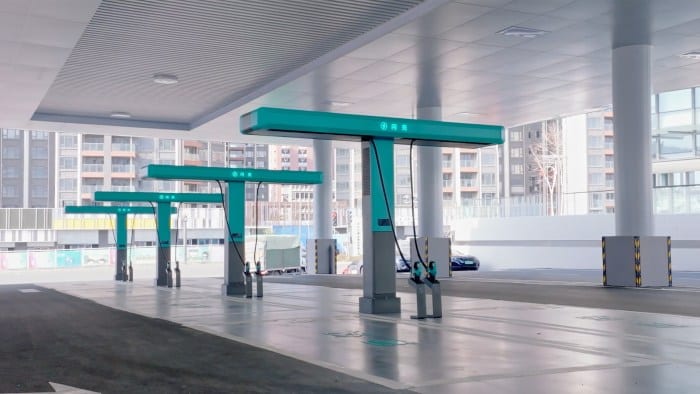
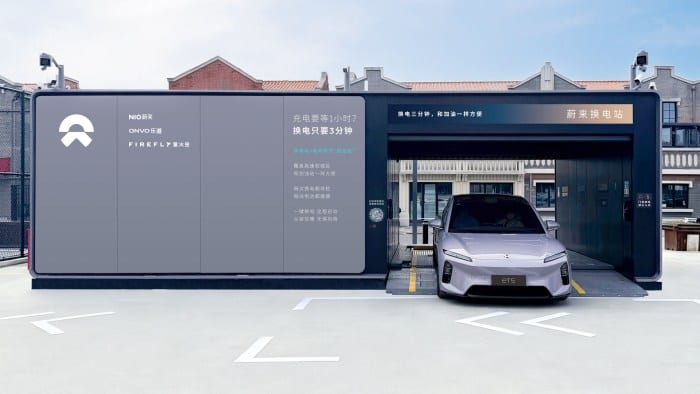
Nio‘s battery swap network — as of press time, at 3,989 stations in China — is central to that argument, providing an alternative to hybrid powertrains for addressing range anxiety.