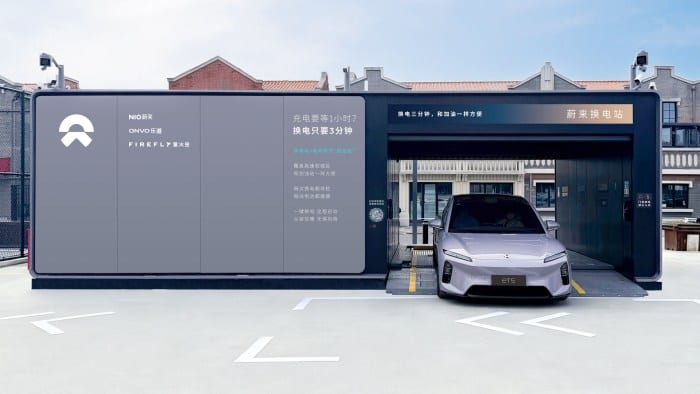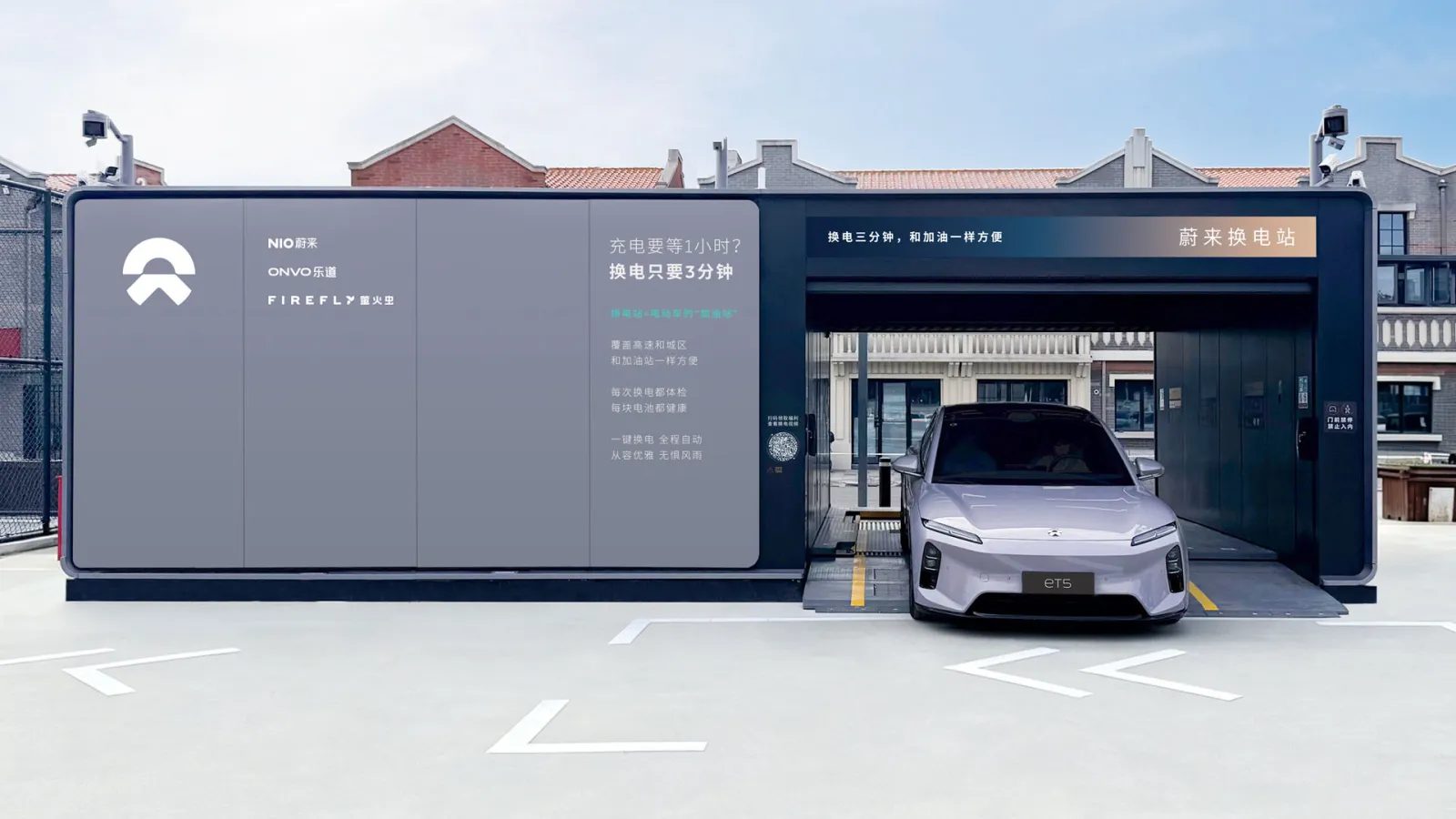

EV maker Nio opened 19 battery swap stations online in China on Wednesday, its biggest single day since April, as it heads into a fourth quarter in which it must more than triple this year’s pace to meet its 2026 construction target.
The new stations took Nio’s swap network to 4,155, including 1,071 on highways, according to the company’s daily network update on social media.
Nio switched on 28 facilities in total on Wednesday, including nine supercharging stations.
It was the company’s second-biggest day of the year, according to EV‘s review of every daily update the company has published since January 1. Only April 30 was bigger, with 26 swap stations among 47 facilities.
A Month-End Pattern
Nio’s biggest days this year have fallen at or near the end of a month.
After April 30, the next largest were March 31 with 13 swap stations, January 31 with 11, and June 30 and August 30 with 10 each.
On most days, Nio opens one to three stations. Nio opened 3 stations on Monday, 7 on Tuesday and 19 on Wednesday, bringing September’s total to 94, its highest monthly figure this year.
June and August were next, with 70 each.
The opening of the 19 stations came on the eve of China’s National Day holiday, which starts on Thursday.
The Target
Nio ended 2025 with 3,676 swap stations.
“The full-year plan is to add 1,000 swap stations, with more than 4,600 built by the end of the year,” Founder and Chief Executive Officer William Li wrote in his New Year’s Day letter to staff.
“For this year, we still plan to build 1,000 new power swap stations,” Chief Financial Officer Stanley Qu said on the second-quarter earnings call on September 1.
“We expect all the newly built infrastructure will be sponsored or funded by our Power Up partners,” he added.
Nio has added 479 stations so far this year, an average of 1.75 a day.
To add 1,000, it needs 521 more in the 92 days to December 31, or about 5.7 a day, more than three times its pace so far.
Reaching 4,600 stations would take 445 more, or about 4.8 a day. At its year-to-date pace, Nio would add about 640 stations in 2026.
Waiting for Gen 5
Nio has long said most of this year’s growth would come from its fifth-generation stations, which also serve its Firefly brand.
“Starting from Q2 next year, all the battery-swap stations we deploy will be fifth-generation stations,” Li said last December.
The rollout slipped. Nio opened its first fifth-generation stations on August 7 in seven cities, including its 4,000th station in Quanzhou, a day on which it added seven stations in all.
A fifth-generation station costs about 1.4 million yuan ($208,800), 100,000 yuan less than the fourth generation, Nio said on the September 1 call.
Nio’s daily updates do not say which generation each new station belongs to.
In April, the auto blogger 轮上递归 said Nio planned to open more than 100 stations a month from September and more than 150 a month from October to December, or about 450 in the fourth quarter.
Nio has not confirmed that schedule, and September came in at 94.
Partners and Geely
Nio’s recent building has leaned on partners.
Under its ‘Power Up’ partner model, state-owned investors hold the station assets and Nio operates them.
On September 28, Nio said Geely would take a 30% stake in Nio’s battery swap unit, valuing it at 16 billion yuan ($2.39 billion).
The stations that went live on Wednesday were built before the Geely agreement was announced.