
Onvo was the first sub-brand of Shanghai-headquartered Nio Inc., launched in May 2024 with a clear focus on the family segment in China.
The aim put it in direct competition with Li Auto, a brand focused on the same segment since its first model debuted in 2019.
What set the two apart was their powertrain approach.
Li Auto built its lineup around extended-range electric vehicles (EREV) before moving into battery-electric models (BEV) in late 2023, with the launch of its Mega MPV.
On the other hand, Onvo — and the broader Nio group — has maintained an exclusive focus on fully electric vehicles.
Last year, competition between the two brands intensified as the two brands launched their respective fully electric three-row SUVs — the Onvo L90 and the Li Auto i8.
The launches triggered a public clash between executives of both companies on Chinese social media, with accusations of smear campaigns exchanged on both sides.
Onvo brand chief Shen Fei was directly involved, at one point posting comments under a Li Auto advertisement and accusing the rival of using paid trolls.
In the months since, the rivalry wound down as Nio turned its attention to its own premium lineup — with the debut of the all-new, six-seat ES8 — while Li Auto underwent an internal restructuring amid weaker-than-expected results in 2025.
The competition appears to have picked up again, however.
Both brands debuted new models on May 15 — coinciding with International Day of Families and Onvo‘s second anniversary — with the Nio sub-brand unveiling the L80, a five-seat variant of its L90 SUV, and Li Auto launching the L9 Livis.
‘Unpleasant Memories’
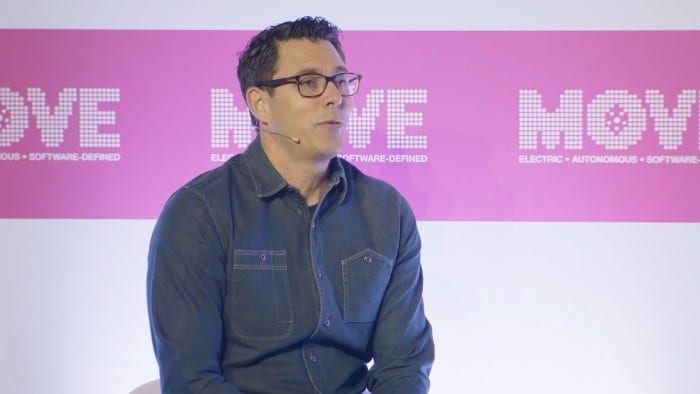
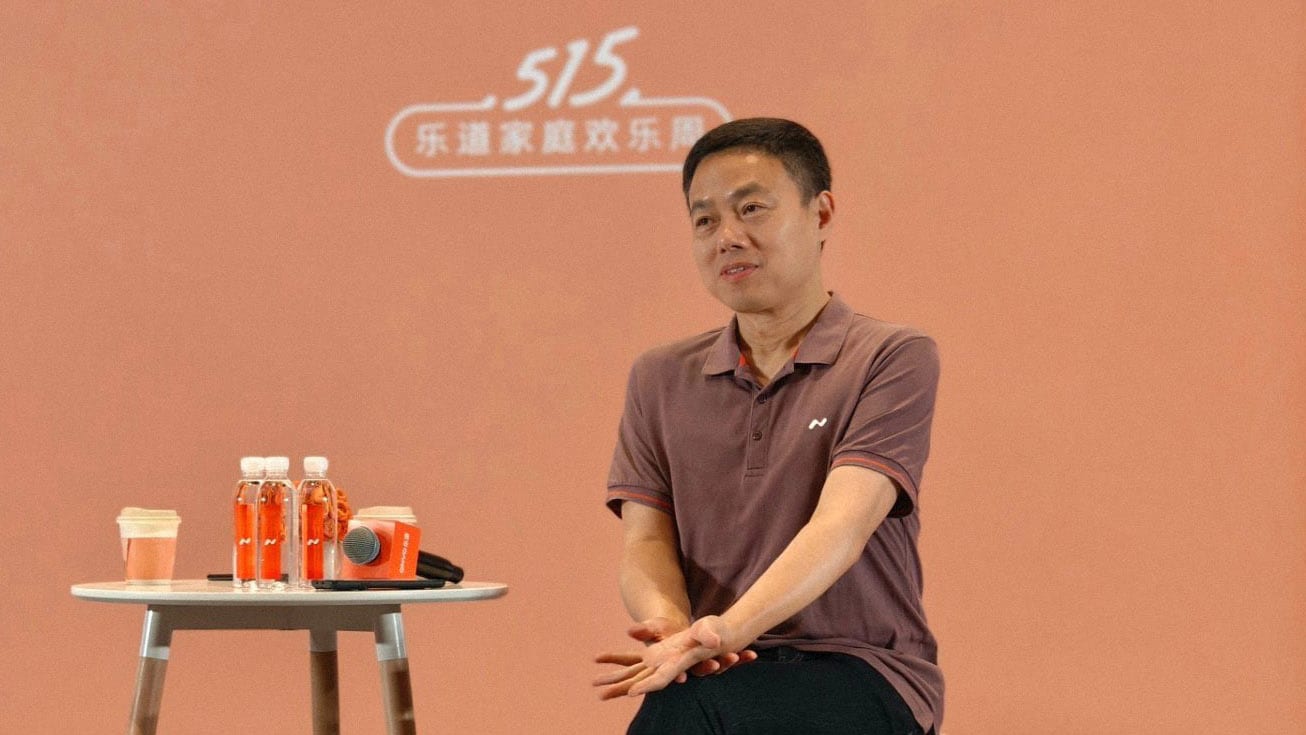
During a media event on Saturday, Onvo‘s brand chief Fei Shen was questioned about a comparison between the two models — which led him to recall last summer’s “unpleasant memories.”
“A few years ago, everyone knew that Li Auto’s sales performance and overall business were doing very well,” he first noted, saying that Nio has “also worked hard to learn from them and tried to do better ourselves in those areas.”
Nio delivered 160,038 vehicles in 2023, while Li Auto sold more than double at 376,030 units.
In 2024, the Shanghai EV maker registered 221,970 vehicles — including both its premium brand Nio and the Onvo sub-brand — while the Beijing-based carmaker listed 500,508.
Last year, Nio recorded 326,028 EVs across its three brands; Li Auto delivered 406,343 units.
Fei Shen is adamant about accepting a comparison between the two brands in the current scenario.
“But if you ask me to make comparisons, personally, whenever Li Auto is mentioned, what comes to mind are some rather unpleasant memories,” he admitted, adding that he doesn’t “really like being associated with Li Auto.”
Last Year’s Exchange
In mid-to-late July, as both brands prepared to present their models to the public, tensions rose through social media interactions.
“Why do I say there are some unhappy memories? I remember sometime last year — I can’t recall the exact timing — there were accusations that we were guiding users or organizing “internet troll armies” and things like that,” Fei Shen said on Saturday.
Last July, Li Auto‘s VP of Business and President of Product Line Liu Jie raised concerns about suspected fake negative reviews targeting the Li i8 SUV, citing a comment that claimed to compare the model to the Onvo L90.
The comment alleged the Li Auto vehicle was unstable and nearly caused a crash, however, Liu dismissed the claim, noting that user test drives for the Li i8 had not yet begun.
“At the time, I said: if that’s the case, then just call the police directly. Later, it turned out that none of it was true. I still feel that I’m owed an apology,” the Onvo chief reaffirmed over the weekend.
“Later, our legal department also spoke up about it, but in the end, the matter just faded away unresolved,” he added.
By then, Shen had also posted two comments under a Li i8 advertisement on Weibo, inviting viewers to also test drive the Onvo L90.
When criticized by users for the move, Shen responded that he did not have the budget to hire paid commenters — a reference to Li Auto‘s use of actor and comedian Yue Yunpeng in its commercial.
During the Onvo L80’s launch event on May 15, Nio‘s founder and CEO William Li was joined on stage by well-known Chinese comedians Hammer Na Lisa and Li Chuan, who have been announced as brand ambassadors.
Famous actor couple Sha Yi and Hu Ke also attended both launch events for the Onvo L90 — the original debut last summer and the unveiling of its updated version late last month.
As Fei Shen recalled the moment, he asked that people not constantly compare the two brands.
“So honestly, if people can avoid constantly putting our two companies together, I’d prefer that. I’m not very willing to engage in direct comparisons,” he said. “What I care about more is the broader trend: pure EVs versus range-extender vehicles.”
Model Comparison
To Nio, the focus is on fully electric vehicles.
Onvo‘s brand chief has also highlighted the difference between BEVs and EREVs when responding to the comparison request.
“Because in reality, whether you compare with the L8, L9, or other range-extended cars, the L80 and L90 benefit from our deep accumulation in pure EV technology,” he said, adding that “since we don’t carry extra range extenders and all those additional complicated components, our cars are significantly lighter.”
According to Shen, Onvo‘s vehicles are “roughly 400 to 600 kilograms [900–1300 lb] lighter than comparable range-extended vehicles,” an advantage in the segment.
A battery electric vehicle allows the company to “fully dedicate the space to passenger comfort and storage space,” as “users can directly feel and see that benefit.”
To Fei Shen, “the handling and driving performance are also much better.”
The brand chief noted that he hasn’t “seen all of their [Li Auto‘s] full presentations, but I did catch some key points people summarized. One phrase I saw was: ‘It used to be: electricity in the city, gasoline on the highway. Now it’s: electricity in the city, electricity on the highway, and gasoline in the wilderness.'”
He then appeared to dismiss the framing.
“For example, if you drive 50 kilometers outside Hefei and get off the highway, is that considered wilderness or still part of the city? I honestly don’t know,” the Onvo brand chief said. “And then when you look at their energy consumption figures and the need to switch to fuel and so on, I just think the overall logic no longer really holds up.”
Dismissal of EREVs
Nio is one of the pure EV makers in China still defending fully electric vehicle production over switching to EREVs — something that many of its competitors have been doing in the past few months.
Fei Shen, a Nio veteran who was formerly responsible for its energy arm, highlighted the company’s focus.
“Five or eight years ago, when EV technology was still relatively poor, I think range extenders definitely had their merits and genuinely satisfied user needs,” Onvo‘s brand chief stated. “But the products people are seeing today were actually defined two or three years ago.”
Fei Shen continued by saying that “only companies like Nio have fully committed themselves to betting on the pure EV path and continuing to push forward until quantitative change eventually becomes qualitative change.
“Long-term technological accumulation ultimately becomes competitiveness for the company, and for users, it translates into tangible real-world experience,” the executive added.
XPeng began production of a hybrid X9 MPV late last year, which became its first EREV model ever. Since then, it has included the powertrain option across multiple models in its lineup.
Xiaomi is also preparing to debut extended-range models after launching the fully electric SU7 sedan and YU7 SUV.
“So our direction and strategy have always been extremely clear in these areas,” Fei Shen added. “That’s why I’m especially unwilling to keep being grouped together and compared with companies whose direction keeps shifting back and forth and feels less clear.”