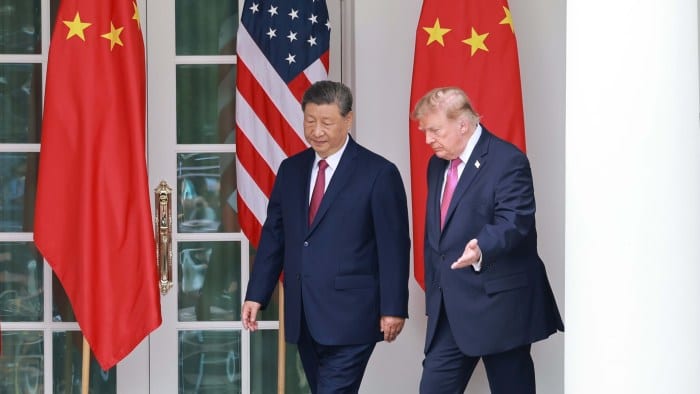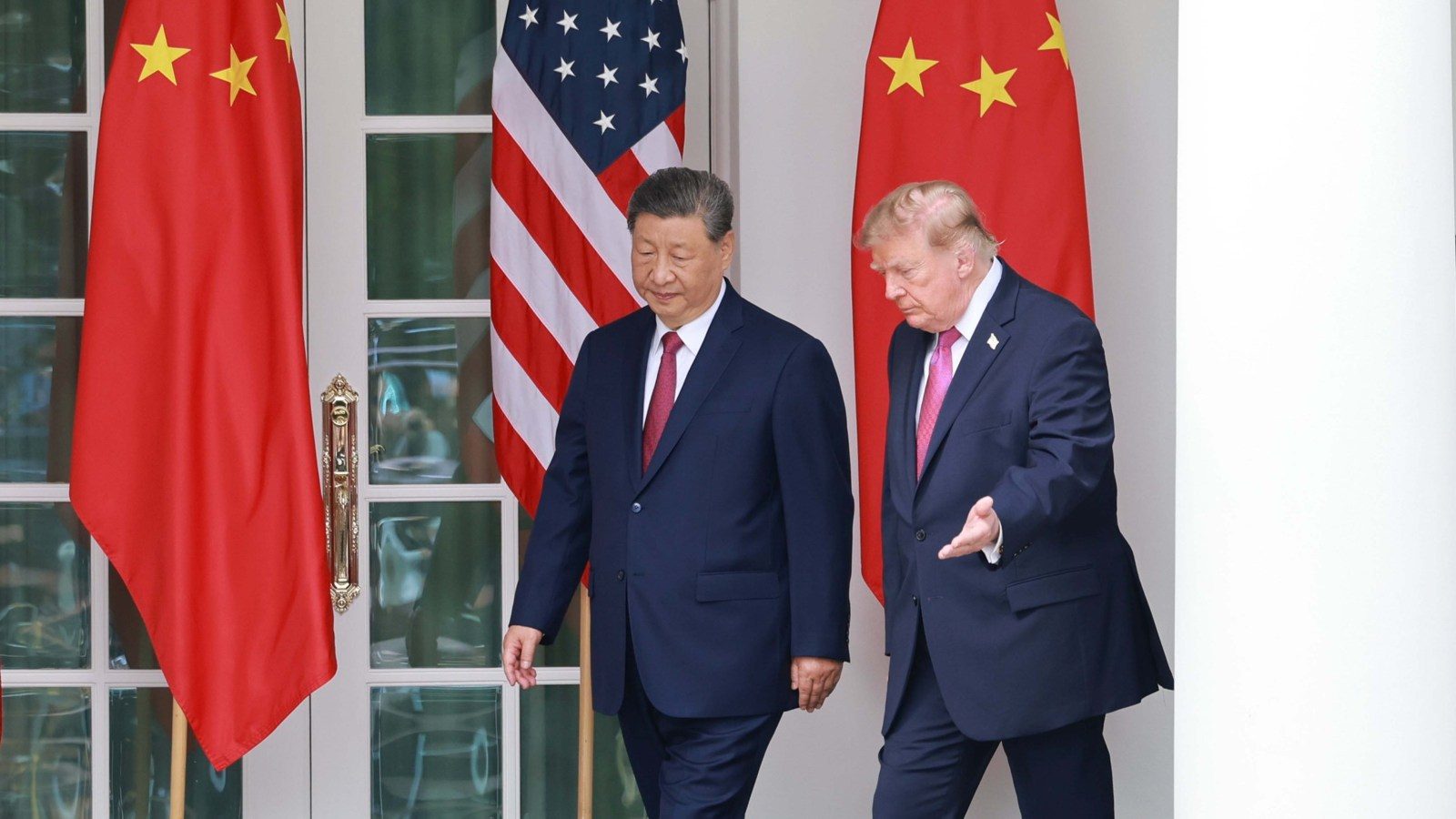

The United States and China have “established” a Board of Investment to discuss Chinese investment, the White House said, but neither government has said whether it will take up President Donald Trump’s offer to let Chinese carmakers build plants in the US.
The board’s mission is “to discuss potential investment opportunities and investment-related impediments,” the White House said in a fact sheet on Friday, after Chinese President Xi Jinping’s state visit to Washington.
“The two countries established the Board of Investment,” the White House fact sheet said. “The mission of the Board of Investment is to discuss potential investment opportunities and investment-related impediments and to provide a structured channel for the two sides to address commercially meaningful investment-related issues.”
The fact sheet names no members, meeting date or agenda for the board, and it does not mention cars.
“If China wanted to come in and open a plant to build their cars here, I’d be OK with it,” Trump told Fox News on September 11.
His own Commerce Secretary ruled that out in April, and a Commerce Department rule already bars Chinese-controlled carmakers from selling connected cars in the US, even if they are built there.
What the Board Is
The White House first announced the board after Trump’s visit to Beijing in May.
“As the cornerstone of this historic agreement, President Trump and President Xi chartered two new institutions,” it said then, naming a Board of Trade and a Board of Investment.
Friday’s fact sheet says the two leaders “operationalized” both boards “this week.”
Treasury Secretary Scott Bessent said in May that it would identify “non-sensitive areas where it would be possible for the Chinese to invest,” Semafor reported.
Little happened over the summer.
“The US side and the Chinese side neither have really initiated the consultation process,” Sean Stein, President of the US-China Business Council, told the South China Morning Post in August.
China’s Version
Beijing’s account is less definite. China’s list of eight outcomes from the visit, published by its foreign ministry on Saturday, names only the Board of Trade, among “other mechanisms.”
Foreign Minister Wang Yi did mention the investment board.
The two economic teams agreed before the visit on “a new joint arrangement, including establishing and advancing the Board of Trade and the Board of Investment,” Wang said in remarks on the visit carried by Xinhua on Saturday.
Neither side has said who will sit on the board or when it will first meet.
Trump’s Offer
Trump has made hiring American workers his condition. “Japan does it, but they hire our people,” he told Fox News. “The big thing is they hire our people.”
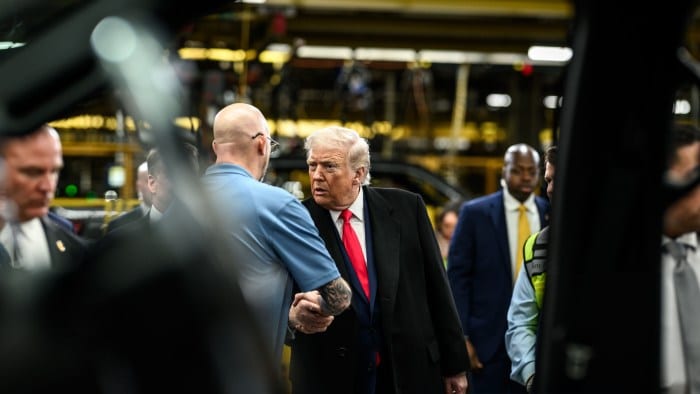
He said much the same in a speech to the Detroit Economic Club in January.
“If they want to come in and build the plant and hire you and hire your friends and your neighbors, that’s great. I love that. Let China come in, let Japan come in,” he said, according to a transcript by Rev.
In April, he called the 100% tariff on Chinese cars “about the only thing” Joe Biden “did good.”
‘Not Cars’
Commerce Secretary Howard Lutnick took the opposite position in April.
Asked at a Semafor event whether a factory joint venture with BYD was on the table, he answered “no,” Bloomberg reported back then. “We are not going to have them here,” he said. Asked about other Chinese companies, he added: “Not cars, not cars.”
Trade Representative Jamieson Greer had said the previous week, on a separate occasion, that restrictions on foreign technology would likely keep Chinese carmakers out of the US for the foreseeable future.
The Rule That Decides
A Chinese car built in Ohio would avoid the import tariff, but not the Commerce Department’s connected-vehicle rule.
The rule, finalised in January 2025, “prohibits manufacturers with a sufficient nexus to the PRC or Russia from selling new connected vehicles” in the US “even if the vehicle was made in the United States,” according to the Bureau of Industry and Security.
That prohibition takes effect with model year 2027.
Commerce can grant exemptions company by company, and it has already used that power on a car built in South Carolina.
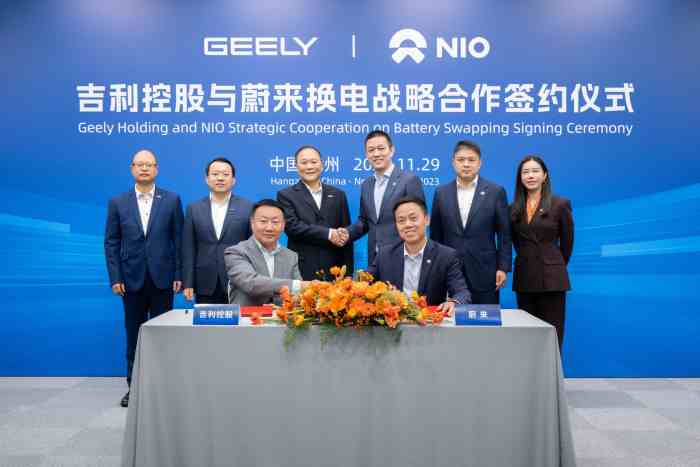
Volvo, which is controlled by China’s Geely, won authorization in May after agreeing to measures on governance, technology and data security, as EV reported.
Commerce refused Polestar, Geely’s other Swedish brand, in June.
That means the Polestar 3, built on the same Ridgeville line as the Volvo EX90, cannot be sold new in the US from the 2027 model year.
Commerce does not publish its authorization decisions. The administration removed the official who led the rule’s completion, Elizabeth Cannon, in January.
Industry and Congress
Six industry groups representing GM, Toyota, Volkswagen, Ford, Hyundai, Stellantis and Tesla, as well as dealers and suppliers, wrote to Trump on September 17, after his Fox interview.
The letter argued that building Chinese vehicles in the US would not resolve the security threat from connected vehicles.
“Even if built in the US, these factories would still rely on Chinese suppliers and Chinese components, and would be overseen by individuals with direct ties to the Chinese government,” the groups wrote.
Senators Bernie Moreno and Elissa Slotkin introduced a bill in April to ban vehicles, hardware and software from foreign adversaries.
Slotkin had said on September 9 that she was hearing “rumors” that Trump planned to allow Chinese cars to be sold in the US as part of a larger deal, without naming a source, as EV reported.
More than 70 House Democrats, led by Representatives Debbie Dingell and Ro Khanna, had urged Trump in April to keep the ban on Chinese automakers in place.
“The President should not invite Chinese automakers to set up shop in the United States,” Slotkin wrote on X on September 22, two days before the state dinner. “We should not give an inch,” she added.
The administration has also turned on a US carmaker over its Chinese partners.
Transportation Secretary Sean Duffy wrote to Ford Chief Executive Officer Jim Farley on September 8 urging him to cut ties with CATL and Geely.
“The Company’s recent strategic decisions paint a troubling picture of a foundational American brand actively intertwining its future with Chinese state-backed enterprises,” Duffy wrote, according to CNBC.
Ford called the letter “a wrongheaded attempt to capture headlines.”
Nothing on Cars
The visit produced no public announcement on vehicles.
China had weighed bringing BYD founder Wang Chuanfu with Xi, Bloomberg reported last week.
He was not on the White House guest list for the state dinner on September 24, which CNBC published in full. The Chinese delegation at the dinner was made up of government officials.
Senior executives from BYD and Xiaomi did travel to Washington but stayed outside the summit, Nikkei Asia reported.
US officials offered to let them join only the state dinner, which Beijing considered insufficient, according to that report. GM Chief Executive Officer Mary Barra and Tesla Chief Executive Officer Elon Musk attended.