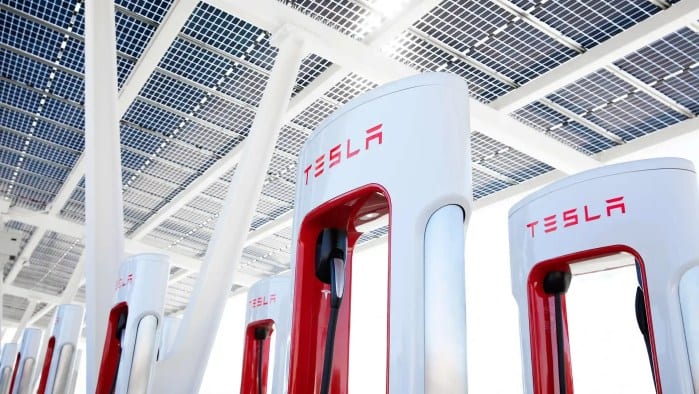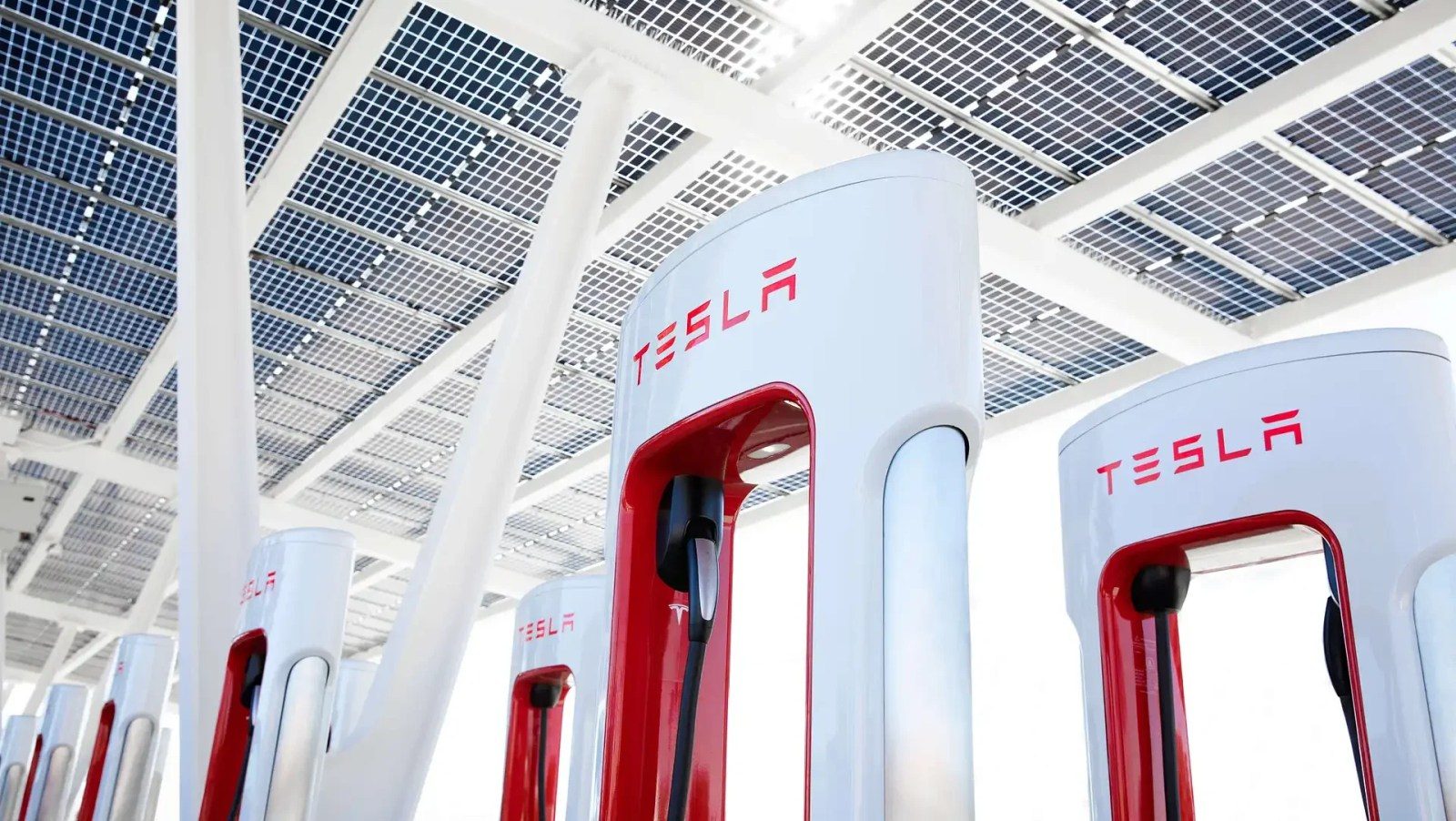

Tesla has introduced a feature that lets drivers pull away from a Supercharger with the cable still attached, accepting damage to the car and the charger in exchange for an escape route, two months after a mass shooting in Idaho.
“Emergency Drive Away lets you shift into Drive while still plugged into a Supercharger,” the company’s charging division said on X on Thursday, alongside a 30-second video of the feature.
“Intended for emergency use only,” it added in a second post. “Use of this feature will damage your vehicle and the Supercharger.”
Tesla did not link the feature to any incident in its posts.
How It Works
Until now, a Tesla could not be shifted out of Park while connected to a Supercharger, so a driver had to release the connector before leaving.
The new feature removes that lock on request.
When the driver tries to shift with the cable attached, the screen offers the option, and the driver holds the brake and confirms before driving off, according to descriptions of the software published by owners and Tesla-focused outlets.
The on-screen warning says that short camera recordings will be shared with Tesla.
The feature involves no new hardware and no breakaway connector, which is why Tesla says its use will cause damage.
Limits
“Latest software update needed (2026.38.3),” the charging division said in a follow-up post. “Pre 2021 Model S/X not supported. Applies to US Superchargers only for now.”
It said in replies to users that the feature works at all US Superchargers, including the V2, V3 and V4 generations and Supercharger for Business sites, and only on Superchargers.
Tesla has not said when, or whether, it will extend it to other countries.
The Cost
Tesla put a figure on the damage when a user asked.
“Depends on the Supercharger, but electrical & civil cost can be up to $25k,” the charging division replied. “Service visit mandatory for the chargeport.”
Asked what leaks from a severed cable, it said glycol, the coolant in the liquid-cooled cable, “which Tesla will clean up as part of the mandatory service visit to the Supercharger after the damage is incurred.”
Tesla has not said who pays those costs when the feature is used in a real emergency.
“Deliberate misuse will invoke additional penalties,” the charging division said, without specifying them.
‘For Years’
“A feature we hope you never need,” Max de Zegher, Tesla’s Director of Charging for North America, wrote on X.
“We went back and forth on this for years, but believe offering it is the right call.”
“Don’t abuse it, so we don’t have to restrict it,” he added.
De Zegher said Tesla selects Supercharger locations with safety in mind and relocates sites it considers unsafe.
“Our goal is that you always feel safe getting out to unplug,” he wrote.
“We’ll improve it quickly based on feedback,” he added, crediting “many teams across Tesla” for the launch.
The Network
The feature covers a network that is still expanding.
Tesla said earlier on Thursday that it opened 2,700 Supercharger stalls in the third quarter, with the network 15% larger than a year earlier.
It said the network hosted 69 million charging sessions in the quarter and delivered 2.4 terawatt-hours of energy, both up 29% from a year earlier.
Those figures are global, while Emergency Drive Away is limited to the United States.
Twin Falls
The feature follows a shooting on August 1 at an In-N-Out restaurant in Twin Falls, Idaho, in which three people were killed and 10 wounded, according to the city’s police.
The gunman died at the scene of a self-inflicted gunshot wound, and police said there was no known motive.
One of the dead was Dale Schultz, 66, of Salt Lake City.
He and his wife had stopped to charge their Tesla at the charging station behind the restaurant, his brother told KSL. His wife was also shot and has undergone several operations, according to people close to the family quoted by the Deseret News.
Tesla owners called for a way to leave a charger without getting out of the car in the weeks that followed.
The Aftermarket Version
A product built for that purpose already existed, and Tesla took its maker to court.
The company sued EVject in August 2024 over its Escape Connector, a $299 adapter designed to split apart so that a driver can pull away from a charger.
Tesla alleged that the adapter could reach surface temperatures of 100 degrees Celsius during charging.
It dropped the case that October, after EVject recalled its early units and released a version with thermal protection, according to EVject.