
Billionaire investor Ron Baron urged investors to buy Tesla shares, citing accelerating demand for Full Self-Driving software as a key catalyst for long-term returns.
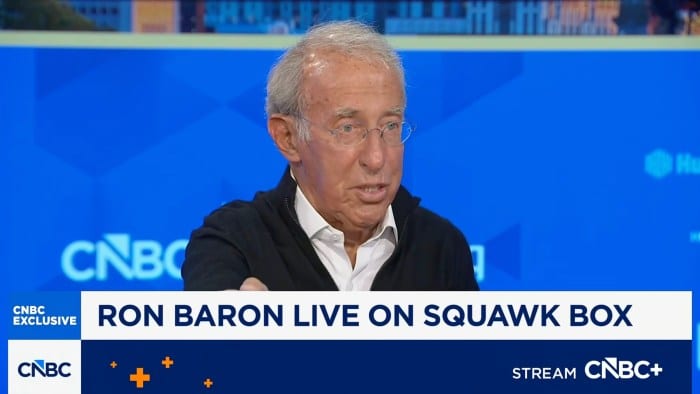
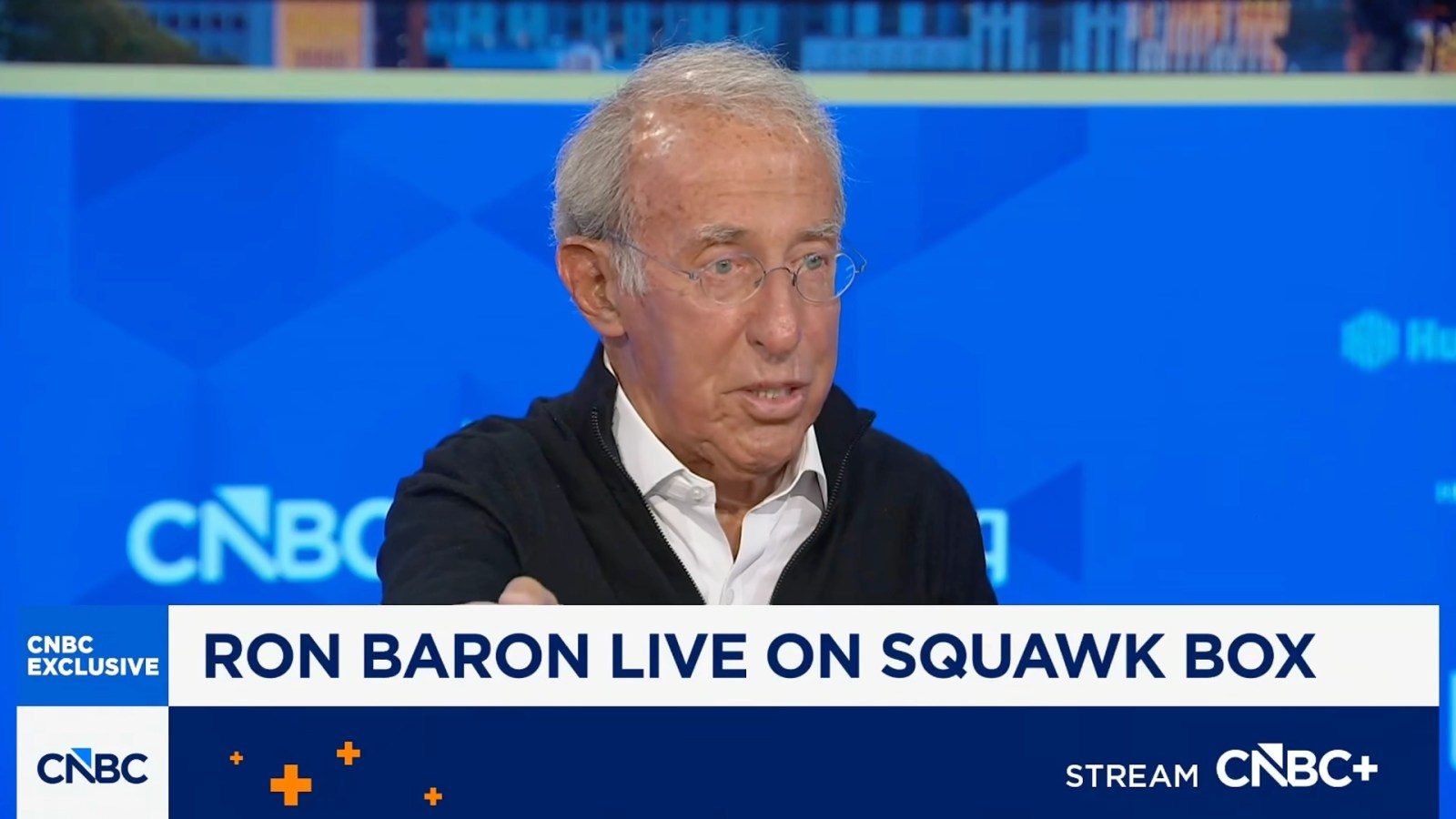
Baron, the founder, CEO, and portfolio manager of Baron Capital, appeared on CNBC‘s Squawk Box on Wednesday, reiterating his conviction in both Tesla and SpaceX — two companies in which his firm holds a combined $30 billion in exposure.
“I think Tesla is the time to buy the stock is now,” Baron said during the segment. “All this FSD is catching on and it’s going to be bigger and bigger and bigger.”
Baron said Tesla now has 1.4 million people using the system, described a 55% growth rate and said 55% of new buyers were taking it at delivery.
Tesla’s own figures are close but not identical. Active Full Self-Driving subscriptions rose 56% in the second quarter to 1.48 million, the largest quarterly gain in the company’s history, and Chief Financial Officer Vaibhav Taneja said about 55% of North American deliveries in the quarter had a subscription enabled at delivery.
“Everyone, 55% of the new people that are getting them are buying this with the self-drive,” Baron said. “And it’s going to be everywhere.”
Asked about market share, Baron said Tesla’s American position was improving as legacy manufacturers retreat from EVs, and added: “And in Europe, it’s incredible. And everywhere in the world is incredible everywhere.”
Goldman Sachs cut its third-quarter delivery forecast for Tesla to 435,000 vehicles from 490,000 this week. Analyst Mark Delaney wrote that China, the United States and Europe were all tracking slower than he had previously expected.
A $30 Billion Bet on Musk
Baron has been one of the most prominent backers of Elon Musk’s companies for more than a decade.
His firm first invested approximately $400 million in Tesla between 2014 and 2016, and has since built a SpaceX position through the company’s twice-yearly employee tender offers.
Baron Capital invested approximately $1.7 billion in SpaceX starting in 2017.
On Wednesday, Baron broke down his current holdings.
Against firm assets of $69 billion in June, the two Musk companies account for about 44% of the business. Baron said his next thirteen holdings, which include Hyatt, MSCI, Spotify and Charles Schwab, come to about $15.5 billion combined, less than half the two Musk positions.
Personally, Baron said his largest position is approximately $5 billion in SpaceX, followed by $1.5 billion in Tesla and about $1.8 billion held through Baron Capital’s mutual funds.
“I have 30 billion dollars in this. 25 and five,” Baron said of the combined position.
Baron also reflected on the distance he has traveled as an investor.
“Which is pretty cool considering that 1970, my net worth was -$15,000 and I didn’t have enough credit to buy a telephone,” he stated.
The remarks build on prior appearances in which Baron has laid out his long-term thesis for both companies.
In May, he told CNBC he expects to make five times the approximately $8 billion his firm has already earned from Tesla — implying $32 billion in additional profits over the next decade.
In November 2025, he projected the stock would reach $2,500 within 10 years and said he does not expect to sell his personal Tesla or SpaceX shares within his lifetime.
In May, he projected the stock would reach $2,000 to $2,500 within 10 years and said he does not expect to sell his personal Tesla or SpaceX shares within his lifetime.
Tesla Stock Under Pressure
Baron’s buy call arrives at a point of sustained weakness for Tesla’s stock.
The shares peaked near $441 in late May, sold off through late July to a 52-week low, and recovered above $360 by mid-August before a 6% drop on September 4 following a Cybercab launch event that analysts said underwhelmed expectations.
Shares closed at $356.58 on Tuesday, down about 20% from the May high.
The stock sits about 28% below its all-time closing high of $489.88, set in December 2025.
Margin compression and uncertainty over Musk’s capital allocation have weighed on sentiment.
Tesla committed to more than $25 billion in capital expenditures for 2026, a figure that more than doubled year over year in the second quarter.
Automotive gross margins excluding regulatory credits fell to 16.3% in the second quarter, below the 18.4% Wall Street had expected. Earnings per share of $0.33 missed a consensus of about $0.52.
Tesla stock was trading about 1% higher at $360 in Wednesday’s session.
FSD as a Demand Driver
Still, Tesla’s Full Self-Driving adoption figures have emerged as a counterpoint to the margin story.
Active FSD subscriptions rose 56% in the second quarter to 1.48 million, the largest quarterly subscriber gain in the company’s history.
CFO Vaibhav Taneja said approximately 55% of North American deliveries in Q2 had an FSD subscription enabled at the time of delivery.
CEO Musk reinforced the point during the Q2 earnings call in July, describing FSD as a bigger sales driver than the vehicles themselves in markets where the software has been approved.
“For a lot of people, they’re actually buying Tesla Full Self-Driving with a car attached, as opposed to a car with FSD,” Musk said. “They’re coming into our stores in the US and telling me they want the Full Self-Driving and with whatever car it comes with.”
Baron echoed that framing on Wednesday, calling FSD the force that will drive the next phase of demand growth.
Baron is not only a financial backer of Tesla, but also a long-standing owner of the company’s vehicles.
During Wednesday’s interview he said he had bought one of 250 special Model S cars Tesla built after ending production of the model, which he said cost about twice as much as the standard car.
“It’s my favorite car I’ve ever had,” Baron said.
He then described the car driving him to breakfast in East Hampton, opening the garage, reversing out, navigating his driveway and turning onto the street before stopping for a duck and six ducklings crossing the road.
“I’m not even paying attention,” Baron said of the journey.
Asked whether he was supposed to be driving without paying attention, he said: “I thought the rules were still technically that you sort of look around and if it makes a shaking sound, you pick up the wheel and you start driving again, but you don’t really need it.”
Tesla markets Full Self-Driving as a supervised system requiring the driver to remain attentive and ready to take control. The National Highway Traffic Safety Administration has an open investigation into the software covering roughly 3.2 million vehicles.
SpaceX-Tesla Merger Speculation
The interview also touched on one of the most closely watched questions in the market: whether SpaceX might make a bid for Tesla.
Baron said he discussed the idea directly with Musk, offering arguments on both sides.
He did not elaborate on the substance of those arguments but made clear the decision rests with Musk.
“I told him that I gave him reasons why I thought it was good and why I thought it wasn’t,” Baron stated, adding, “I’m not someone who makes the decision and you’re the guy and whatever you decide is better is what I’m going to support.”
The comments follow Musk’s appearance alongside SpaceX President Gwynne Shotwell at the All-In Summit in Los Angeles on Tuesday.
Asked why Tesla and SpaceX remain separate entities despite deepening collaboration on projects including the jointly developed Terafab semiconductor facility, Musk did not rule out a combination.
“With all this collaboration, on so many levels, who can imagine what action one might take when there’s so much close collaboration in so many areas,” Musk said at the event.