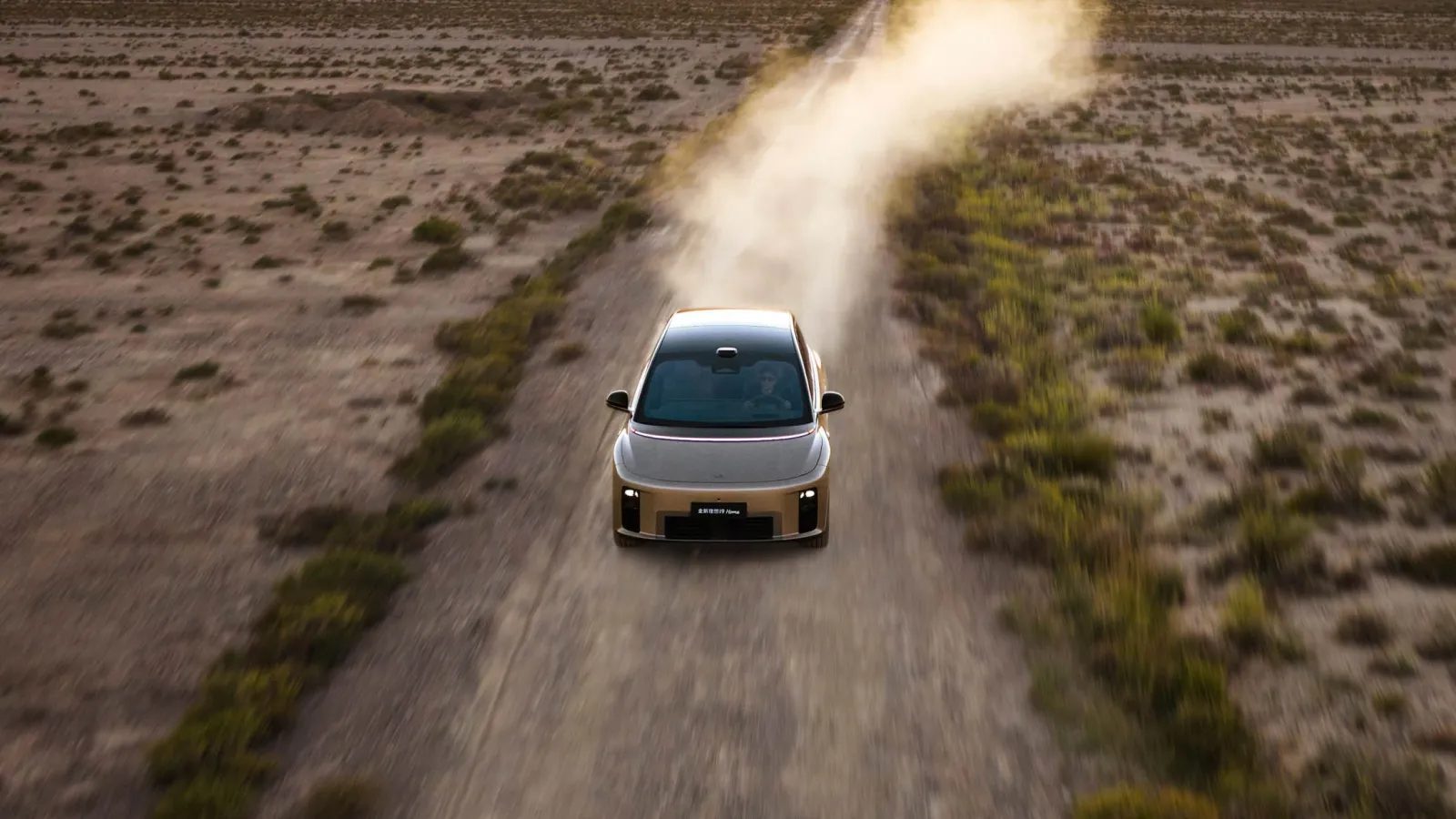

Li Auto launched its flagship fully electric SUV on Wednesday at a nationwide price of 369,800 yuan ($55,100), offered in one configuration and with deliveries beginning this week.
The six-seat i9 comes only as a ‘Home’ version, the company’s second model to carry that designation after the Mega multi-purpose vehicle. The model is the first flagship on Li Auto’s second-generation battery-electric platform.
The price sets it 30,000 yuan above the i8 all-wheel-drive performance version at 339,800 yuan, a premium of 8.8%, and 140,000 yuan below the Mega at 509,800.
Where It Sits
The i9 was not priced against rivals. It was priced against Li Auto’s own extended-range range.
At 369,800 yuan it costs exactly the same as the L8 Ultra, the five-seat extended-range sport utility vehicle that has been on sale since the summer. Potential customers now choose between a six-seat battery-electric car and a five-seat extended-range one at identical money.
It is the second time Li Auto has done this. The L6 and the rear-drive i6 are both 249,800 yuan, at the bottom of the range.
On entry prices, the fully electric SUV line climbs in exact 60,000-yuan steps, from the i6 at 249,800 to the i8 at 309,800 to the i9 at 369,800, before the 140,000-yuan jump to the Mega.
On the extended-range side the L7 starts at 301,800, the L8 at 369,800 and the L9 at 459,800, running to 509,800 for the L9 Livis.
So the i9 tops the fully electric sport utility line, sits 90,000 yuan below the cheapest L9 and is not a flagship by price. Chinese coverage before the launch had put it between 400,000 and 500,000 yuan.
Size
The i9 measures 5,225 millimetres long, 1,970 wide and 1,752 tall on a 3,168-millimetre wheelbase, making it Li Auto’s largest sport utility vehicle.
Founder and Chief Executive Officer Li Xiang argued on Weibo on Monday that the growth in flagship sport utility vehicle dimensions is a passing phase that battery-electric architecture will end, two days before the launch.
The i9 is 7 millimetres longer than the 2022 L9 that established the six-seat flagship as a category in China, and 30 millimetres shorter than the L9 Li Auto sells today.
Li Auto claims a drag coefficient of 0.215, which it says is the lowest of any mass-production SUV.
Steer-by-wire and rear-wheel steering are standard, giving a turning diameter of 10.6 metres.
The Cabin
The interior is where Li Auto has put the money.
All four front and second-row seats are full-size zero-gravity units. The second row rotates under power so occupants face each other, and the company says they recline to a 150-degree posture with 18-point kneading massage.
The third row reclines to 55 degrees and slides fore and aft under power. Li Auto says a low sill and wide door aperture allow passengers to reach it without a step or running board once the second-row seats swivel.
The company names three cabin modes: Home living room, Home cinema and Home suite.
A 29-inch 6K panoramic display sits alongside a 21.4-inch 4K rear screen that slides fore and aft, running on a Qualcomm Snapdragon 8797. Apple CarPlay is supported on the panoramic screen, and Li Auto says its own navigation and entertainment remain usable while CarPlay is connected.
The front boot opens electrically, and the rear compartment uses a sunken well with an upper and lower level.
Powertrain
Dual motors produce a combined 400 kilowatts and 660 newton metres, reaching 100 kilometres an hour in 4.9 seconds with a top speed of 200.
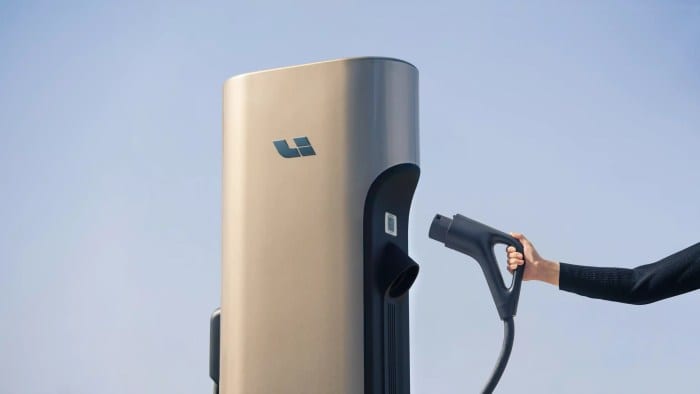
A 101 kilowatt-hour ternary pack gives 705 kilometres on China’s CLTC cycle. Li Auto quotes 500 kilometres of range in ten minutes on its own 5C chargers, though some Chinese summaries of the launch give about 400.
That is 15 kilometres less than the smaller i8 all-wheel drive, which is quoted at 720 kilometres. The packaging went to cabin volume.
First cars use CATL 5C cells. Li Auto switches to packs it developed itself, manufactured by Sunwoda, from late October, after which they become the only option.
Why the Price Matters
Li Auto needs the mix. Vehicle margin fell to 9.4% in the second quarter from 19.4% a year earlier, with a net loss of 1.7 billion yuan. First-half deliveries were 193,472, down 5.1%.
The cheaper i6 has been carrying the company, delivering 21,453 units in June, or 69% of the month’s total.
A six-seat flagship at 369,800 yuan lifts the average transaction price without asking buyers to reach the 500,000-yuan band where the L9 Livis and Mega sit.
It is also a price held rather than a price cut. Li Auto has not cut the official price of a continuing model this year. What it has done is reset each figure when it replaces the car, launching the new Mega below the outgoing Home version and the L9 Livis below its own pre-sale price, then adding a cheaper rear-drive i8 in August.
Transaction prices are a separate matter, and both the i8 and the Mega carried cash incentives before those changes.
The margin shows the pressure landing anyway.