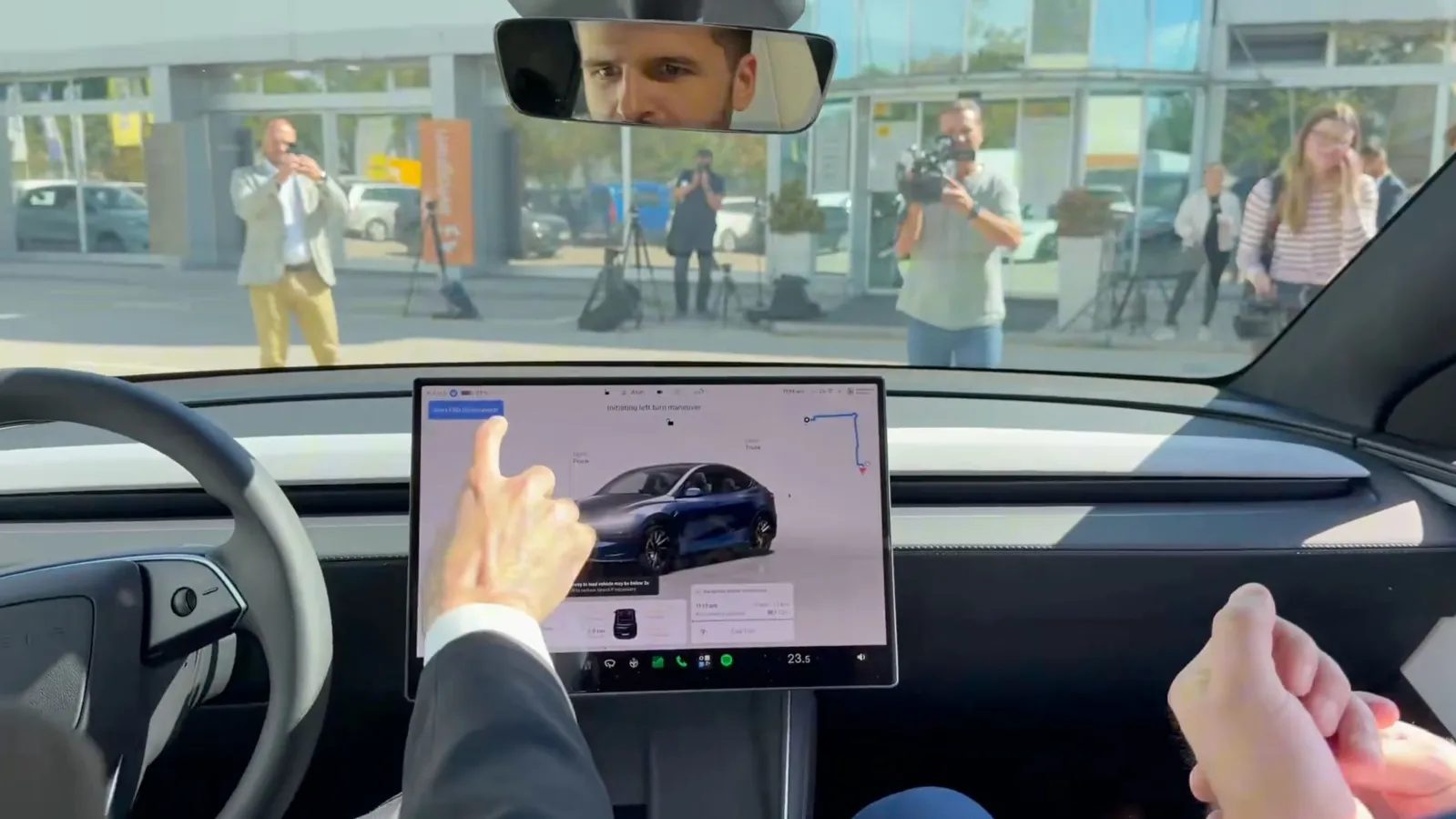

Slovenia will draft changes to its laws to allow driverless taxis to operate, Deputy Prime Minister Jernej Vrtovec said on Monday after riding in a Tesla with the company’s Full Self-Driving software, a week after the country approved the system.
“I think we will shortly adapt the legislation and we will have robotaxis in Ljubljana, Maribor, Celje, Nova Gorica and so on,” Vrtovec, who is also minister of infrastructure and energy, told the STA news agency.
He gave no timetable beyond “shortly” and the government has not adopted a bill.
Slovenian outlets reported the changes would permit pilot projects for fully driverless vehicles and allow them to join ride-hailing platforms including Uber and Bolt.
Uber has operated in Ljubljana since May 2025 and in Maribor since April 2026, but under Slovenian rules requiring licensed taxi drivers, taximeters and municipal permits rather than the open platform model the company runs elsewhere. Bolt operates scooters in the capital.
What Vrtovec described would loosen those constraints while also admitting vehicles with no driver at all.
Vrtovec said the Tesla system he rode in was “something safe and efficient” and “absolutely represents the future.”
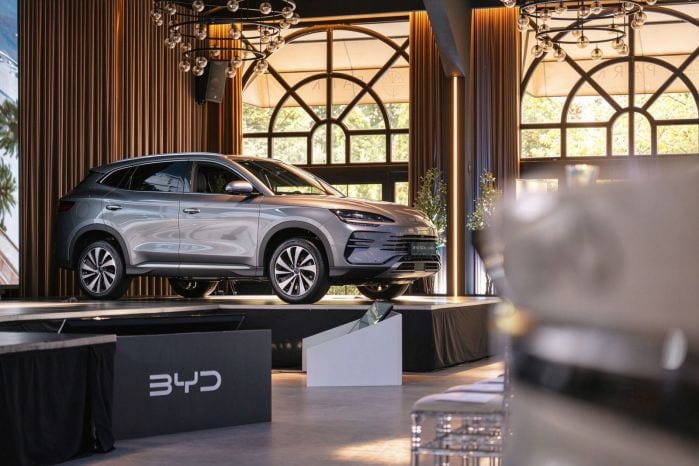
In May, Marko Femc of Plan-net Avto, a Slovenian importer of Chinese electric cars, told RTV SLO the company had formally applied to the infrastructure ministry for commercial robotaxi operation, starting in Ljubljana.
Two Different Technologies
The software Vrtovec tested is not the one that his legislation would enable. Full Self-Driving Supervised is a driver-assistance system.
“My impression? The system is safe, efficient, and above all, an exciting glimpse into the future of mobility,” he wrote on X after testing FSD. “It doesn’t get tired, doesn’t fall asleep, and can significantly contribute to safer driving.”
“Slovenia is among the first 6 countries in Europe to open the door to this technology,” the deputy PM added.
The driver must watch the road and remains legally responsible, a point Vrtovec made himself in a video posted on X on Monday, writing that the system handles steering, junctions and lane changes “while the driver retains control throughout.”
Robotaxis operate without a driver, under a separate legal regime covering geofencing, remote operation, liability, insurance and taxi licensing. Slovenia has no such framework.
The approval granted on September 7 does not provide one.
It was a national recognition of a provisional Dutch type approval issued by RDW in April under European vehicle regulations, which five other countries had already adopted.
Slovenia’s road safety agency, the AVP, confirmed it in writing and noted that it remains temporary.
Slovenia’s Bet
Slovenia became the sixth European country to allow Full Self-Driving Supervised, after the Netherlands, Lithuania, Estonia, Denmark and Belgium.
Vrtovec reposted Tesla’s announcement with the words “Developing Slovenia” and had signalled the step in July.
The six cover roughly 9% of the European Union’s population. An EU-wide approval would require a qualified majority of member states, and Tesla has said a vote could come as soon as October 6.
Finland and Greece have said they are considering approval. France raised safety concerns in July and has since begun testing two vehicles equipped with the system.
Robotaxi rules would remain national whatever the committee decides.
Zagreb Is the Template
Vrtovec named Croatia, and the timing explains why.
Pony.ai and Verne began carrying invited passengers in fully driverless cars on public roads in Zagreb last week, four days before his ride, describing it as a European first.
The driverless rides are tests rather than a public service.
The route runs 22 kilometres (14 miles) from Verne’s headquarters and a business district to Franjo Tuđman Airport.
The commercial service started in April with a safety operator on board, through a partnership between Pony.ai, Verne and Uber.
Pony.ai says the fleet has since covered more than 200,000 kilometres and completed several thousand rides, with an average passenger rating of 4.7 out of 5. The figures are the operator’s own.
Verne owns and operates the vehicles, Pony.ai supplies the autonomous driving system, and Uber supplies the booking platform. The cars are based on the electric Arcfox Alpha T5.
“Five months ago, we launched Europe’s first commercial Robotaxi service,” Verne chief executive Marko Pejković said. “We are now taking the next step, moving from autonomous driving with an onboard AV operator toward fully driverless operations.”
Pony.ai says its overseas pipeline exceeds 4,000 vehicles, including more than 2,000 with Uber across Europe.