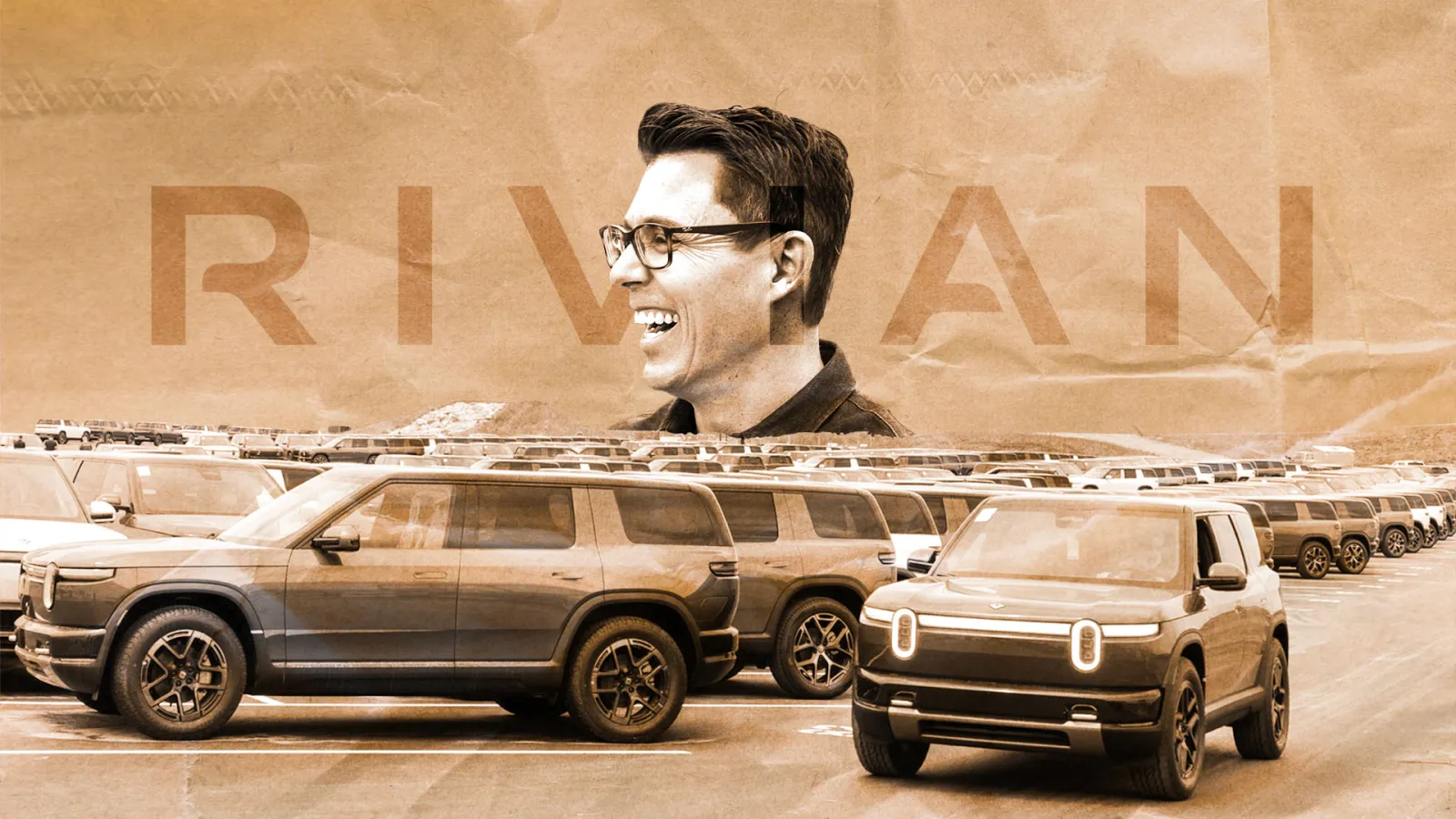
Rivian opened an invitation-only program that will put its Point-to-Point hands-free driving feature in the hands of a limited group of owners in December, ahead of a broad release the company is targeting for 2027.
The Autonomy Early Access Program is open to US owners of second-generation R1 and R2 vehicles with an active Autonomy+ subscription, according to a new page on Rivian’s website.
Rivian describes it as an “invite-only validation initiative” to test pre-release driver-assistance features before they reach the wider fleet, starting with Point-to-Point.
Selection will begin in California and Florida, with more locations planned later, Rivian said on its Autonomy+ page.
Owners in Canada are not eligible, even though Rivian’s Universal Hands-Free system already covers 3.5 million miles of roads across the US and Canada.
Rivian has not issued a press release on the program, and the support pages do not say how many owners will be admitted.
Who Gets In
Owners on a free Autonomy+ trial are excluded, as are first-generation R1 vehicles, which run the older Driver+ system.
Any Autonomy+ subscriber can register interest through a tile in their Rivian.com account, which appears only for the vehicle’s primary owner.
Invitations go to owners with “high Autonomy feature usage, and a clean recent safety record,” Rivian said.
The company listed forward collision warnings, “true collisions events” and other safety-related metrics among the factors it weighs.
Rivian said it will also balance the group by region, vehicle model and other factors so that participants reflect “the broader owner community.”
Safety and participation are re-verified every 30 days, and membership can be revoked at Rivian’s discretion at any time.
To be considered, owners must consent to Rivian reviewing their software and feature usage history, their general driving history and their participation in earlier Rivian programs.
Owners who are not selected will not receive a rejection email, and their submission stays on file for future phases without a new application.
What Testers Owe Rivian
Participants will not be paid and must use the preview features weekly, log issues from inside the vehicle when it is safe to do so, complete monthly surveys and be available for interviews or focus groups.
They must also enable data collection, including location and camera data, and keep the features, program details and their feedback confidential under a non-disclosure agreement.
In return, they receive new Autonomy features over the air before the rest of the fleet, along with a newsletter that Rivian says gives “behind-the-scenes visibility” into its work.
Primary owners must tell any secondary driver that the vehicle is enrolled and ensure that driver follows the program’s terms.
Point-to-Point Takes Shape
Point-to-Point links Universal Hands-Free to the car’s turn-by-turn navigation, handling “supervised turns, highway transitions, and city streets,” Rivian said.
The company said the feature runs on a 360-degree multi-modal sensor array and its Large Driving Model, the foundation model it unveiled last December.
Rivian’s two pages differ slightly on timing, with the Autonomy+ page citing December and the program page citing “late 2026” for early access, before a broad expansion in 2027.
In an August 14 roadmap, Rivian said a “limited rollout begins later this year, with a widespread customer rollout targeted for 2027,” and described the feature as hands-free but eyes-on, under the driver’s “continuous supervision.”
The gap Point-to-Point must close is clear from Rivian’s own fine print, which says Universal Hands-Free will not stop or slow down for traffic lights or stop signs.
Philbin told R2 buyers in May that upcoming releases would start with “Universal Hands-Free Phase 2 which adds sophisticated stop sign and traffic light control,” but Rivian’s support pages still say the system does not stop for either.
Rivian’s R1 software update 2026.23 took Lane Change on Command beyond divided highways, and its release notes said the display would show traffic lights and cones that the system still does not act on.
Founder and CEO RJ Scaringe told analysts on July 30 that the first version will be “like Level 2++, where your hands are off the wheel, but your eyes are still primarily on the road.”
Drivers will be able to “look away for short extended moments of time,” but will not be “in a position to officially be reading a book or be responding to emails,” he said.
Rivian still states that neither of its driver-assistance platforms is a Level 3 system, according to its Autonomy Platform page.
A Year of Autonomy Promises
The program is the first concrete step toward a timeline Rivian set at its first Autonomy & AI Day in Palo Alto on December 11, 2025.
There, it unveiled the Rivian Autonomy Processor (RAP1), a custom 5-nanometer chip powering a third-generation computer rated at 1,600 sparse INT8 TOPS, and said its Gen 3 hardware with LiDAR would ship on the R2 from the end of 2026.
Rivian said that computer, the ACM3, can process 5 billion pixels per second.
It also priced Autonomy+ at $2,500 or $49.99 a month and laid out “a clear trajectory including point-to-point, eyes off and personal L4.”
Universal Hands-Free reached second-generation R1 owners a week later in update 2025.46, expanding hands-free coverage roughly 24-fold from about 135,000 miles of pre-mapped highways.
Rivian began charging for Autonomy+ in April after extending the free trial three times, and kept the price unchanged on the 2027 R1.
Scaringe said in a May interview that autonomy was “now occupying the vast majority of our R&D dollars,” after Rivian spent $458 million on research and development in the first quarter.
In June, Scaringe said the feature would be “very similar to Tesla’s FSD.”
On the second-quarter call, he said Rivian expected “to begin rolling out point-to-point capabilities by the end of this year,” and that Autonomy+ take rates were “trending positively” since monetization began.
Senior Vice President of Autonomy and AI James Philbin, asked in September about customers’ willingness to pay for Autonomy+, said it was “generally tracking actually better than we expected,” without giving a take-rate figure.
At an Evercore ISI forum on September 29, Philbin said Rivian was “very much on track” for an initial rollout toward year-end, while the company said the first LiDAR-equipped R2s would go to employees this year and to customers in 2027.
Point-to-Point does not depend on that new hardware and will run on the current second-generation R1 and R2 fleet, Rivian executives have said.
Philbin said in May that he expected autonomous capabilities across the two hardware generations to be “largely the same for the next several years.”
Robotaxi Ambitions
California and Florida are also home to San Francisco and Miami, the 2028 launch cities in Rivian’s robotaxi agreement with Uber, though Rivian has not linked the choice of states to that program.
Uber agreed in March to invest up to $1.25 billion, tied to milestones that include robotaxi testing in San Francisco, Miami and Chicago by year-end.
Uber Chief Financial Officer Balaji Krishnamurthy said in August that a Rivian running a preview of its upcoming Autonomy+ features “flawlessly drove” from Sunnyvale to Cupertino and back during a demonstration with Scaringe.
Uber or its fleet partners expect to buy 10,000 R2 robotaxis in a first phase, with talks possible on up to 40,000 more from 2030, as the service scales to 25 cities by 2031.
Scaringe has targeted hands-off, eyes-off driving for 2027, while Philbin has called US state regulation of eyes-off systems “a complete patchwork.”
At the Evercore forum, Philbin also said Rivian is “actively investigating supporting future versions of the van that could have more capability in terms of autonomy,” referring to its commercial delivery van.
The exclusion of first-generation vehicles comes as Rivian faces a proposed class action, filed in June in federal court in California, alleging it marketed hands-free capabilities that its 2022 to 2024 R1T and R1S lacked the hardware to deliver.
Tesla’s 2021 Playbook
The approach echoes Tesla‘s September 2021 decision to let owners request its FSD Beta, gating access on a Safety Score that also counted forward collision warnings.
Tesla first widened that beta to drivers with perfect scores of 100 the following month.
Rivian will hold its second Autonomy & AI Day on December 9 at its Fell Street space in San Francisco, an event Scaringe called “an anchor point to then roll out some of these new features.”
Needham analyst Chris Pierce said in August that the market gives Rivian “zero credit for their autonomy aspirations.”