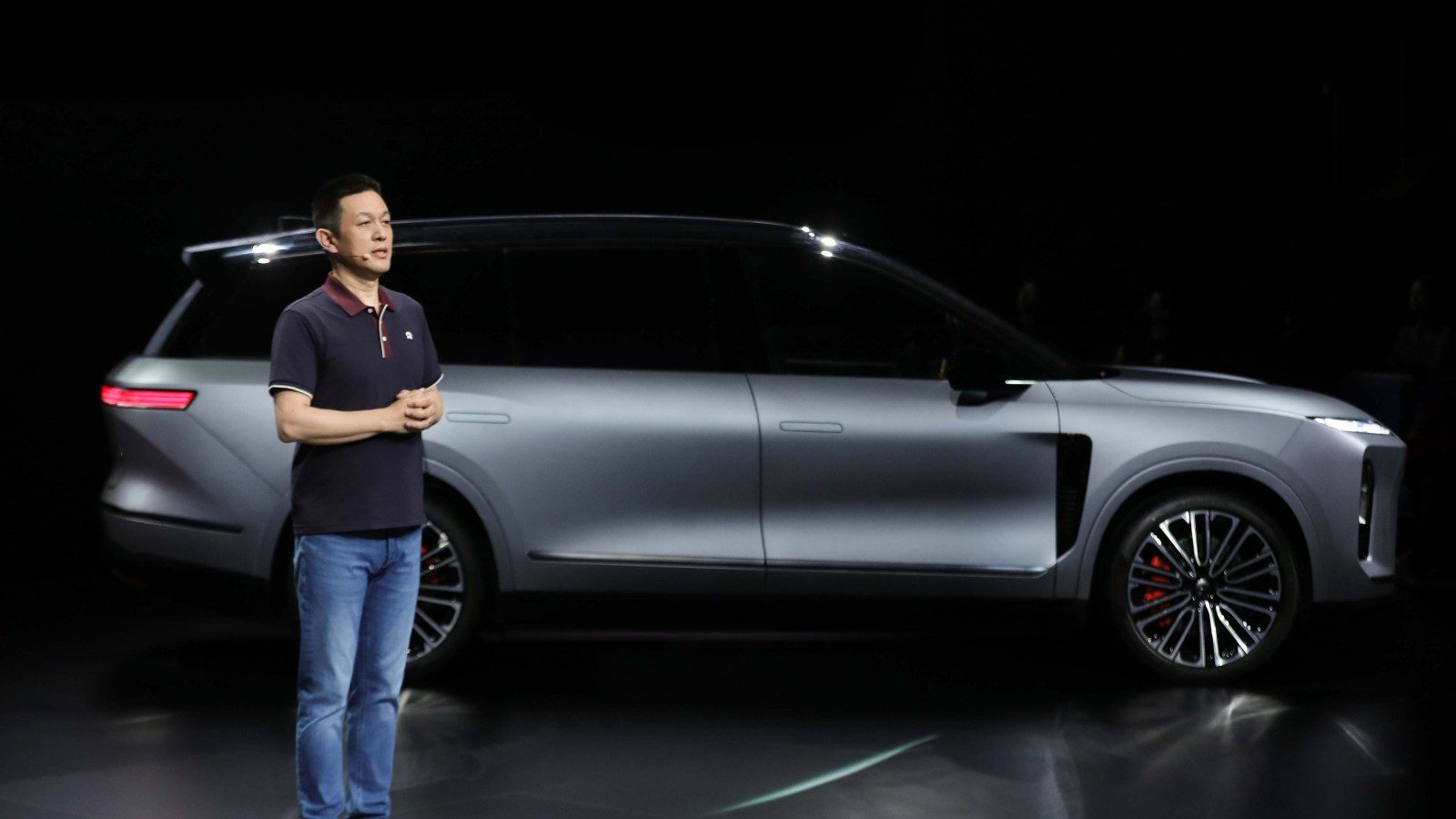

Rising raw material prices have added nearly 20,000 yuan ($2,900) to the production cost of each Nio ES8, founder and CEO William Li has said on Friday.
The founder noted that fully offsetting that increase would require raising the selling price by about 30,000 yuan ($4,400).
Additionally, the EV maker is working with supply-chain partners to absorb part of the increase and intends to keep prices stable.
“In the short term, it’s still within a range we can bear,” Li said, speaking alongside co-founder and president Qin Lihong.
The comments were made during a media briefing on the morning that followed the launch of the five-seat version of its best-selling model, as first reported by Chinese media outet Sina Tech.
The five-seat ES8 is priced from 382,800 yuan ($56,300) with battery included — 24,000 yuan below the three-row version — with a higher Executive Signature Edition starting at 422,800 yuan ($62,200).
Under Nio‘s Battery as a Service lease, the two trims drop to 274,800 yuan ($40,400) and 314,800 yuan ($46,300), respectively.
The launch arrives as the six-seat ES8’s initial backlog clears. After peaking at 22,258 units in December, deliveries have declined in five of six months since.
The model accounted for 46.3% of Nio Inc. deliveries in the first five months of 2026 and drove the company’s first-ever quarterly profit in the fourth quarter of 2025.
The ES8’s launch in late September 2025 lifted vehicle margin to 18.8% in the first quarter of 2026, up from 10.2% a year earlier.
As of January, each unit of the ES8 generated about 80,000 yuan ($11,800) in gross profit for Nio. Li’s cost figure narrows that cushion by roughly a quarter.
The cost pressure arrives just as Nio‘s product mix has tilted sharply upmarket.
Consolidated average selling price of Nio Inc. — including the main premium brand, Onvo and Firefly — climbed to roughly 273,000 yuan ($40,100) in the first quarter, a 15.6% year-over-year increase.
The arrival of the ES9 flagship in late May pushed the Nio brand’s average transaction price to 443,000 yuan ($65,200) in June — up 14% from the first quarter.
Escalating Cost Warnings
Nio founder’s newly cited figure roughly double the range he cited four months earlier.
At a media briefing in Shanghai on March 11, he said memory chips and rebounding raw material prices could push costs up by 6,000 to 10,000 yuan per premium EV.
“Memory chip is indeed a problem that in worst cases can lead to production suspension,” he told reporters then, according to Reuters.
By the first-quarter earnings call on May 21, the estimate had firmed.
“Starting Q2 and beyond, on average, the cost impact per unit is around more than 10,000 yuan,” management said.
Nio reaffirmed a 17% to 18% vehicle gross margin target for the full year.
These costs extend well beyond its premium lineup.
In an interview with the Economic Observer in mid-June, William Li commented that sub-brand Onvo vehicle costs had climbed by more than 10,000 yuan ($1,500), reaching roughly 15,000 yuan ($2,200) with taxes.
“Supply-chain prices really have risen too much now,” he noted. “The Onvo L60 still has gross margin, but it’s pretty dire.”
At the Chongqing Auto Forum last month, Li issued a broader warning.
“This is the toughest year I’ve experienced since entering the auto industry,” he said. “We need to be mentally prepared for the entire industry to contract by 15% to 20%.”
Industry-wide Cost Squeeze
Nio‘s pressure mirrors a sector-wide shift.
Memory chip and battery raw material costs are rising simultaneously, compressing margins across China’s electric vehicle sector.
Contract prices for commodity DRAM surged 90% to 95% quarter-over-quarter in the first quarter, according to TrendForce, as Samsung, SK Hynix and Micron shifted advanced-node production toward AI data centres.
Battery-grade lithium carbonate climbed back above $25,000 per tonne — more than 170% above the June 2025 trough — driven by Zimbabwe’s sudden February export ban on lithium concentrates and the extended suspension of CATL’s Jianxiawo lepidolite mine.
More than 15 automakers have announced price hikes or reduced incentives since the start of 2026, Jiemian News reported.
These include from established automakers like BYD, which increased the price of its God’s Eye ADAS earlier this year, to tech giant and newcomer in the auto industry Xiaomi, which increased prices across the SU7 lineup in what its leadership called a “passive price adjustment.”
According to China Passenger Car Association (CPCA)’s secretary-general Cui Dongshu, the auto industry profit margin dropped to 3.2% in the first quarter.
Total industry profits fell 18% year-on-year to 78.4 billion yuan ($11.5 billion).