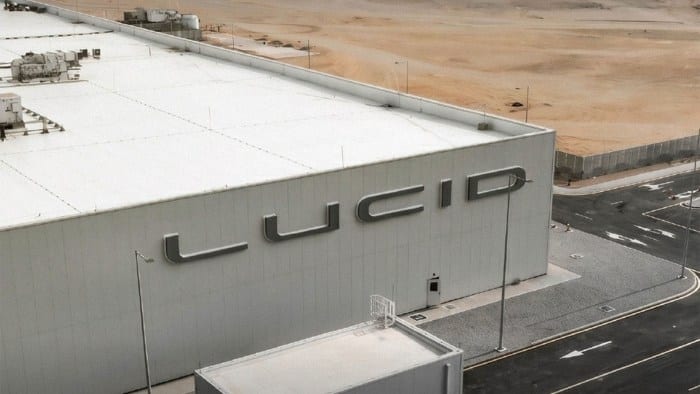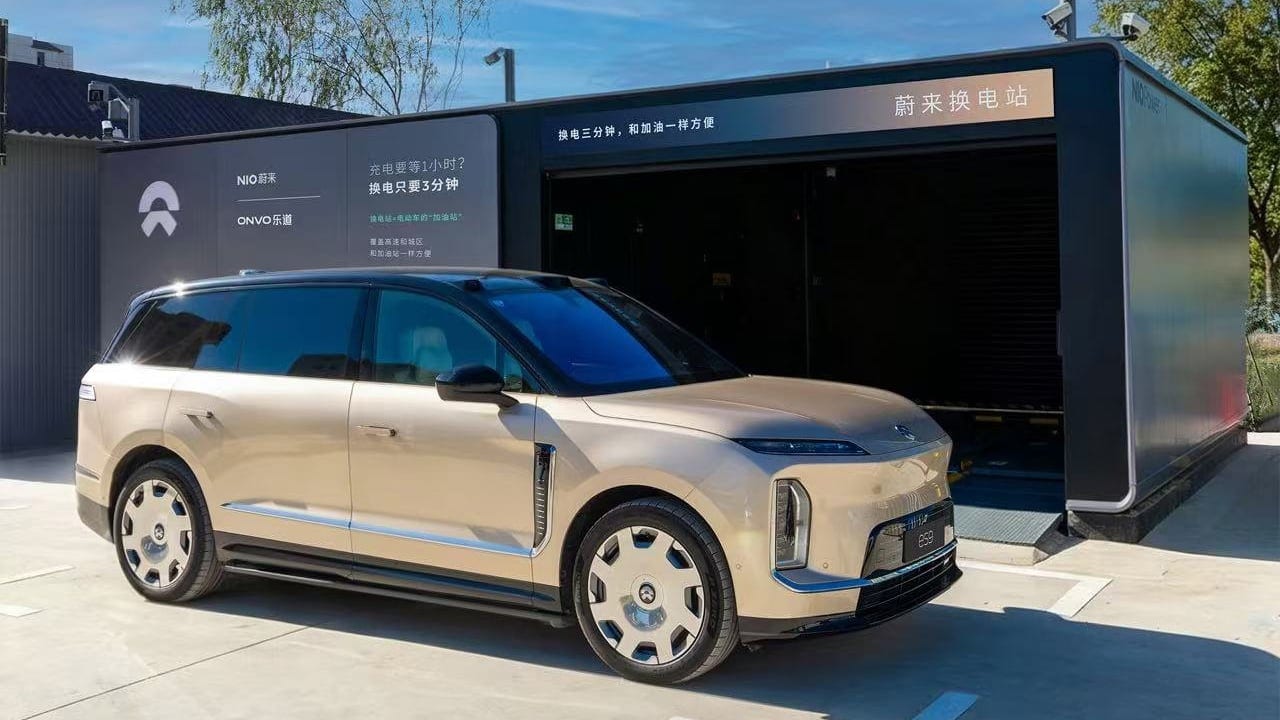

Nio‘s 4,000th battery swap station — also the company’s first fifth-generation station — will begin operating on August 7 in Quanzhou, in China’s Fujian province, VP of Branding and Communications Ma Lin said in a Weibo post on Monday.
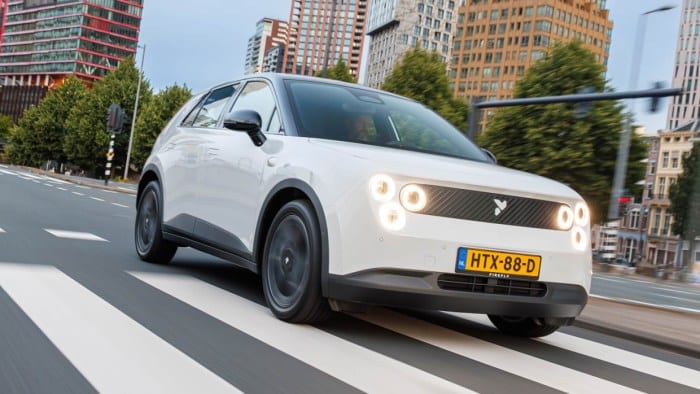
The station will serve users across all three of the group’s brands: Nio, Onvo and Firefly.
Thursday’s opening puts a date on a program that has slipped repeatedly.
The fifth generation was first targeted for trial operation before Christmas 2025, then moved into the first half of 2026, before mass deployment was pushed to July or August in March, the third revision to the timeline.
Founder and CEO William Li disclosed the updated schedule at a customer event in Wuhan, where the new stations are built.
The Station Built for the Whole Lineup
The fifth generation is the first in Nio‘s network able to serve Firefly, built to handle every battery format in the group, from the budget brand’s 42.1-kilowatt-hour pack to the largest units in the Nio range.
Current fourth-generation stations support Nio and Onvo vehicles but not Firefly, whose shorter wheelbase left it unable to use any earlier station — meaning the group’s cheapest cars have run without access to the infrastructure.
Each generation has held more batteries than the last, tracking the fleet’s growth: the first generation, opened in 2018, stored five batteries and managed about 100 swaps a day; the second, co-developed with Sinopec from 2020, held thirteen; the fourth, launched in June 2024, stores up to 23 and completes each swap in 144 seconds.
Nio has guided to a roughly 20% capacity increase for the fifth generation, with as many as 500 vehicles served per station per day.
Co-founder and President Qin Lihong, who first flagged the capacity gain to reporters including EV in Hangzhou last September, has described the system as “the ultimate goal of our battery swap strategy.”
A Rollout Back-Loaded Into Q4
The Quanzhou opening starts the clock on a compressed schedule.
Li’s New Year letter set a plan of more than 1,000 new swap stations in 2026, taking the network beyond 4,600 stations by year-end.
Progress ran well behind that pace through the spring — roughly 8.5% of the annual target by late March and 11.8% by mid-April — as deployment of fourth-generation stations slowed ahead of the generational transition.
The recovery plan concentrates the build into the closing months. Nio intends to deploy more than 100 stations a month from September and over 150 a month from October through December — roughly 450 fifth-generation stations in the final quarter alone, nearly half the full-year target in a single quarter.
The Network Behind the Number
The 4,000-station mark caps a network that passed 100 million cumulative swaps on February 6 and was approaching 110 million by early May, processing roughly 110,000 swaps a day on average across roughly 3,838 stations in China at that point, alongside more than 1,000 highway stations and access to over 1.5 million third-party charging piles.
The rental structure takes the flagship ES9 from 498,000 yuan to 390,000 yuan and the five-seat ES8 from 382,800 yuan to 274,800 yuan, and shapes the entry economics of the cheaper brands the same way.
Ma disclosed the Quanzhou date alongside a guessing contest he had run since Friday, offering 20,000 Nio points to the first users to predict the opening day.
The executive’s Weibo account has become a primary channel for operational disclosures that do not appear in the company’s monthly delivery releases.