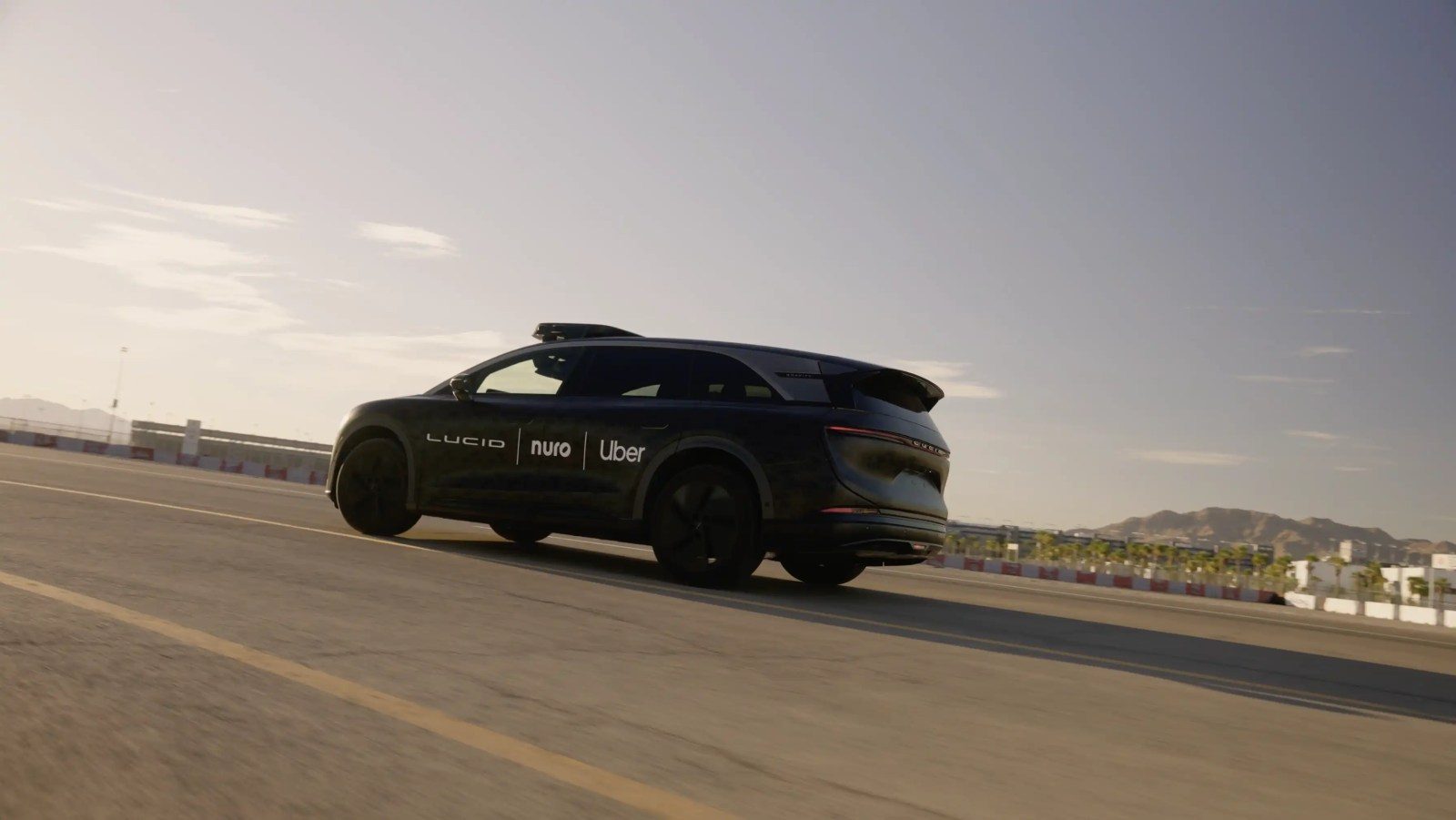

Lucid Motors and its robotaxi partners have described their engineering fleet as “nearly 100 vehicles” for five months running — a round figure that entered use two months before the company’s own precise count of 75, and that has outlived it without the two numbers ever being reconciled.
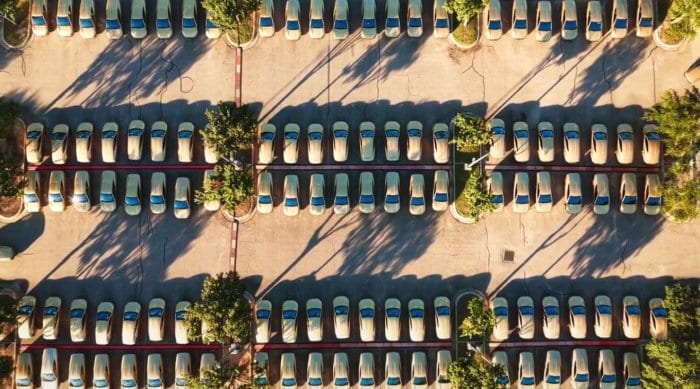
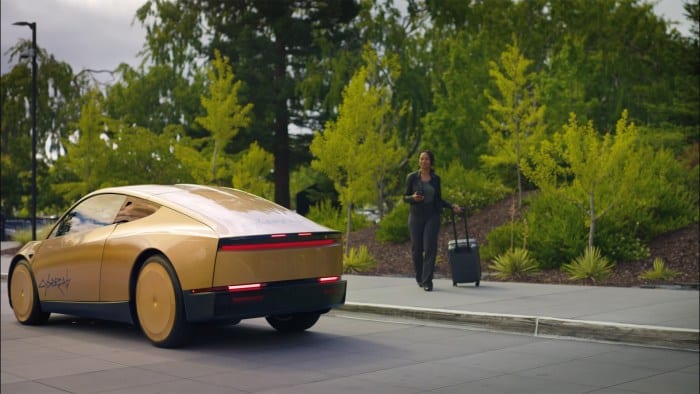
Chief executive Silvio Napoli reached for the number again on Tuesday’s second-quarter earnings call, telling analysts the program with Uber and Nuro is deep into testing and validation with “an active engineering fleet of nearly 100 vehicles” operating in the San Francisco Bay Area and Houston.
The characterization carried extra weight this quarter. Napoli held up the robotaxi as a new source of volume for the Casa Grande, Arizona, factory — a plant running at roughly a fifth of its 90,000-unit capacity — when a Morgan Stanley analyst pressed him on utilization during the same call.
A Round Number and a Precise One
Nuro first disclosed the figure in March, saying its engineering fleet comprised “almost 100” Gravity SUVs. Uber’s President and Chief Operating Officer Andrew Macdonald wrote at the time that “the fleet is scaling.”
The same month, then-interim chief executive Marc Winterhoff told attendees at Lucid‘s debut Investor Day in New York that all engineering test vehicles for the program had been delivered.
Two months later, the company supplied a precise count — and undercut the round one.
On the first-quarter call in May, management said Lucid had delivered 75 engineering vehicles to Nuro and Uber, as EV reported at the time, noting the gap with the figure Nuro had cited since March.
Whether the 75 covered only the first quarter or a longer period was not specified.
The two disclosures resist reconciliation. If all engineering vehicles had been delivered by March, as Winterhoff stated, then March’s “almost 100” and May’s 75 describe the same, finished fleet — and both cannot be precise.
The round number survived anyway.
The partners repeated “nearly 100 vehicles” in the June 17 announcement naming Houston as the program’s second market, ahead of a mid-2027 launch there and a Bay Area debut later this year.
Napoli’s remarks on Tuesday made it five months without movement — and without reconciliation of the two figures, nearly 11 months after the first engineering prototype was handed to Nuro in September 2025.
New Phase
With former interim CEO Winterhoff declaring the engineering fleet fully delivered in March, the count could only grow once the next vehicle category — production-validation robotaxis — began arriving.
That handover has started in July, according to Napoli.
“Last month, we began delivering to Uber and Nuro production validation vehicles assembled at our facility in Coolidge, Arizona. This will be followed by regular vehicle production in Q4, which in turn will be followed by a launch in late 2026,” the CEO said on Tuesday.
The sequencing roughly matches the June release, which said the test fleet would expand “in the coming weeks” as the first production-validation units were built.
The assembly site, however, has shifted in the company’s telling.
Napoli disclosed in mid-June that the first production-validation robotaxis would be built at Casa Grande, before Tuesday’s remarks placed their assembly at Coolidge, the pilot facility for the midsize program.
Whether Tuesday’s “nearly 100” already includes the new units, the company did not say.
With production-validation vehicles arriving since July, the round figure may in fact be accurate for the first time — a fleet of 75 engineering vehicles plus the first Coolidge-built units could now approach 100.
What remains unresolved is the spring: the months when the figure circulated while, by the company’s own statements, the delivered fleet stood at 75 and nothing more was coming.
The Scale the Number Has to Reach
The engineering fleet remains a fraction of the program’s stated ambition — and of the commercial machinery already being built around it.
Under a second vehicle production agreement signed in April, Uber expanded its purchase commitment to a minimum of 35,000 vehicles over six years — at least 10,000 Gravity SUVs and 25,000 units of the future midsize platform — while lifting its investment in Lucid to $500 million.
Hertz’s newly created affiliate Oro Mobility will handle day-to-day asset management for the robotaxis — charging, maintenance, repairs, cleaning and depot staffing — starting in the Bay Area later this year.
In Houston, Uber has secured a 50,000-square-foot depot and charging facility specified for 40 fast chargers, 15 service bays and roughly 4 megawatts of power, with construction due to begin in early 2027.
Nuro secured a California DMV driverless testing permit covering the Gravity in early May, followed by a second key state permit within a week.
The permits allow driverless testing and passenger pilot operations with a safety driver aboard; paid driverless rides still require a DMV deployment permit and a CPUC ride-hailing authorization.
The commercial launch remains targeted for late 2026 in the Bay Area before expanding to Houston next year.