Uber has now committed more than $10 billion to buying thousands of autonomous vehicles and taking equity stakes in their developers.
The ride-hailing giant increased its bet on Thursday by announcing a fleet management partnership with Hertz — through a newly created affiliate named Oro Mobility.
Hertz shares jumped as much as 22% in early trading on the news, rising to $6.85 in their best day in nearly six months.
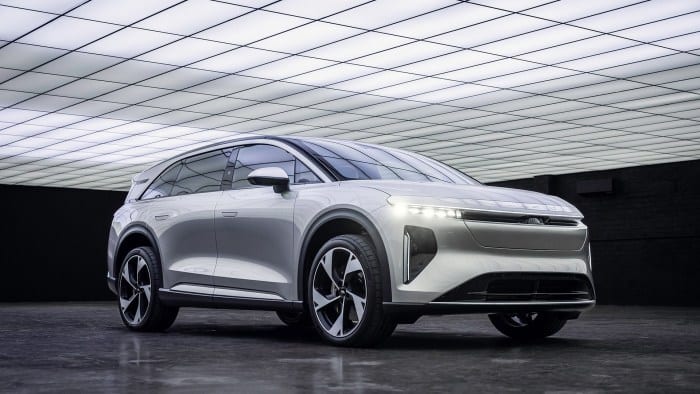
Under the deal, Oro will provide day-to-day vehicle asset management for Uber‘s autonomous robotaxi programme of Lucid vehicles equipped with Nuro’s Level 4 autonomous driving technology — including charging, maintenance, repairs, cleaning and depot staffing.
The service is expected to launch in the San Francisco Bay Area later this year, with the two companies exploring expansion in 2027.
A separate, second partnership announced the same day will see Oro provide fleet services on Uber’s platform using vehicles operated by Oro-employed drivers.
Following a pilot in Atlanta last year, the driver-led service is already active in Los Angeles and San Francisco, with Northern New Jersey expected to launch this spring.
Hertz said it had launched Oro Mobility as an affiliated operating company designed to provide integrated fleet management solutions across multiple mobility segments. Uber is the first major partner under the new structure.
“This partnership doubles down on our hybrid network strategy, where both driver-led and autonomous rideshare operations can scale and serve communities reliably and efficiently,” Uber‘s President and COO Andrew Macdonald stated on X.
According to the executive, “it’s the only way to meet increasing rideshare demand and continue to deliver a seamless, high-quality rider experience.”
Hertz and Uber have collaborated for at least a decade, with their existing rideshare rental partnership operating one of the largest such fleets globally. Today’s deal extends that relationship into autonomous fleet operations and centralised driver-led services.
The $10 billion figure — which includes more than $2.5 billion in equity stakes and over $7.5 billion earmarked for robotaxi fleet purchases — exceeds Uber‘s $9.8 billion in free cash flow last year and represents roughly 7% of the company’s current market capitalisation of approximately $150 billion.
Lucid Deal Expansion
The Hertz announcement builds on a series of robotaxi deals Uber has struck over the past year.
Uber expanded its purchase commitment with Lucid Motors to at least 35,000 vehicles — up 75% from the 20,000 Gravity SUVs agreed under the original July 2025 deal.
The ride-hailing company also invested an additional $200 million in Lucid, raising its total investment to $500 million and making it an 11.5% shareholder.
The expanded fleet will include both the Lucid Gravity and the upcoming midsize platform, positioned as the cost-efficient workhorse for fleet deployment at scale — after Macdonald told investors in March that bringing autonomous ride-hail to the mass market requires a lower-cost vehicle than the Gravity.
The commercial robotaxi service remains on track to launch later this year in the Bay Area, with Nuro leading autonomous on-road testing since December.
Lucid-Nuro robotaxis have also been spotted in Houston, though neither company has confirmed the Texas city as a commercial launch market.
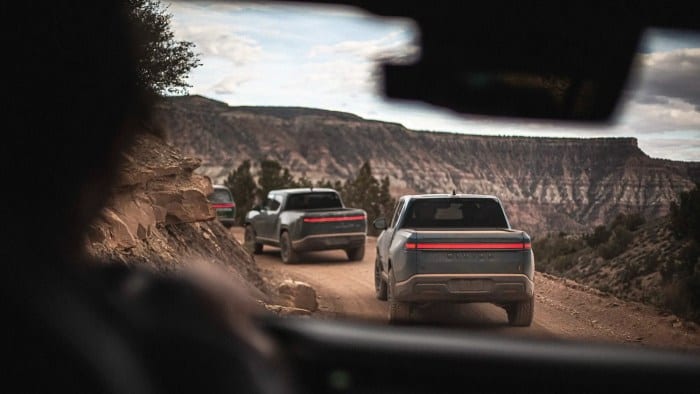
In March, Uber agreed to invest up to $1.25 billion in Lucid‘s competitor Rivian through 2031, with the two companies planning to deploy up to 50,000 R2 robotaxis across 25 cities.
A comparison of the Rivian and Lucid deals shows Uber using a similar financial template — equity investment tied to vehicle purchase commitments — while making fundamentally different bets on the autonomous technology stack behind each programme.
While Lucid uses Nuro’s autonomy stack, the Rivian vehicles will run on the company’s in-house developed software.
PIF’s Position
Saudi Arabia’s Public Investment Fund sits at the centre of the Uber–Lucid relationship.
PIF first invested $3.5 billion in Uber in 2016, one of its earliest major overseas deals under Vision 2030.
It is also Lucid‘s largest shareholder with a roughly 50% stake, having invested approximately $9.5 billion in the EV maker since 2018.
Uber has overtaken Lucid as PIF’s largest US equity holding by market value, according to 13F filings.
On the same day the expanded Uber deal was announced, PIF affiliate Ayar Third Investment Company committed a fresh $550 million to Lucid through convertible preferred stock.
‘Trillion-Dollar Opportunity’
Uber CEO Dara Khosrowshahi has framed the company’s aggressive dealmaking as an insurance policy against disruption.
“We are putting our capital up in order to guarantee supply [of robotaxis] going forward,” the Chief Executive told investors in February. “Much of that supply is going to be on profitable economics (…) and we will continue making these kinds of commitments.”
Although the company has committed to underwrite tens of thousands of robotaxis, it expects fleet management companies, institutional investors and private credit to help finance the deployment.
“The whole system is going to financialize, just as you see data centres financialize as well,” the CEO said.
At the same time, Khosrowshahi has cautioned that robotaxis are yet to scale to a level that is material for the company.
“We added 50 times the trips on the Uber platform this last year than the entire AV industry added,” he said. He has described autonomous mobility as a “trillion-dollar opportunity.”
Uber became profitable in 2023, after having accumulated more than $30 billion in operating losses.
Tesla and Waymo
Uber‘s biggest robotaxi rivals for the next decade are Alphabet’s Waymo and Tesla — both of which are building vertically integrated operations that bypass the Khosrowshahi-led company entirely.
Waymo currently operates across 11 US cities and delivers more than 500,000 paid rides per week using approximately 3,000 Jaguar I-PACE robotaxis.
The company aims to reach one million weekly rides by the end of the year and is preparing international launches in London and Tokyo.
While Waymo has partnered with Uber in secondary markets like Austin and Atlanta, it operates its own app in primary markets — including San Francisco, where its market share stood at roughly 16% in February compared to Uber‘s 62%.
Tesla presents what may be the more disruptive long-term threat.
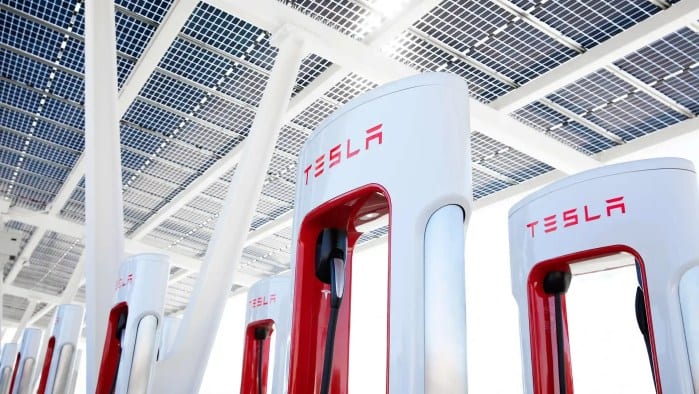
Unlike Uber — which must negotiate with carmakers, autonomy providers and fleet managers — Tesla owns the entire stack: the vehicle, the self-driving software, the ride-hailing app and the fleet.
The company launched unsupervised robotaxi rides in Dallas and Houston in April and currently operates 25 unsupervised Model Y vehicles across three Texas cities.
The major difference is cost.
Morgan Stanley estimates Tesla‘s current robotaxi cost at roughly $0.81 per mile, compared to $1.36 to $1.43 for Waymo.
In Dallas, a Tesla ride undercut Waymo by 56% on the same route within days of launching — a gap expected to widen once the Cybercab scales.
The purpose-built two-seat autonomous vehicle, which has no steering wheel or pedals, began production at Giga Texas in April and is designed to deliver a dramatically lower cost per mile than any fleet Uber can assemble through third-party partnerships.
Drone footage recently showed Tesla ramping up steering-wheel-free Cybercab builds at Giga Texas.
CEO Elon Musk has dismissed the need for ride-hailing partnerships, while Khosrowshahi previously acknowledged that Tesla‘s talks with Uber had fizzled, noting that the EV maker “wants to build it alone.”
Uber‘s pitch to robotaxi operators is that its platform can increase vehicle utilization beyond what any single developer can achieve on its own.