Kia Canada’s Chief Operating Officer played down the threat from BYD, Geely and Chery as the Chinese carmakers prepare to enter Canada, saying their arrival comes with “a lot of hype” and that Kia already holds the market’s affordable end.
“We’re trying to be the first affordable EV brand in the country,” Kia Canada Chief Operating Officer Elias El-Achhab said at Automotive News Canada‘s Retail Forum in Vaughan, Ontario, on October 20, the publication reported.
“There’s a lot of hype,” El-Achhab said of the Chinese newcomers. He added that their impact would depend on how well they enter the market and how they perform over time.
Rather than seeing the newcomers as a threat, Kia sees a chance to reinforce the value of its own vehicles, he said. Asked whether its affordable positioning left Kia more exposed, he replied: “I actually think the opposite.”
The Chinese brands will also arrive without access to a federal rebate that Kia’s cheapest EVs can claim.
KIA’s prices
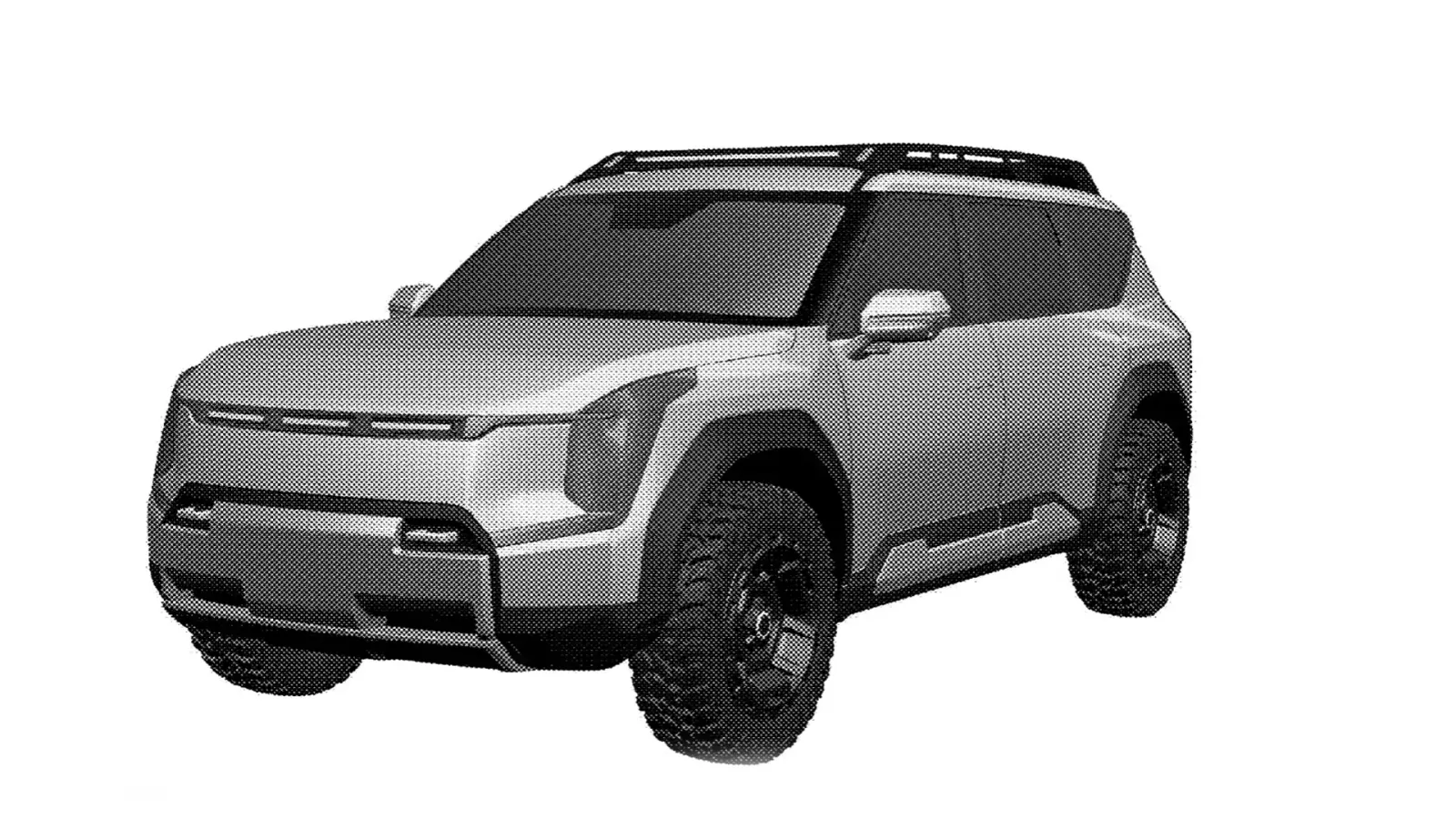
Kia’s entry point is the EV3 subcompact SUV, which launched in Canada this year at C$36,995 ($26,300). With delivery and other fees, it starts at C$39,744 ($28,300).
Kia’s claim to the affordable crown is contested. Nissan‘s new Leaf S undercut the EV3 a month after its launch, at C$34,998 ($24,900), or C$37,966 ($27,000) with fees.
Kia’s electric lineup includes the EV4 compact sedan and the EV5 compact SUV. The EV5, built at Kia’s plant in Gwangju, South Korea, starts at C$43,495 ($31,000), according to Kia Canada.
El-Achhab said the EV3’s price was not set specifically to counter Chinese brands. It was fixed before Ottawa reinstated rebates in February, he said, but the timing gives Kia a chance to put an affordable EV in front of buyers as interest in China-made models grows.
“I thought it was just a bonus,” he said.
Kia’s advantage, El-Achhab argued, is the combination of price and content rather than being the cheapest car in a segment. “Because we are more affordable … and I will reiterate, it’s more of a value equation that we offer,” he said.
A rebate the Chinese cannot claim
That bonus is the biggest structural hurdle for the Chinese brands.
Ottawa’s Electric Vehicle Affordability Program, launched on February 16, pays up to C$5,000 ($3,600) on battery-electric vehicles and C$2,500 ($1,800) on plug-in hybrids, according to Transport Canada.
Eligible vehicles must be made in Canada or in a country with a free-trade agreement with Canada, and those built abroad must sell for no more than C$50,000 ($35,600). South Korea and Japan have such agreements. China does not.
The EV3 and the Leaf S both qualify, taking the EV3’s price with fees to about C$34,700 ($24,700).
The incentive falls to C$4,000 ($2,800) for battery-electric cars in 2027, the year most Chinese brands plan to start selling. A China-built EV would need to be priced about that much below a comparable Kia just to reach the same net price.
The Chinese cars do enter at a low tariff. Under the deal Prime Minister Mark Carney struck with Beijing in January, up to 49,000 China-built vehicles a year can enter at the 6.1% most-favored-nation rate, replacing the 100% surtax imposed in October 2024.
Who is coming, and when
None of the three has named a model, price or dealer for Canada.
Chery’s Omoda & Jaecoo brand became the first Chinese brand to set a Canadian launch window, saying on its website in September that it was “coming late 2026.”
But Chery Vice President Charlie Zhang told Reuters last week that the brand would launch early next year. In May, he had said Chery planned to start with two fully electric models in British Columbia, Ontario and Quebec.
Geely said on October 9 that its mainstream Geely brand would start selling in Canada in 2027 through dealers.
“Trust is earned over time, and we are committed to earning it here,” said Bryan Wu, Managing Director of Geely Auto Canada. The only model its Canadian website names is the Geely E5, sold in China as the Galaxy E5.
BYD’s Canadian website still says “coming soon.” The company has been testing four models in Canada, the Shark pickup, the Sealion 7, the Sealion 06 and the Ti7, and has engaged a dealer-acquisition firm to find sites for about 20 dealerships, starting in the Greater Toronto Area.
Dongfeng‘s Canadian distributor is also targeting 2027.
As many as four Chinese automakers are set to have models certified for Canada by early next year and are nearing the finish line on sales networks with local retailers, Tim Reuss, Chief Executive Officer of the Canadian Automobile Dealers Association, told Automotive News Canada earlier this month.
Unused Quota
Supply will not be the constraint at first. Canada had used 15,931 of the 49,000 permits in the current quota year as of October 23, leaving 33,069 through February 28, according to Global Affairs Canada.
The second six-month window has drawn 328 vehicles, about 1% of its 33,397 permits.
The largest user so far appears to be Tesla, which halted orders for its Shanghai-built Model 3 this month, saying demand had exhausted its import quota. The government data names no automakers.
Tesla’s Canadian public policy lead, Iain Myrans, wrote on LinkedIn that the department tells automakers in advance the maximum volumes they can expect, and Global Affairs Canada has said it is “consulting with interested companies about the remaining quota.”
The rules tighten from March 2027, when at least 10% of permits must go to vehicles with a free-on-board value of C$35,000 ($24,900) or less. That share rises to 50% by 2030, pushing importers toward exactly the price band where the EV3 and the Leaf S compete.
Local Production
A Canadian plant would remove both handicaps, putting cars outside the quota and potentially within reach of the rebate.
Chery Executive VP Guibing Zhang told Bloomberg last week that “even without the American market, Canada is a market that is worth having a factory for manufacturing.” He said Chery was assessing idle plant capacity and talking to investors.
BYD Executive Vice President Stella Li told Bloomberg in March that BYD was studying a wholly owned Canadian factory and did not think a joint venture would work.
Industry Minister Mélanie Joly said in June that BYD, Chery and Geely were willing to explore joint ventures. Any such venture would need majority Canadian ownership, according to The Logic.
Buyers are waiting
The Chinese brands may already be shaping demand before they arrive.
Some 42% of “likely EV buyers” said they might “wait for more Chinese EVs to become available,” according to an Abacus Data poll published by Clean Energy Canada on October 9.
Kia is betting on loyalty once buyers switch. El-Achhab said about 90% of consumers who move into an EV stay in the segment, making the EV3, EV4 and EV5 entry points to the brand.
Orders are backed up for the EV3 and EV5, he said, and Kia’s 196 Canadian dealers could see service customers rise 20% over two years even if sales stay flat.
Kia also sells combustion, hybrid, plug-in hybrid and battery-electric models, which El-Achhab said gives dealers room to adjust to a “yo-yo” policy environment.
“If we can’t control it, we try to find the silver lining,” he said.