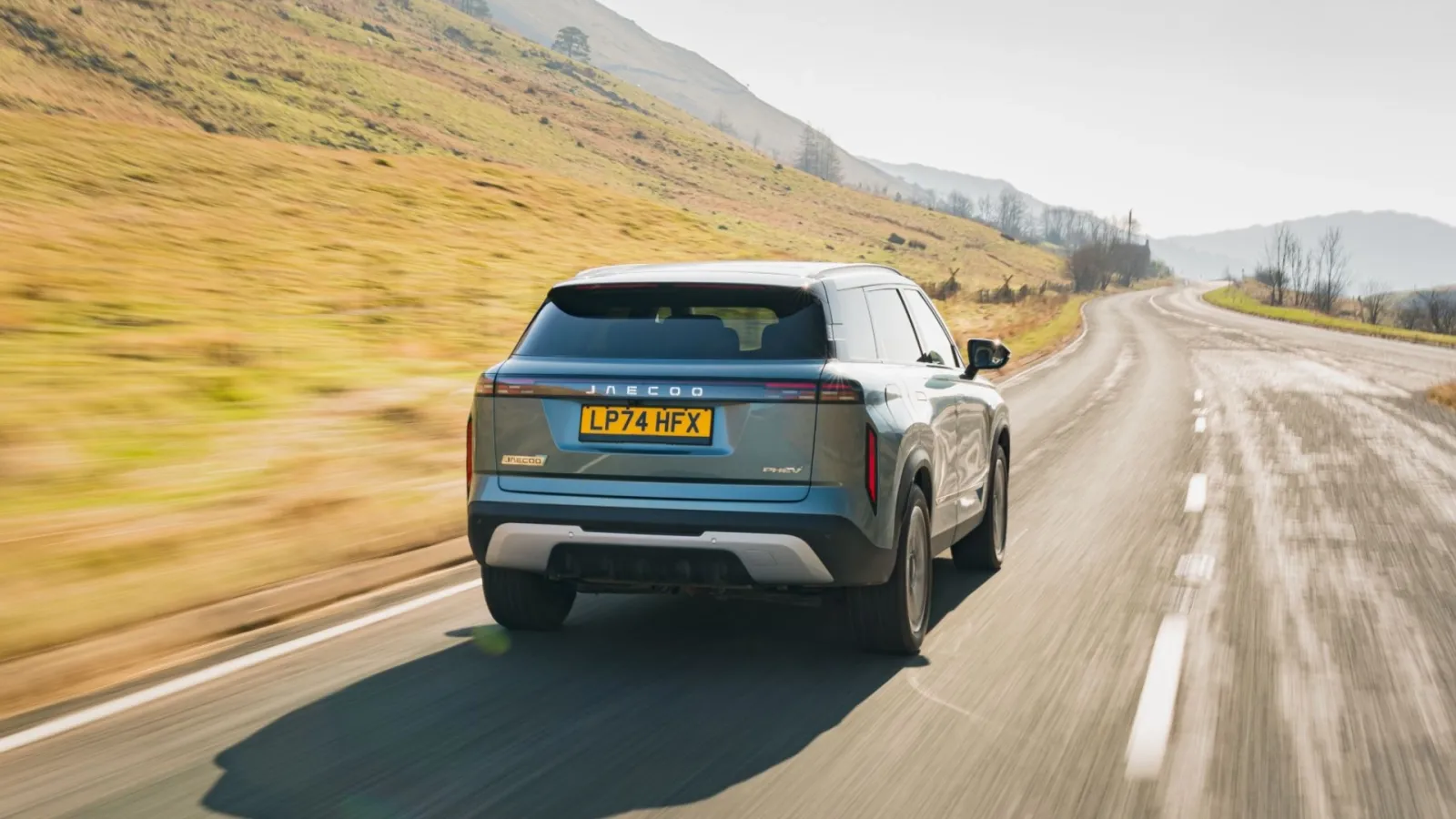
Chery is considering building cars in Canada, including by taking over idle capacity at existing plants or partnering with local investors, an executive said, days after the Chinese carmaker pushed back its Canadian sales launch to early 2027.
“Even without the American market, Canada is a market that is worth having a factory for manufacturing,” Guibing Zhang, Executive VP of Chery, told Bloomberg in an interview at the company’s headquarters in Wuhu.
“We are looking for the suitable opportunity and communicating on the possible formats,” he said.
Chery is assessing idle capacity and speaking to investors in Canada who are interested in Chinese carmakers, Zhang said, without identifying any companies. He did not give a timeline or production volume.
“If we can find some good ways to merge with partners, not only just from investments from Chery but from different parties, and if we can get the manufacturing going — I think that is something that the Canadian government would welcome,” Zhang added.
If it goes ahead, Chery would become the first Chinese carmaker to build vehicles in Canada.
Launch Slips to Early 2027
The production comments came two days after another Chery executive gave a later date for the brand’s Canadian debut.
Chery is preparing to launch in Canada early next year, Charlie Zhang, Vice President of Chery, told Reuters on Wednesday, also in Wuhu.
That is later than the “late 2026” date that Chery’s Omoda & Jaecoo brand set on its new Canadian website in September, which made it the first Chinese brand to give a Canadian launch date.
The website still promised “OMODA & JAECOO, coming late 2026” on Friday, two days after Charlie Zhang gave the later date. Chery has not explained the gap between the two.
Charlie Zhang had said in May that Chery planned to start selling two fully electric models in British Columbia, Ontario and Quebec, and had targeted the fourth quarter of 2026, subject to regulatory approvals. Neither he nor the company explained the delay.
The site still names no models, prices or dealers. It says Omoda & Jaecoo is “building a network across Canada.”
Four Omoda and Jaecoo vehicles, including the electric Jaecoo J5, were photographed in Toronto in April, and prototypes have been seen testing in Ontario. Globally, the two brands sell fully electric models such as the Omoda E5 and Jaecoo E5 alongside several plug-in hybrids, all of which would be eligible under the quota.
The Canadian business is led by Farzad Salehi, Executive VP and Country Director of Omoda & Jaecoo Canada, who previously ran Chery’s Middle East operations.
Charlie Zhang has been in frequent contact with Industry Minister Mélanie Joly, Guibing Zhang said. Joly met Chery, BYD and Geely during a visit to China in June and said at the time that the companies were willing to explore joint ventures.
An Opening Created by Ottawa
Canada opened the door to Chinese cars in January, when it agreed with Beijing to replace a 100% surtax on China-built electric vehicles with a quota.
The quota allows 49,000 vehicles a year, rising to about 70,000 by 2030, at the 6.1% most-favored-nation tariff. It covers battery-electric cars, plug-in hybrids and hybrids.
Demand has been concentrated and uneven. Importers used 15,603 of the 24,500 permits in the first six-month window, which ended on August 31, and the second window started slowly.
As of October 9, 33,069 of the year’s 49,000 permits remained unused, according to Global Affairs Canada data.
Tesla stopped taking orders for its cheapest, Shanghai-built Model 3 versions in Canada this month, saying demand had used up its quota.
The rules tighten from the second quota year, which starts in March 2027, when at least 10% of permits must go to vehicles with a free-on-board value of C$35,000 ($25,000) or less. That share rises to 50% by 2030.
An early-2027 launch would put Chery’s first sales into that second year. A Canadian plant would let it sell outside the quota altogether.
A Crowded Queue
Chery is one of several Chinese carmakers lining up for Canada.
Geely said on October 9 that it would launch in Canada in 2027, without naming models, prices or dealers. It has not said publicly whether it is considering manufacturing there.
BYD has said it is studying a wholly owned Canadian factory and has questioned whether joint ventures would work. It also inquired about taking over Stellantis’ idled Brampton plant to make buses, a local politician said in September. BYD ran a bus assembly plant in Ontario until 2023.
Stellantis is considering exporting China-built Jeeps to Canada from a venture with Dongfeng from 2027, while its own Brampton plant in Ontario sits idle.
Several Chinese brands scaled back their Canadian plans earlier this year, citing the quota’s limits on profitability, and a survey showed Canadian buyers remain cautious about Chinese EVs.
The US Shadow
Any Chinese-owned factory in Canada would sit next to a market that remains closed to Chinese cars.
The US applies tariffs of more than 100% to Chinese-built EVs and rules that bar Chinese software in connected vehicles. US officials have said Chinese cars from Canada will not be allowed to cross the border.
President Donald Trump has drawn a distinction between imports and production, suggesting in September that he might be willing to let a Chinese carmaker build in the US and employ local workers.
A Chery plant in Canada could still strain ties with Washington, as industry watchers see Canada as a launching pad for Chinese EVs into the US, Bloomberg reported.
Chery has said since May that it hopes to enter the US at a suitable time. Charlie Zhang told Reuters this week that Chery was open to “a potential partnership with American carmakers” and that it could find “a China-free solution in terms of hardware and software.”
Canada’s auto industry is already under strain from US tariffs.
The head of the Canadian Vehicle Manufacturers’ Association has urged a return to tariff-free trade under the USMCA, and the association’s President, Brian Kingston, told lawmakers in April that the quota was equivalent to about 30% of the EVs sold in Canada last year.
Canada would add to a growing manufacturing footprint abroad as Chinese carmakers localize production to get around protectionist measures.
Chery has a joint venture plant in Spain to navigate EU tariffs and quotas, has taken over a Nissan factory in South Africa as a hub for the continent and is exploring building cars at Nissan’s Sunderland plant in the UK.