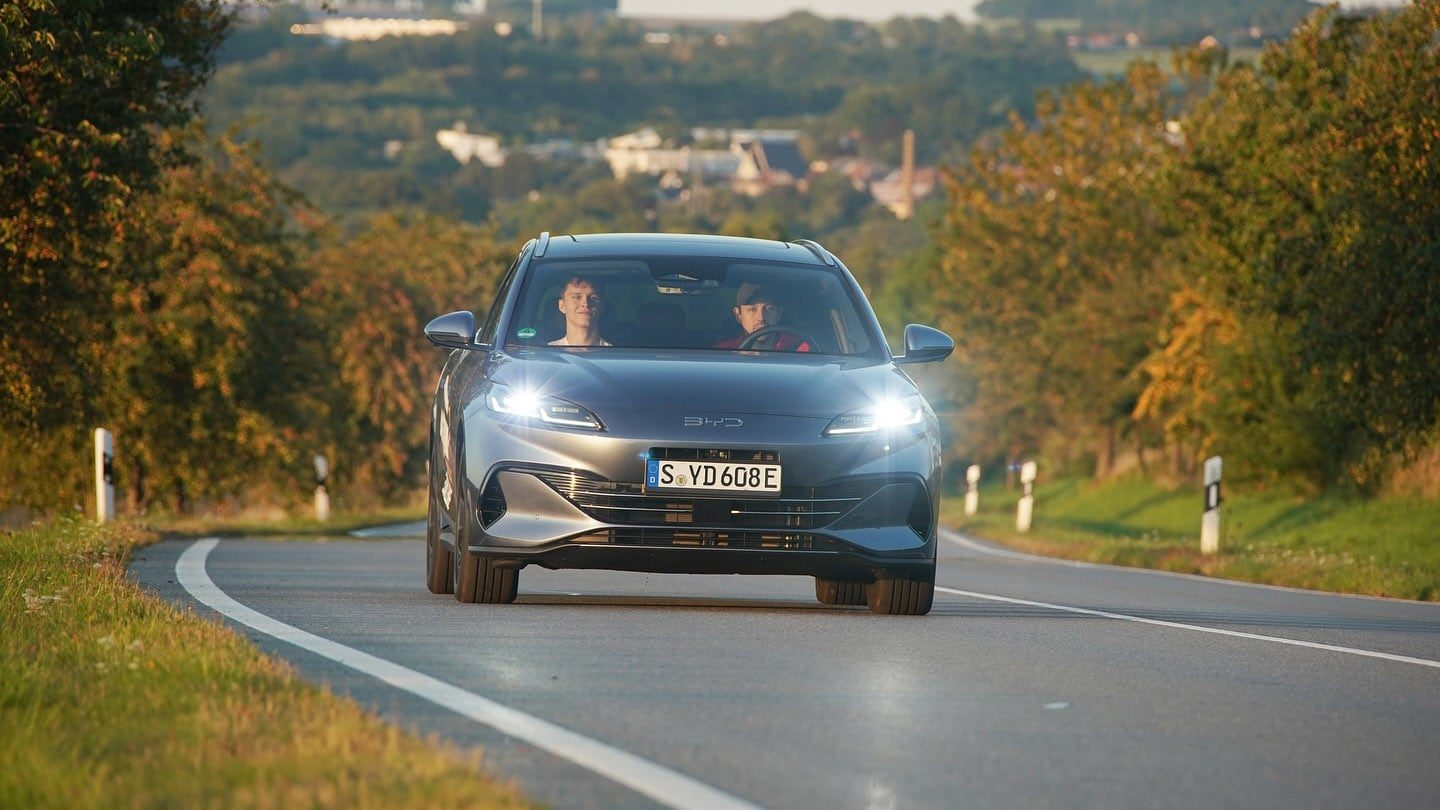

BYD more than doubled its share of the European car market in the first half of 2026, reaching 2.4% across the EU, EFTA and the UK — matching Tesla for the first time as overseas push continues.
Chery — a newer entrant selling largely combustion and hybrid models, which includes not only its main brand but also international-focused Jaecoo & Omoda and Jetour brands — nearly quadrupled its share to 2.2% over the same period.
Data published by the European Automobile Manufacturers’ Association (ACEA) showed on Wednesday that BYD climbed from a 1.0% share in the first half of 2025 to 2.4% in the first six months of 2026.
Tesla, on the other hand, rose from 1.6% to 2.4%.
However, a direct comparison cannot be made as the Chinese giant sells considerably cheaper vehicles, including hybrids.
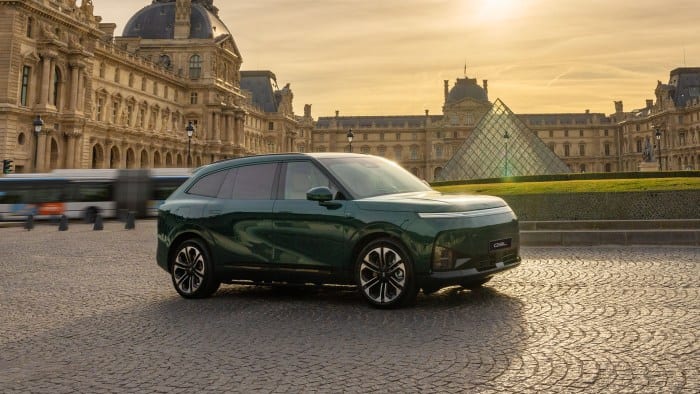
The Elon Musk-led brand only produces fully electric vehicles (BEV), while BYD‘s registrations combine fully electric cars with a growing line of plug-in hybrids (PHEV), most notably the Seal U DM-i, Atto 2 DM-i and the recently debuted Dolphin G.
Chery‘s volumes are overwhelmingly combustion-powered. The Jaecoo 7, offered in petrol and PHEV versions, was the UK’s best-selling new car in March.
The five largest Chinese-owned groups — BYD, SAIC, Chery, Leapmotor and Geely Group — registered a combined 791,958 vehicles in the first half, accounting for roughly 11% of the EU, EFTA and UK market.
Through May, the figure stood at approximately 10.6%.
Beyond market share, the ACEA data confirms BYD has also overtaken Tesla in absolute registrations, with the Chinese autoamker registering 174,144 vehicles in the first half, against Tesla‘s 170,351 — a gap of fewer than 4,000 units.
A year ago, BYD trailed by roughly 39,000 units.
A Market in Transition
BEV, PHEV and hybrid models all gained ground against petrol and diesel in the first six months, according to ACEA data covering the European Union.
A total of 1,220,890 new battery-electric cars were registered, capturing 20.7% of the EU market.
Three of the four largest markets experienced strong growth: France rose 62.9%, Germany 48.0% and Denmark 41.2%. Belgium posted a more moderate 8.2% increase.
Hybrid-electric registrations rose to 2,198,148 units, accounting for 37.3% of the market — the single largest powertrain category — supported by growth in Italy (23.0%) and Spain (20.8%).
Plug-in hybrid registrations reached 577,735 units, with PHEVs now representing 9.8% of EU registrations, up from 8.5% a year earlier, driven by rising volumes in Italy (84.3%), Spain (39.0%) and Germany (17.9%).
Petrol registrations declined 17.2%, with France posting the sharpest drop at 34.2%.
Combined, the two combustion fuels — petrol and diesel — held roughly 30% of the EU market, against nearly 38% a year earlier.
Different Lineups, Different Prices
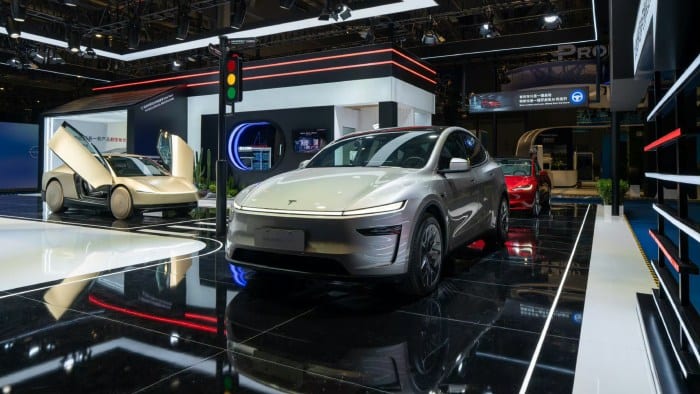
Tesla‘s European range consists of two models: the Model 3 sedan and the Model Y SUV.
The Model Y, produced at Gigafactory Berlin, starts from €40,990 in Germany, while the Model 3, built at Tesla‘s Shanghai factory, starts at around €41,000 in most European markets and from £37,990 in the UK.
BYD fields more than a dozen nameplates spanning BEVs and PHEVs, from the Dolphin Surf — starting in the low €20,000s — to the Sealion 7 SUV and the Han sedan, priced above €69,000 in Germany.
The company has also announced a wave of models designed specifically for Europe — starting with the Dolphin G plug-in hybrid.
Precise European average selling prices are not publicly disclosed by either company.
Globally, Tesla‘s implied average transaction price stands at roughly $41,300 per vehicle; BYD‘s at approximately $20,300 (around 141,000 yuan).
European ASPs for both brands likely run higher than their global averages, but the structural gap remains wide: BYD competes across price segments Tesla does not address.
Tariffs on Chinese-Made EVs
The European Commission imposed definitive countervailing duties on China-made battery-electric vehicles in October 2024 for a period of five years, on top of the EU’s standard 10% vehicle import tariff.
BYD faces a 17.0% countervailing duty, Geely 18.8% and SAIC 35.3%. Cooperating companies not individually sampled — including Nio and XPeng — face 20.7%.
Tesla, which requested an individual examination for vehicles exported from its Shanghai factory, was assigned a 7.8% rate.
The duty applies to the Model 3; the Berlin-made Model Y is exempt.
Crucially, the duties cover only fully electric vehicles.
Plug-in hybrids and combustion-powered cars imported from China currently face only the standard 10% tariff.
Brussels has been reported to be considering whether to extend the countervailing duties to PHEVs — a move that would hit BYD‘s Seal U DM-i and Chery’s growing PHEV range.
However, several of these reports have been either denied or unconfirmed.
Several Chinese companies are opting to localize production in order to bypass the duties, including BYD in Hungary.
Germany
In Germany, Tesla registered 28,857 vehicles during the first half, a 224.6% increase from the same period in 2025, according to KBA data.
The rebound follows a punishing 2025 in which Tesla‘s German registrations roughly halved.
Germany’s reinstated federal EV incentive — offering private buyers between €3,000 and €6,000 — supported the broader recovery.
BYD registered approximately 26,264 vehicles in Germany during the first half, more than tripling its year-earlier figure.
The company set a new monthly record of 6,265 German registrations in June and became the country’s top-selling plug-in brand in May.