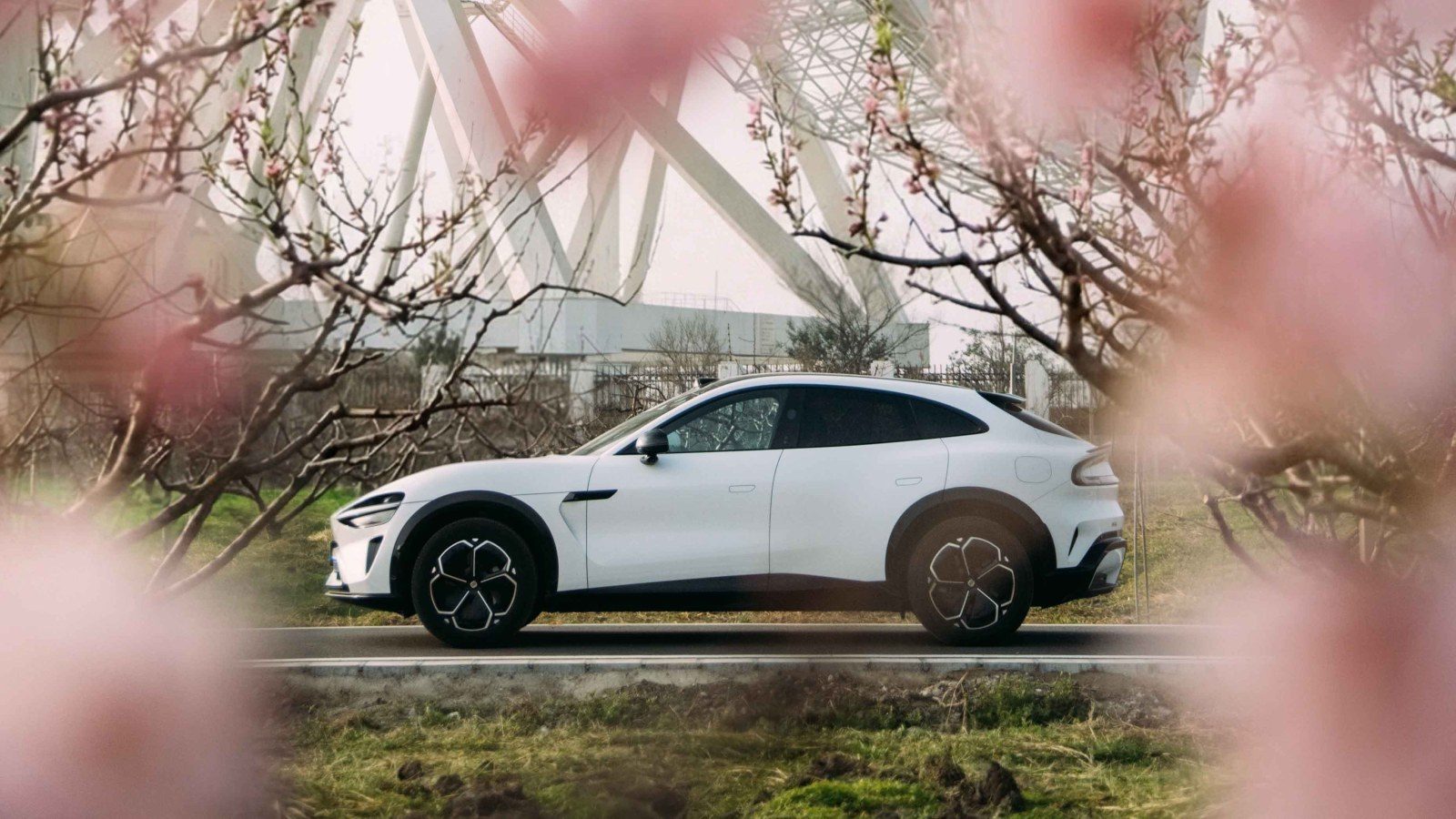

Xiaomi delivered 32,759 electric vehicles in May, a 16.9% increase from a year earlier, according to data released Monday by the China Passenger Car Association (CPCA).
The figures — which confirm the preliminary estimate the company disclosed on June 1 of “over” 30,000 units — represented, however, a 10.7% decline from April.
The CPCA report also provided the model breakdown of the month, revealing that the YU7 SUV delivered 8,736 units in May — down 11.5% from April’s 9,876.
The sequential decline marks the fifth consecutive month of month-on-month erosion for the model, which peaked at 37,869 units in January and has fallen steadily since.
The SU7 sedan accounted for the remaining 24,023 units, down 14.2% year-on-year and 10.5% from the prior month.
May was the eighth consecutive month of year-on-year declines for the SU7, a streak that began during the model’s transition to its second-generation version.
In the first five months of 2026, the sedan delivered 60,082 units, a 54.6% drop from the same period in 2025.
Year-to-date Progress
During the January-to-May period, Xiaomi delivered 150,317 vehicles — an increase of 13.48% from the same period a year ago, when the tech giant only sold the SU7 sedan.
The figure represents 27.3% of the company’s full-year delivery target of 550,000 units, which was reiterated late last month.
The delivery target of 550,000 units represents a 34% increase from the approximately 410,000 vehicles the company delivered in 2025.
The brand delivered more than 79,000 vehicles in the first quarter.
February and March each came in above 20,000, with March weighed down by the SU7 production line switchover to the second-generation model.
To reach the 550,000-unit target, Xiaomi must deliver approximately 399,683 vehicles from June through December — an average of roughly 57,100 per month.
The monthly pace would exceed the brand’s previous peak of 50,212 vehicles, set in December 2025, by about 14%.
YU7 Trajectory
The YU7 was launched in late June 2025 and set an industry record with over 240,000 locked-in orders within 18 hours of opening its books.
Deliveries began in July 2025 with 6,042 units and climbed rapidly, reaching 39,089 in December 2025 and 37,869 in January 2026 —
Since then, however, monthly volumes have fallen sharply. From a January peak of 37,869, deliveries dropped to 20,196 in February, 13,558 in March, 9,876 in April and 8,736 in May.
Total YU7 deliveries in the first five months of 2026 stood at 90,235 units, according to the CPCA.
The decline follows a pattern common among Chinese EV launches, where an initial wave of backlog fulfillment gives way to a lower-demand run rate.
Xiaomi acknowledged the trend and moved to address it with an aggressive product expansion in late May, introducing two entirely new YU7 variants on the same day.
YU7 x Model Y
Xiaomi‘s YU7 SUV outsold the Tesla Model Y by more than double and was named the best-selling vehicle in China in January. Since then, however, the two models followed completely different trajectories.
Tesla‘s wholesale volume for the Model Y reached 54,765 units in May, up 38.55% year-on-year and 5.03% from April, according to CPCA data released on Monday.
A direct unit-for-unit comparison between the two SUVs is complicated by how the CPCA reports Tesla‘s data.
The association does not differentiate between the standard five-seat Model Y and the six-seat Model Y L, which was launched in China in August 2025.
The 54,765 wholesale figure therefore combines both variants and includes vehicles exported from the Shanghai factory. Domestically, 28,911 Model Ys were sold.
Tesla currently sells the Model Y in four variants in China, priced from 263,500 yuan ($38,800).
The Model Y L, its three-row variant, is available from 339,000 yuan ($50,000).
Tesla‘s May performance was partly driven by new vehicle financing policies, including an “Easy Loan” service introduced during the month to lower the purchase threshold for Chinese consumers.
The SU7 was the first model to truly compete with Tesla‘s Model 3.
Xiaomi‘s debut model outsold the Tesla sedan for most of 2025. In 2026, however, sales of both models have fluctuated.
YU7 Standard + GT
In an effort to reverse the YU7’s downward trend and push the brand into higher-premium segments, Xiaomi launched the YU7 GT on May 21 at a starting price of 389,900 yuan ($57,600).
A fully-loaded configuration is priced at 429,900 yuan ($63,500), with an optional GT Sport Package adding 34,000 yuan at list price, discounted to 14,000 yuan during the launch period.
The high-performance SUV produces 1,003 horsepower from a dual-motor all-wheel-drive system with 288 kW at the front and 450 kW at the rear.
The YU7 GT reaches a top speed of 300 km/h, accelerates from zero to 100 km/h in 2.92 seconds and delivers a CLTC-rated range of 705 km (438 miles).
Development was led by Xiaomi‘s European R&D center in Munich, established in March 2025. The YU7 GT is the Munich center’s first production-ready output.
At the same May 21 event, the tech giant launched a new base model of the YU7 at a starting price of 233,500 yuan ($34,400), aiming to lower the barrier to purchase and reignite demand.
The move undercut the previous entry-level YU7 by 20,000 yuan, or about 7.9%, with the older variant rebranded as the YU7 Long Range edition.
Lei Jun framed the model as a renewed challenge to the Model Y, describing it as a vehicle built to “once again challenge the Model Y on sales.”
The co-founder acknowledged during the launch event that cancelling the original standard variant before the YU7’s June 2025 debut had been a mistake, saying the version had been planned three years ago but was dropped at the last minute.
The new YU7 standard carries a 73.0 kWh lithium iron phosphate battery and delivers a CLTC-rated range of 643 km (398 miles).
The rest of the specification mirrors the Long Range edition, retaining the LiDAR sensor, the Xiaomi HAD assisted-driving system and the V6s Plus super motor.
For comparison, the Tesla Model Y rear-wheel-drive carries a 62.5 kWh battery with a CLTC range of 593 km (368 miles).
The pricing positions the YU7 standard below every Model Y trim currently on sale in China.
Additionally, customers who place orders before June 30 receive a five-year low-interest loan and free lifetime access to the HAD assisted-driving system.
Deliveries of the variant began on May 26.