
Only eight of the 20 largest passenger vehicle brands in China by first-half wholesale sales posted year-over-year growth, according to data released over the past week by automakers and the China Passenger Car Association (CPCA).
Most of these brands are heavily exposed to battery-electric and plug-in hybrid powertrains.
Tesla rose 28.4%, the Stellantis-backed Leapmotor surged 60.8%, Xiaomi climbed 17.2%, and the Geely-owned Zeekr nearly doubled with a 96.6% gain.
All four brands had sold only battery electric vehicles (BEV) until recently, as the three latter expanded into the hybrid market.
The notable exception is SAIC-backed MG, which still produces mostly internal combustion engine (ICE) vehicles, but has built a large BEV export business.
The brand saw sales jump 64.7%.
The 12 brands that declined skew overwhelmingly toward internal combustion lineups: Volkswagen fell 34.5%, Changan dropped 40.7%, Nissan slid 20.1% and BMW lost 18.8%.
Even market leader BYD, whose entire lineup is electrified, contracted 21.4% as domestic demand weakened across segments.
Domestic retail sales of passenger vehicles in China fell 20.2% year over year in the first half of 2026, reaching 8.7 million units.
Wholesale figures declined far less steeply — just 5.7% year over year in June — but only because exports surged 82.3% to 877,000 units that month.
Strip out the overseas push and the domestic contraction is sharper than the headline numbers suggest.
Most of China’s largest automakers closed the first half with less than 40% of their annual sales targets completed, leaving a steep ramp ahead as weak consumer confidence, high fuel costs and intensifying competition continue to weigh on domestic demand.
Domestic Giants Stumble
BYD wholesaled 1.549 million passenger vehicles in H1 2026, a 21.4% year-over-year decline.
The drop is all the more striking given that 789,400 of those units — about 43.6% of total volume — were shipped overseas.
The Shenzhen-based automaker has guided to full-year sales of 5.0 to 5.5 million new energy vehicles and raised its overseas target to 1.5 million units in March, leaning on international markets to offset the domestic shortfall.
BYD’s first-quarter net profit plunged 55%, evidence of how deeply the price war has eroded margins even for the market leader.
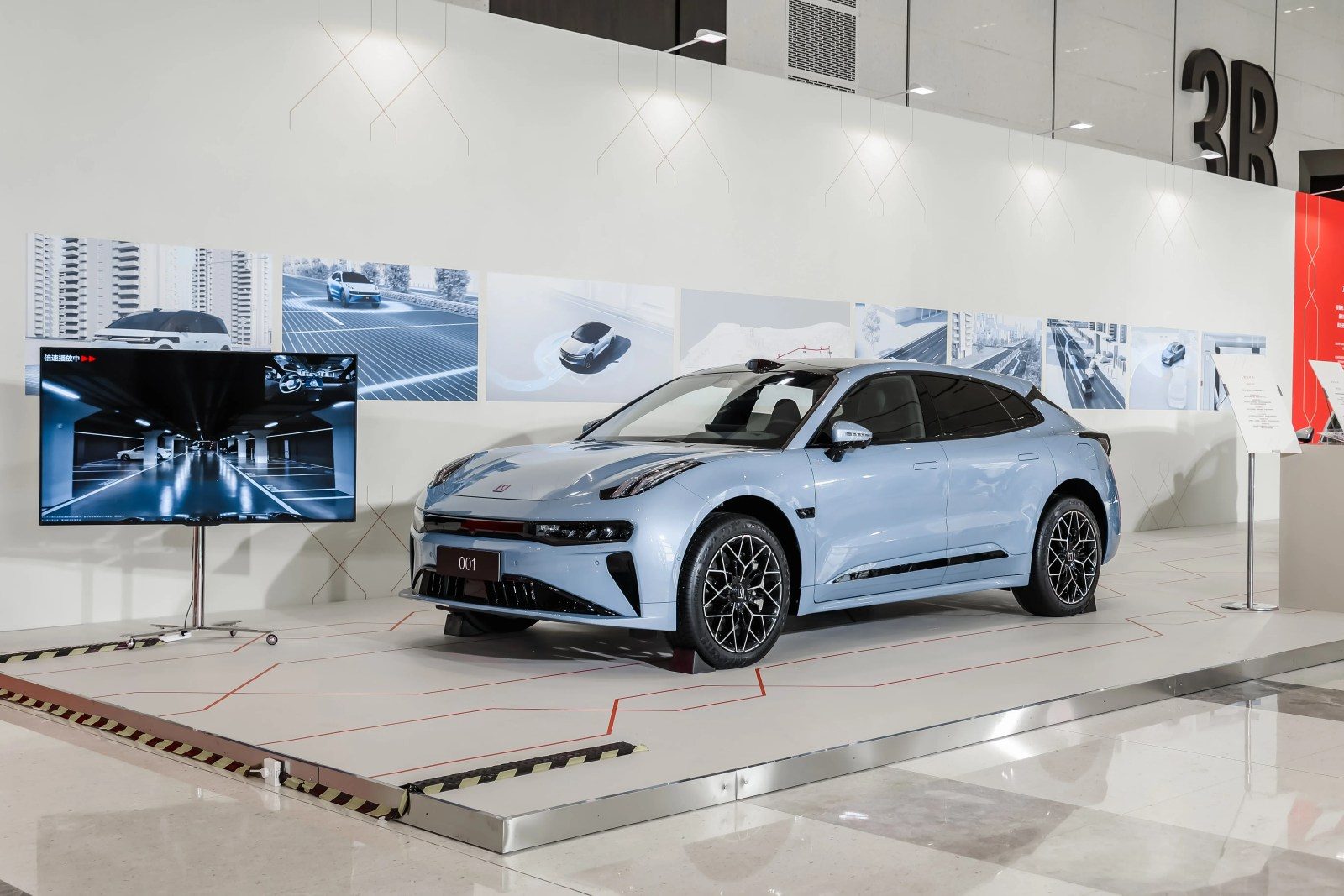
Geely‘s namesake brand fell 14.8% to 575,700 units, though its Galaxy sub-brand grew 7.6% to 519,100 and Zeekr surged 96.6% to 178,400, showing the group’s electrification pivot is producing uneven results.
Changan posted the sharpest decline among major domestic brands, plunging 40.7% to 337,100 units.
Chery stood out as a rare gainer in the wholesale rankings, climbing 14.7% to 907,800 units to consolidate second place.
The growth, however, is largely export-driven — Chery was China’s largest vehicle exporter in 2025, shipping more than 1.2 million cars abroad, and its domestic retail performance has lagged its wholesale gains.
The CPCA flagged earlier this year that Chery recorded the most striking wholesale-to-retail split of any major manufacturer in March, with wholesales rising 12.6% while retail fell 41%.
NEV Brands
Among China’s EV startups, the first half created a widening gap between delivery trajectories and annual targets.
Stellantis-backed Leapmotor sold 356,500 vehicles in the first half, a 60.8% year-over-year increase.
The figure represents just 35.6% of its one-million-unit annual goal.
June’s record 93,376 units was the first month the brand cleared the roughly 83,000-unit monthly pace the target implies — with chairman Zhu Jiangming acknowledging the difficulty while maintaining the goal is achievable.
Nio delivered 191,123 vehicles across its three brands in H1, up 67.4% — a record for the company — and equivalent to between 39% and 42% of its full-year target of 456,000 to 489,000 units.
Clearing even the low end requires a second half roughly 39% larger than the first — a ramp the company expects to lean on the ES9 flagship SUV, the Onvo L80 and L90, and continued Firefly growth to deliver.
XPeng delivered 165,977 vehicles, down 15.8%, leaving under a third of its 550,000-to-600,000-unit annual target banked at the halfway mark.
The brand must deliver at least 384,000 vehicles in the second half — about 2.3 times the first — to reach the lower end of the guidance.
Li Auto registered 193,500 units, down 5.1%, as competition in the premium extended-range segment it once dominated intensified.
European and Japanese Brands
Foreign automakers bore the brunt of the domestic sales decline.
Volkswagen‘s namesake brand wholesaled 593,000 vehicles in the first six months, a 34.5% year-over-year collapse driven by a combustion-heavy China lineup that has left the German automaker acutely exposed to the fuel-to-electric shift.
VW Group‘s Audi fell 17.7% to 221,200 units.
Porsche — not among the top 20 by volume — delivered just 14,501 vehicles in China in H1, a 32% plunge that left the sports-car maker selling fewer cars in the country than in Germany for the first time.
German giant BMW declined 18.8% to 212,800 units.
Among Japanese brands, Toyota fell 9.3% to 651,600 and Nissan dropped 20.1% to 195,700.
The CPCA attributed the collapse of foreign brands’ combustion-heavy lineups to the same dynamic driving the broader market: “high oil prices and evolving consumer behavior accelerated the ‘fuel-to-electric transition.'”
In June, joint ventures’ fuel vehicle retail sales fell 39%, while their NEV sales rose 45% — a gap that illustrates the urgency of an electrification shift most foreign players have been slow to execute.
Joint-venture brands’ share of the Chinese market stood at 20.5% in June, with German brands at 12.8%, Japanese at 11.0% and American at 5.8%.
Dealer Pressure
Beneath the wholesale figures, distribution channels are showing acute stress.
The China Automobile Dealers Association’s Vehicle Inventory Alert Index stood at 57.2% in June, above the warning line, with the majority of dealers missing their first-half targets.
The CPCA said dealerships are “widely reporting losses” and that “operational risks are rising,” while total passenger vehicle inventory declined by 480,000 units in H1 — nearly three times the 170,000-unit drawdown in the same period of 2025.
Automaker profitability has deteriorated in parallel.
The industry’s sales profit margin fell to 3.4% in January through May, a figure the CPCA described as “the lowest in five years” and significantly below the 6.1% average for downstream industrial enterprises.
Surging upstream costs in non-ferrous metals and semiconductors, combined with sluggish retail demand, have squeezed earnings from both sides.
According to the CPCA, the intense price war from the first half “has clearly subsided” and that competition is “rapidly pivoting toward intelligent features, safety performance, and real-world range capabilities.”
The association’s forecasting team has revised its full-year 2026 retail volume growth projection to negative 14%, a figure it called “the most pessimistic June forecast on record.”
Combined with international crude oil prices dropping toward $70 per barrel, the CPCA expects pent-up demand to begin releasing in the third quarter — though it cautioned that wholesale-to-retail gaps are likely to widen further before terminal sales recover.