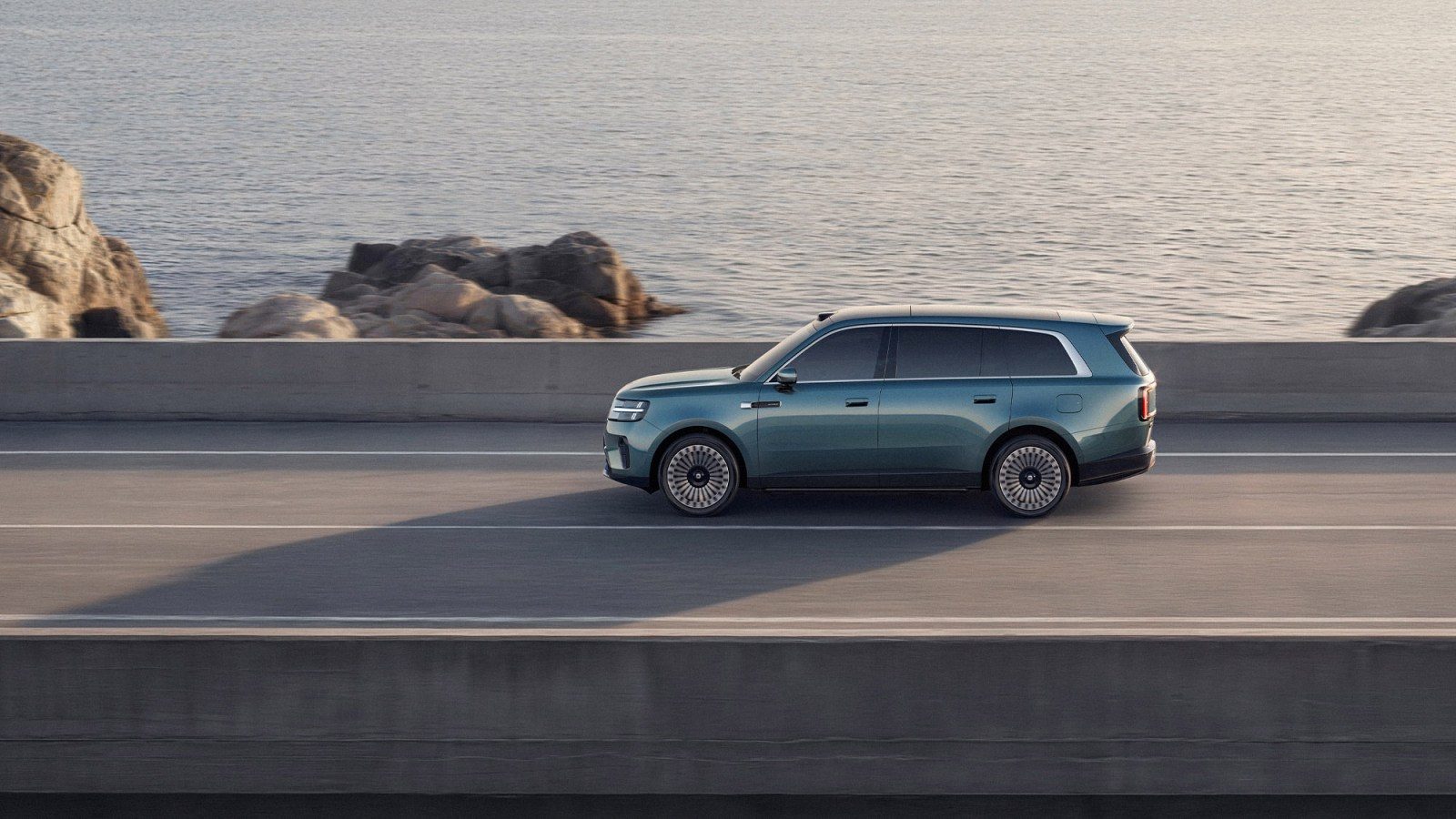

Xiaomi co-founder and chief executive Lei Jun said on Thursday that the SkyNomad N90 Max delivers a combined range of 1,705 kilometres on China’s CLTC cycle, unveiling the company’s first extended-range powertrain at a technology event in Beijing.
The smaller N70 Max was given a pure-electric CLTC range of up to 505 km.
Both figures come from Xiaomi‘s own presentation and are measured on the CLTC cycle, which is materially more generous than the WLTP standard used in Europe or the EPA ratings applied in the United States.
What Was Announced
The event, held at 7:00 p.m. Beijing time, introduced what Xiaomi calls the ‘Kunlun’ architecture, built around three elements: the Kunlun platform, the Kunlun Super Range Extender and a full-domain safety system.
The range extender is a 1.5-litre turbocharged unit designated M15DRE, developed with Harbin Dongan Auto Engine, a Changan subsidiary.
Output is 112 kW, and the engine charges the battery rather than driving the wheels.
Lei said seven core components were developed specifically for the unit and a further 57 were redesigned.
Fuel consumption on a depleted battery is quoted at 6.26 litres per 100 km on the WLTC cycle for the N90 Max, with a lower figure of 5.7 litres per 100 km for the N70 Pro. The engine accepts 92, 95 and 98 octane petrol.
Maintenance after the first service is scheduled once every three years or 30,000 km of range-extender operation, with an eight-year or 160,000 km warranty on the range extender and the electric drive system.
The Battery and Range Figures
Two packs are offered: a 52 kWh lithium-iron-phosphate unit supplied by Sunwoda and a 76 kWh ternary lithium pack from CALB.
On the 76 kWh pack, Xiaomi puts pure-electric CLTC range at up to 505 km for the N70 Max and 464 km for the N90 Max.
Regulatory filings had earlier listed WLTC pure-electric range for the N90 Max at 363 to 370 km, and entry N70 models on the 52 kWh pack at 270 km WLTC.
The gap between those sets of numbers is the cycle rather than the car. CLTC figures typically run well above WLTC for the same vehicle, and both sit above what a driver would see at sustained motorway speed.
The 1,705 km combined figure assumes a full battery and a full fuel tank, and represents the theoretical maximum before either is exhausted.
The Cabin Is the Product
Xiaomi has positioned the platform around interior reconfiguration rather than performance.
The company says it began developing the Kunlun architecture from scratch in early 2023, specifically to allow the cabin to be rearranged, and that the series took three and a half years to complete.
The floor is flat front to rear, with rear floor height reduced to 298 mm, and Xiaomi claims up to 4.4 square metres of usable interior area. The N90 Max runs six seat rails extending to 1,938 mm.
Detail released later in the evening set out how the cabin reconfigures.
The first-row seats rotate under power, operable by voice through Xiaomi‘s ‘Xiao Ai’ assistant, and the centre console slides back to the second row to serve as a table. An optional board can be fitted to it.
Xiaomi gave three figures for the resulting layouts.
In what it calls facing-seats mode, occupant space for two reaches a maximum of 1,760 mm. A four-person arrangement leaves 1,370 mm in the second row. With the second and third rows slid fully back, maximum space reaches 1,550 mm.
Boot volume is quoted at 1,831 litres with a tailgate sill height of 690 mm, which Xiaomi presents as suited to loading bulky items and to pitching rear and side awnings from the vehicle.
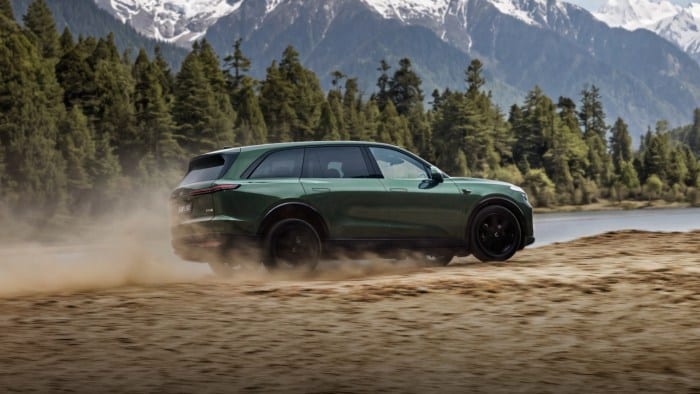
The N90 Max measures 5,285 mm long, 1,998 mm wide and 1,825 mm tall on a 3,080 mm wheelbase, in five-seat and 2+2+3 seven-seat configurations. A camping variant with a pop-up roof stands 1,925 mm tall.
The N70 Max measures 4,960 mm long on a 2,950 mm wheelbase and is offered only as a five-seater.
Entry N70 models pair a single 210 kW rear motor with the 52 kWh pack. The N70 Max and N90 add a 100 kW front motor for 310 kW combined. Top speed across the range is limited to 190 km/h.
Testing
Xiaomi has put unusual emphasis on validation for its first non-electric powertrain.
The company said the series had accumulated 626 days of testing across two winters and two summers as of June 30, using 566 vehicles over 4.28 million kilometres.
The N90 Max prototype, identified in filings as KV235, has covered more than 60,000 km since January.
Pricing
No prices had been announced as of publication time.
A separate commercial launch is expected in mid-to-late August, likely timed to the N90’s public appearance at the Chengdu Auto Show on August 21.
Chinese reporting has suggested a starting price near 200,000 yuan, roughly $29,400, which would undercut the Li Auto L9 and the Aito M9. Both start above 250,000 yuan, and their makers accounted for seven of China’s ten best-selling extended-range SUVs in 2025.
Reports have also indicated more than 10,000 units built and ready for delivery at launch.
Why Xiaomi Needs It
SkyNomad is Xiaomi‘s second vehicle series after the SU7 saloon and YU7 SUV, and its first departure from battery-electric powertrains. China’s industry ministry cleared the company to build extended-range vehicles at its Beijing plant in June.
The commercial logic is straightforward. Xiaomi delivered 185,055 vehicles in the first half of 2026, up 17.2% year over year but around a third of a full-year target of 550,000 units. Reaching that number depends on a series that has not yet gone on sale.
The move also puts Xiaomi on the opposite side of an argument running through the Chinese market this week.
Onvo brand chief Shen Fei used the L90’s first anniversary on Wednesday to argue that the era of range-extended three-row SUVs is ending, citing a coming tax change and his own delivery figures.