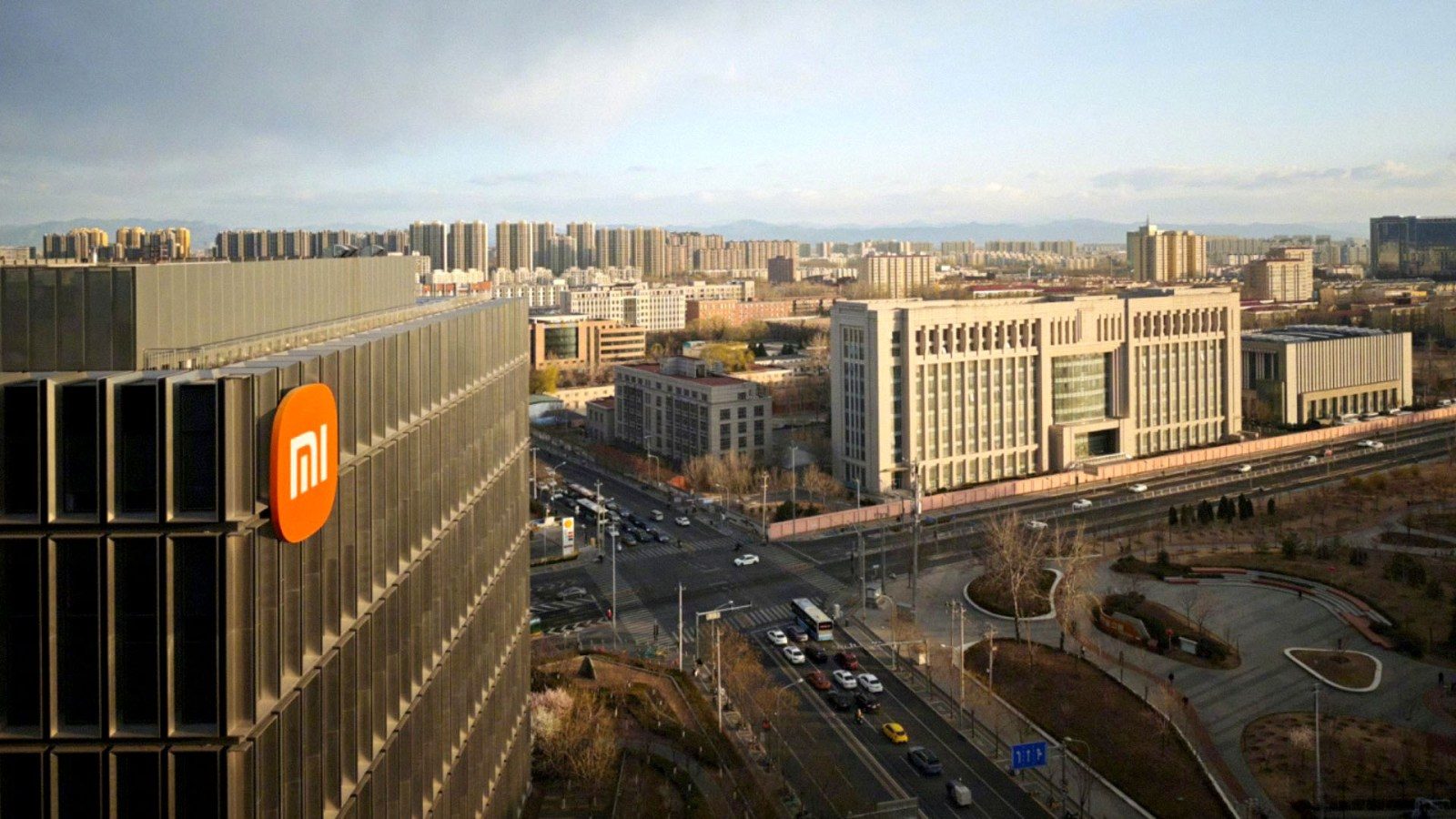

Xiaomi has made its first investment in the battery swapping sector after years of focusing on fast-charging partnerships and battery supply chain deals, acquiring a 23.08% stake in a newly formed Hangzhou-based operator.
According to corporate registration records, the investment was made through the wholly owned subsidiary ‘Hanxing Venture Capital’, which invested 30 million yuan ($4.4 million) in ‘Zhejiang Xinglixing New Energy Technology Co., Ltd.’
The investment coincided with an increase in the company’s registered capital from 100 million yuan to 130 million yuan ($19.2 million).
Founded in February, with legal representative Shen Hao, Xinglixing’s business scope covers new energy vehicle (NEV) electrical accessories sales, battery sales, battery-swap facility sales, emerging energy technology research and development, and auto parts retail.
‘Zhejiang Jinrui Automobile Sales Service Co., Ltd.,’ a Hangzhou-based company founded in 2007 with long-term operations in vehicle sales, dealership networks and after-sales services, retains the controlling 76.92% stake.
The startup’s profile — a regional operator leveraging an established automotive services company’s dealership and after-sales resources — sets it apart from the technology-heavy or capital-intensive approaches pursued by Nio and CATL.
A Light-Asset Bet
Chinese media outlets including Securities Times and NetEase framed the investment as a low-cost, light-asset entry into battery swapping — a stark contrast to the capital-intensive path Nio has taken over the past eight years.
As of late 2024, the Shanghai-headquartered EV maker had invested more than 20 billion yuan (nearly $3 billion) in charging and battery swap infrastructure since opening its first swap station in Shenzhen in 2018.
The company currently operates 3,991 battery swap stations in China — just nine short of the 4,000-station milestone — and has targeted more than 1,000 net additions this year.
Xiaomi‘s 30 million yuan outlay buys a minority stake in a five-month-old company.
Until now, Xiaomi‘s energy strategy has relied primarily on light-asset cooperation.
The company has secured access to more than 1.26 million third-party charging piles through partnerships with Nio, XPeng and Li Auto, and has developed its own 600 kW liquid-cooled supercharging technology.
Chinese media described the Xinglixing stake as evolving the strategy from “fast charge plus cooperation” toward “fast charge plus swap plus cooperation.”
Product Mismatch
None of Xiaomi‘s current or announced vehicles are compatible with battery swapping.
The SU7 sedan and YU7 SUV are fully electric vehicles (BEV) built on a 800-volt fast-charging architecture.
Additionally, the timing of the investment surfaces in corporate filings just as Xiaomi unveiled its first hybrid models.
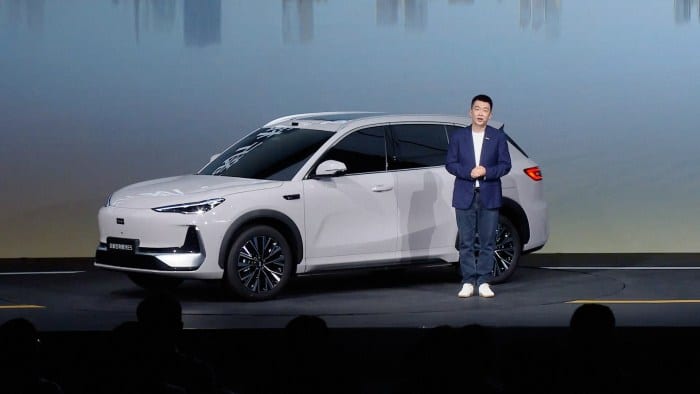
The company’s newly launched SkyNomad series — the N70 Max and N90 Max extended-range SUVs that debuted on July 30 — use a gasoline-electric range-extender (EREV) powertrain, making them structurally incompatible with swapping.
The SkyNomad launch triggered an indirect exchange between Xiaomi‘s co-founder and Chief Executive Lei Jun and Nio‘s former Senior VP and current Onvo brand chief Shen Fei over the merits of extended-range vehicles versus pure electric vehicles.
Lei Jun defended the EREV format, arguing that demand for range-extended vehicles remains robust and that the choice between powertrains has never been about taking sides in a technological debate.
Hours before Xiaomi‘s SkyNomad launch event, Shen mounted a defense of battery electric vehicles, citing Onvo’s own sales data and policy tailwinds — including the end of China’s transitional tax incentives for EREVs starting January 1, 2027.
Nio remains one of the few Chinese automakers still committed exclusively to electric powertrains, and its battery swap network is central to that position.
Founder and CEO William Li has argued that battery swapping provides an alternative to hybrid powertrains for addressing range anxiety, and the company has invested heavily to support that claim.
Nio’s Lead
Nio‘s dominance in China’s battery swap market remains clear by scale.
The company has built more than 9,000 combined battery charging and swapping stations and provided more than 200 million cumulative charging and swapping services.
In 2025 alone, Nio generated roughly 3.1 billion yuan ($458.9 million) in battery swapping service revenue, ranking first among domestic operators.
Beyond its own network, Nio has also invested in third-party operators.
Through Nio Capital, a private equity firm co-founded by William Li, the company invested a combined 400 million yuan ($59.3 million) in Aulton New Energy across two funding rounds.
Nio Capital currently holds a 5.53% stake in Aulton, making it the third-largest shareholder in the operator, which recently refiled for a Hong Kong listing.
CATL, the world’s largest battery maker, has emerged as the most aggressive challenger.
The company entered the swap market at the end of 2024 with its Choco-SEB system, adopting an open platform strategy that provides standardized battery swapping solutions for automakers across the industry.
By the end of the first half, CATL had deployed 2,000 Choco stations across 180 cities and targets more than 3,000 by year-end, covering more than 190 cities.
On the vehicle side, the Choco-SEB system has secured cooperation with 11 automakers covering 18 brands, with 25 battery-swappable models planned and six already launched.
The contrast in build rates is significant.
CATL added 980 stations in the first half of 2026 at an average of 163 per month.
Nio has added 315 across the first seven months, averaging 45 per month. The company has acknowledged repeatedly that its front-half slowdown was driven by holding back fourth-generation builds while waiting for fifth-generation hardware.
Large-scale deployment of Gen 5 stations began this week, with Nio targeting more than 100 new openings per month from September.