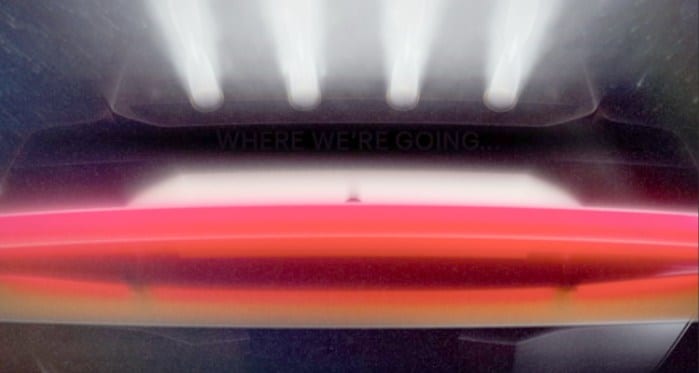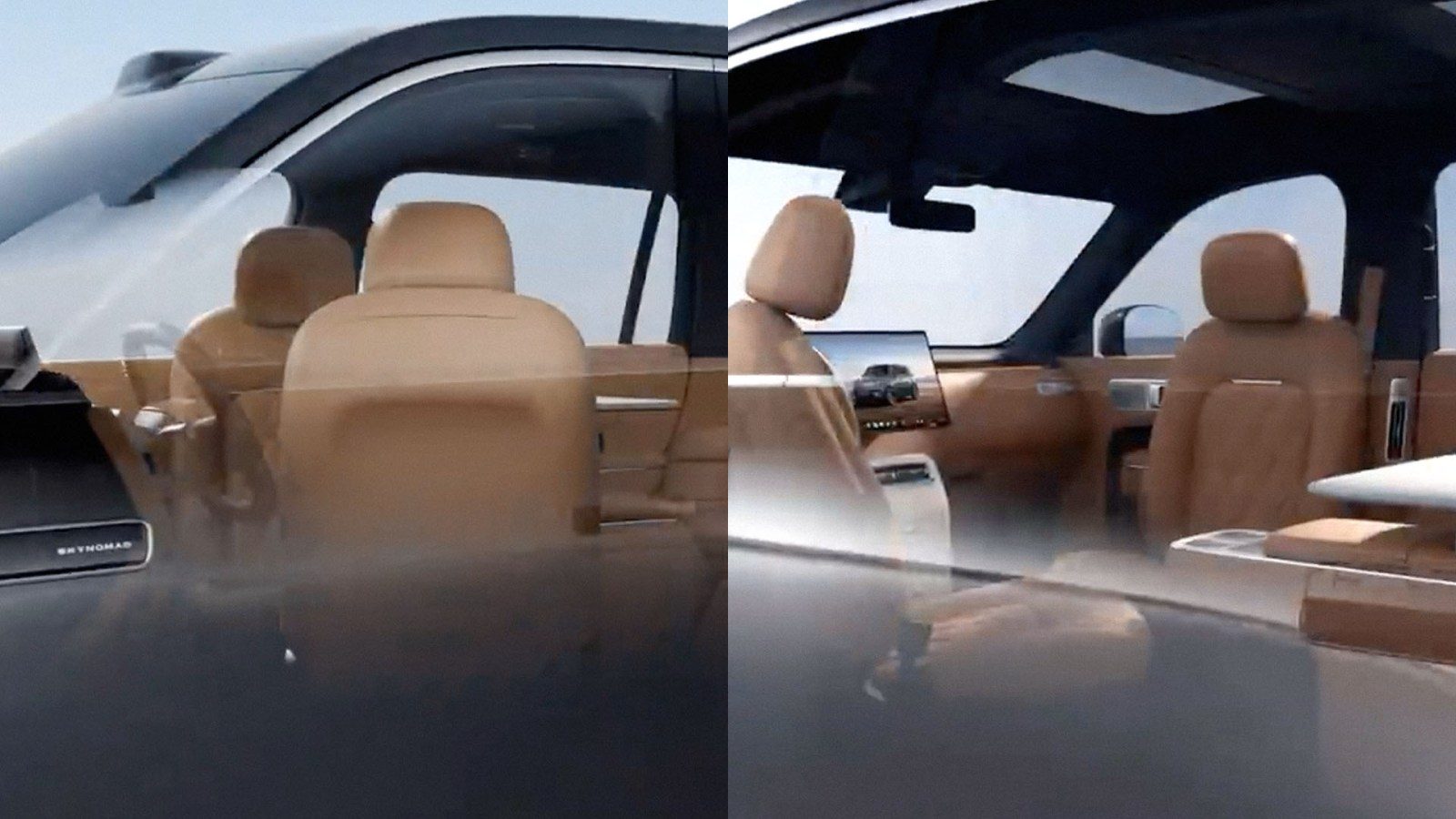

Xiaomi unveiled on Thursday the first cabin and side-profile images of its debut Sky Nomad model, a full-size extended-range electric (EREV) SUV.
The tech giant’s third model features a transformable interior unlike anything the company has built since entering the auto industry in 2024, with the fully electric SU7 sedan.
Co-founder and chief executive Lei Jun confirmed on Weibo that Sky Nomad is Xiaomi‘s second product series — not the standalone sub-brand that had been rumored for months.
Comparing the series with its two first models on X, the CEO wrote that “the Xiaomi SU7 and Xiaomi YU7 are positioned as ‘the driver’s car’,” while the “Xiaomi SkyNomad is positioned as ‘an intelligent, reconfigurable, large-space SUV’.”
Lei declined to give a precise launch date for the upcoming model — which is also the first EREV under its auto unit — telling followers only that the vehicle is “coming soon.”
Reservations opened on Thursday.
Interior Details
Xiaomi presented the — internally codenamed N90 — model’s cabin through animated schematics and floor-plan diagrams posted on the Sky Nomad Weibo account, describing the layout as an “SUV shape with an MPV cabin.”
Front-row seats rotate 180 degrees to face the second row, turning the first two rows into a face-to-face arrangement.
A floor-standing table slots between them in this configuration, creating what Xiaomi called a “living room” layout.
A sliding center armrest extends rearward. With a tabletop accessory inserted into the cup holder, the armrest forms what the company described as a “bar counter.”
Xiaomi‘s teasers suggest the console may be movable.
Second and third rows can be arranged in multiple layouts, according to the company.
With all three rows deployed, the vehicle still holds at least seven pieces of luggage, though specific dimensions were not disclosed.
Boxy Styling and Outdoor Push
Externally, the N90 marks a sharp break from the aerodynamic curves of the SU7 and YU7.
A boxy, upright silhouette replaces the swooping roofline that defined Xiaomi‘s first two models, while electrically deployed door steps reflect the vehicle’s height.
Previous spy photos showed a seven-seat variant fitted with a built-in roof tent, underscoring the outdoor positioning that Sky Nomad’s branding has emphasized since Xiaomi began filing trademarks under the name in August 2025, according to records from China’s National Intellectual Property Administration.
“Many people spend two hours commuting every day. Sometimes they take a nap in their car during lunch. Sometimes they work from inside the vehicle,” Lei Jun wrote on Weibo. “On weekends they travel with their families. When camping, they hope the car can become a second home.”
According to the co-founder, “for these people, a car is no longer just a means of transportation.”
Sky Nomad addresses what he said Xiaomi had asked itself since early 2023: how to make a vehicle that genuinely makes people feel at ease.
First EREV, Direct Challenge to Li Auto
Xiaomi began developing the ‘Kunlun’ Architecture entirely from scratch in 2023.
Every vehicle produced by the tech giant so far — from the SU7 sedan that debuted in March 2024 through the YU7 crossover — has been a pure battery-electric vehicle (BEV).
Sky Nomad breaks that pattern.
China’s Ministry of Industry and Information Technology approved Xiaomi to produce extended-range electric passenger vehicles at its Beijing plant last month, clearing the regulatory path for the series.
The N90 pairs a 1.5-liter turbocharged engine — functioning solely as a generator that never drives the wheels — with a battery pack exceeding 70 kWh.
Pure-electric range is estimated at 400 to 500 kilometers (248–310 miles) under China’s CLTC cycle.
Battery supply will be split between Sunwoda (60%) and CALB (40%), per Chinese outlet 21jingji. Dual-motor all-wheel drive is expected.
Stretching beyond 5.3 meters in length with a 3.1-meter wheelbase, the N90 will be offered in five- and seven-seat configurations.
Starting prices are expected to reach as low as 200,000 yuan ($29,400), placing Sky Nomad in direct competition with Li Auto and Huawei-backed Aito — brands that together accounted for seven of the top 10 best-selling extended-range SUVs in China in 2025.
Volume Gap
Sky Nomad arrives as Xiaomi works to close a widening gap against its 550,000-unit delivery target for 2026.
CPCA data shows the tech giant delivered 34,738 vehicles in June, up 36.5% year-over-year, lifted by a rebound in the YU7 SUV to 14,324 units after five consecutive months of sequential decline.
Xiaomi attributed the recovery in part to a late-May product expansion: a cheaper YU7 Standard variant starting at 233,500 yuan ($34,300) debuted on May 21, significantly lowering the entry price.
On the same day, Xiaomi launched the high-performance YU7 GT starting at 389,900 yuan ($57,300), a 990-horsepower dual-motor SUV that set the fastest production-SUV lap at the Nürburgring Nordschleife.
SU7 sedan deliveries came in at 20,414 units, down 12.1% year-over-year and extending a ninth straight month of annual decline during the model’s generational transition.
First-half cumulative deliveries reached 185,055 vehicles — roughly 34% of the annual target.
Reaching 550,000 units demands average monthly volume of about 60,000 across the second half, well above the brand’s all-time peak of 50,212 set last December.