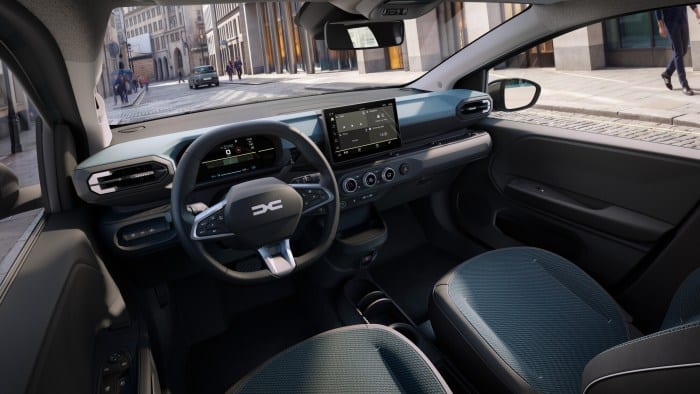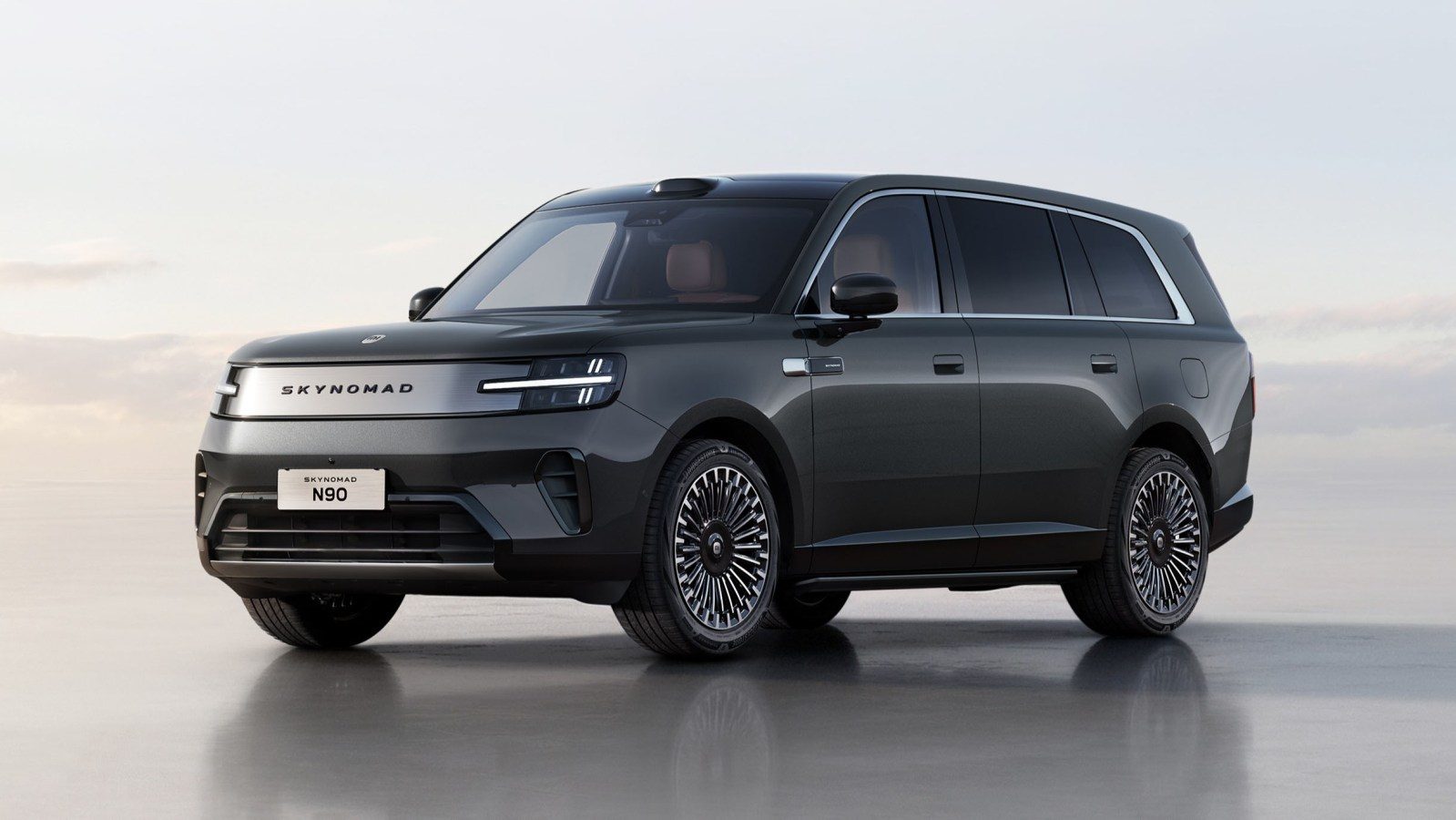

The newly released China Passenger Car Association’s model-level breakdown shows that consumers have been increasingly looking into flagship models such as the Zeekr 9X, the Li Auto L9 Livis, Nio ES9, the XPeng GX, the Leapmotor D19, and Xiaomi’s new series SkyNomad.
China’s volume league is led by cars priced below 100,000 yuan, while much of its revenue league belongs to companies delivering 20,000 to 36,000 cars a month at 235,000 to 435,000 yuan.
Leapmotor delivered 101,267 vehicles in July, the first monthly six-figure total ever posted by a Chinese EV startup and roughly the combined volume of Nio, XPeng and Li Auto.
Measured in vehicle revenue, that lead largely disappears.
Applying each company’s most recently disclosed selling prices to its July volume, Leapmotor‘s record month implies roughly 9.9 billion yuan, while Nio Inc.‘s 35,934 deliveries — barely a third as many vehicles — produced between 9.8 billion and 11.8 billion yuan ($1.5 billion and $1.8 billion).
Both figures rest on first-quarter prices applied to a July mix that has since moved, and the association’s breakdown, published Tuesday, shows it moving upward at almost every company in the comparison.
The Method
The comparison began circulating on Monday, when a revenue ranking posted by Weibo auto blogger Remi雷米侃电车 — an account with about 104,000 followers — spread across Chinese social media; the table itself was labeled as user-estimated, with average prices guessed rather than sourced, so EV rebuilt the exercise from company disclosures instead.
None of the major Chinese EV makers has reported second-quarter earnings, leaving first-quarter filings as the latest audited-adjacent price data.
Nio, XPeng, Xiaomi and Li Auto are all due to report over the next four weeks, with XPeng confirmed for August 24 and Li Auto for August 26, each with a call at 8:00 a.m. Eastern Time. Nio and Xiaomi have yet to set a date.
EV derived each company’s average selling price from those filings — vehicle revenue divided by deliveries — or from figures company executives have put on the record, and applied the results to July’s disclosed delivery totals.
BYD, Geely, Chery, Changan and Tesla‘s China operation are excluded from the derived table as their disclosures do not isolate NEV vehicle revenue.
BYD‘s automotive segment mixes in batteries and electronics, and Tesla does not break out China, though BYD‘s 411,072 passenger NEVs in July would top any revenue ranking on scale alone.
Two Companies, One Revenue Line
Leapmotor‘s first-quarter total revenue of 10.82 billion yuan against 110,155 deliveries implies about 98,200 yuan per vehicle, and less once parts and technology sales inside that revenue line are stripped out.
Nio Inc.‘s consolidated average selling price reached roughly 273,000 yuan in the first quarter, up 15.6% year over year, which applied to July’s volume yields about 9.8 billion yuan.
Building the same month from brand-level disclosures pushes the figure higher.
The premium brand’s July average transaction price of 434,600 yuan, disclosed by VP of Branding and Communications Ma Lin, produces about 8.7 billion yuan from the brand’s 20,008 deliveries alone.
Onvo‘s 10,155 vehicles at a company-stated average above 240,000 yuan and Firefly‘s 5,771 at 119,800 yuan are added, for a blended total near 11.8 billion yuan.
Either way, a group delivering barely a third as many vehicles sits level with — or above — the country’s startup volume champion in revenue terms.
It does so from a month that was down across every brand.
Nio Inc.‘s July fell 11.5% from June, with the Nio brand off 8.7%, Onvo 13.5% and Firefly 16.9%. The parity holds between Leapmotor‘s best month on record and one of Nio‘s weaker sequential months of the year.
The association’s model split, unlike the price assumptions elsewhere in this comparison, closes exactly.
The Nio brand’s nine models account for 19,972 retail units, and the 36 vehicles exported in July bring the total to the 20,008 the company announced.
That split independently supports Ma Lin’s figure.
The ES8 at 10,284 units, the ES9 at 6,311 and the ET9 at 97 together supplied 83.6% of the brand’s July volume, and all three start above 380,000 yuan.
The ES8 is priced from 382,800 in its new five-seat form and 406,800 in six- and seven-seat layouts, the ES9 from 498,000 and the ET9 at 768,000.
The six older models below them, from the ES6 down to a single-digit ET7 and two discontinued EC7s, accounted for the remaining 16.4%.
The same three models supplied 77.7% of the brand’s first-quarter volume, when the ES9 did not yet exist, which is the mix behind a first-quarter brand average of 390,000 yuan — 11.4% below July’s.
Ma Lin has disclosed that average on Weibo through the ES9’s launch, and the series shows it peaking early: the brand’s weekly figure passed 450,000 yuan in the first days of June, the month closed at 443,000, and July came in 1.9% lower again.
Onvo‘s own ladder has also moved.
The L80, launched May 15 from 242,800 yuan, took 3,232 of the sub-brand’s 10,153 domestic units in July, against 4,949 for the 206,900-yuan L60 and 1,972 for the 265,800-yuan L90.
Weighting those three by volume produces roughly 235,000 yuan, close enough to the company’s stated figure to leave the group range intact — though more than 90% of the L80’s early buyers took the battery-rental option, which lowers the price at which each vehicle is booked.
Nio‘s brand-level transaction price is about 4.4 times Leapmotor‘s first-quarter revenue per vehicle, though the two are not measured the same way: one is a retail transaction price for a single brand, the other a group revenue figure that includes exports sold at wholesale and non-vehicle sales.
What the July Breakdown Shows
The association recorded 83,698 Leapmotor deliveries in China in July, and the model split shows the catalogue pulling apart from the middle.
The sub-100,000-yuan A10 took 26,424 of those vehicles, or 31.6%, with the A05 adding 2,249 for a combined 34.3% of domestic volume.
At the other end, the D19 flagship reached 10,043 units and the D99 MPV contributed 2,047 in its first partial month, together 14.4% — neither model existed in the first-quarter average that produced the 98,200-yuan figure.
Squeezed between them, the C10, C11 and C16 mainstays that supplied 60.4% of January’s domestic deliveries and 64.6% of February’s fell to 28.1% in July.
The domestic figure and the month’s 14,858 exports together account for 98,556 of the 101,267 vehicles Leapmotorannounced, a difference consistent with the association’s retail series running behind company wholesale.
Two Price Ladders That Never Meet
The catalogs behind those averages barely touch at a single price point.
Leapmotor‘s ladder runs from the A10, which was launched March 26 from 65,800 yuan, with LiDAR available below 90,000 yuan.
The lineup continues through the refreshed B01 and B10 (95,800 to 125,800 yuan), the C10, C11 and C16 mainstays (125,800 to 169,800 yuan, refreshed June 16), the D19 flagship (219,800 to 269,800 yuan, launched April 16), to the D99 MPV’s 319,800-yuan top trim, delivered from July 20.
Nio Inc.‘s ladder starts where Leapmotor‘s ends.
From the Firefly‘s 119,800 yuan and Onvo‘s 206,900-yuan L60, 242,800-yuan L80 and 265,800-yuan L90, through the ES8 from 382,800 yuan in five-seat form and 406,800 yuan with three rows, to the ES9’s 498,000-to-628,000-yuan range and the ET9 sedan at 768,000 yuan.
The most expensive vehicle Leapmotor has ever sold therefore sits below the six-seat ES8’s starting price, and its D19 flagship — averaging about 250,000 yuan, per management — competes with Onvo‘s L90, Nio‘s mass-market sub-brand, rather than with any Nio-badged model.
The single point of contact is at the bottom: the Firefly‘s 119,800-yuan entry equals the top trim of Leapmotor‘s refreshed B01 sedan.
The ES9’s 498,000-yuan base price is 7.6 times the A10’s 65,800 yuan — which is why 101,267 Leapmotors and 35,934 Nios generate comparable monthly revenue.
Export the Cheapest Models
The overseas channels pull in the same direction the catalogues diverge.
Leapmotor‘s exports have fallen for two consecutive months, from 18,685 in May to 16,433 in June and 14,858 in July, a decline of 20.5% from the peak.
Inside that shrinking total the mix has moved down: C10 exports fell 82.2% from May’s 7,818 to 1,393, while the cheaper B10 at 9,295 units now accounts for 62.6% of everything Leapmotor ships abroad.
Nio Inc. exported 92 vehicles in July — 36 Nio-brand, 54 Firefly and two Onvo — or 0.26% of group deliveries.
Firefly, the group’s 119,800-yuan entry brand, has now overtaken the Nio brand as its largest exported marque, with 275 units in the first seven months against 267.
The contrast matters for the comparison: Leapmotor books 14.7% of its volume through an export channel where vehicles are sold to the Stellantis joint venture rather than to retail customers, while Nio‘s average is drawn almost entirely from Chinese sales.
The Middle of the Market
The same inversion runs below the two leaders, and the July breakdown moves it.
Xiaomi‘s EV division disclosed a first-quarter average selling price of about 235,000 yuan, which applied to its 30,000-plus July deliveries implies at least 7.1 billion yuan.
XPeng delivered more vehicles — 38,027 in July, with records in markets such as Germany — but its first-quarter filing implies an average of about 175,500 yuan per vehicle, for roughly 6.7 billion yuan, putting the two companies close on revenue despite a volume gap of more than a quarter.
That XPeng figure is the least stable in the table.
The association’s data shows the 123,800-yuan Mona M03 falling to 10,237 units in July, down 27.7% from June and 34.8% below the 15,704 it delivered a year earlier, while the flagship GX rose to 7,016 from 6,737.
Across seven months the M03 has delivered 72,549 vehicles against 102,055 in the same period of 2025, a decline of 28.9%.
The M03’s drop lands in the month its replacement arrived, and most of it is a handover rather than a loss: the L03 delivered 2,884 units in its first two weeks, absorbing about three-quarters of the M03’s 3,923-unit decline.
Taken together the two Mona sedans fell 7.4% from June, against a 4.1% rise for the GX, so the model that supplied 175,345 of XPeng‘s record 429,445 deliveries in 2025, or 40.8%, is giving way to a successor at a near-identical price rather than to the flagship.
Li Auto‘s first-quarter filing implies about 226,000 yuan per vehicle, or about 6.9 billion yuan on July’s 30,468 deliveries.
The company attributed the first quarter’s price decline to a product mix that predates the new L9, which drew more than 10,000 orders for its Livis trim priced above 500,000 yuan within two weeks of its May launch.
Seres, whose Aito brand sells at the highest price points of any Chinese volume NEV maker, reported first-quarter revenue of 25.75 billion yuan on 78,500 NEV sales — up to about 328,000 yuan per vehicle, on a group figure that is not isolated to vehicles.
The company’s roughly 20,000 July deliveries approach XPeng‘s revenue on close to half the volume.
The Launch Calendar Behind the Averages
XPeng ran both ends of the price ladder at once.
The flagship six-seat GX, presold at 399,800 yuan in April, launched on May 20 at 279,800 to 359,800 yuan — a cut of roughly 120,000 yuan that priced it against the Onvo L90 rather than the Nio ES8 — while the revamped Mona L03 launched on July 16 from 123,800 yuan and took more than 20,000 firm orders within seven minutes.
The GX has since plateaued rather than ramped, adding 279 units between its first and second full months.
A second flagship follows immediately.
XPeng opens pre-sales for the large five-seat G9L on Tuesday, with a launch event at 7:00 a.m. ET, aiming the model at China’s 300,000-yuan segment as the GX’s twin.
Li Auto‘s refresh runs the same test from above — the new L9 launched on May 15 with more than 10,000 orders for its Livis trim priced above 500,000 yuan, followed by a redesigned L8 in June and a new all-wheel-drive L6 on July 16 — after a first quarter in which mix pushed vehicle margin to 6.1% from 19.8% a year earlier.
Leapmotor has launched or refreshed eight models this year in pursuit of a 1-million-vehicle target that requires about 107,000 monthly deliveries in the second half — above even July’s record — and that management expects new models to supply 60% of, ahead of a planned second brand aimed above 300,000 yuan.
Nio‘s two 2026 launches, the ES9 in May and the five-seat ES8 in July, both entered above 380,000 yuan.
Xiaomi‘s 235,000-yuan average points up: the YU7 GT arrived on May 21 at 389,900 yuan, well above the 233,500-yuan standard car, and the new-generation SU7 launched in March with more than 80,000 pre-order commitments by early May.
Seres cuts the opposite way from the highest base, with the Aito M6 — which drew 10,000 orders within 15 minutes of its April 22 launch — ramping mass deliveries below the M9-heavy mix that built the roughly 328,000-yuan average.
Every Average Points the Same Way
The derived table’s weakness is not that it is imprecise but that its imprecision runs in one direction.
Every company in it that launched upmarket this year — Nio with the ES9, Leapmotor with the D19 and D99, XPeng with the GX, Li Auto with the L9 Livis, Xiaomi with the YU7 GT and the SkyNomad series — enters the second half with a mix richer than the first-quarter baseline the estimates are built on.
Nio‘s is the clearest case and the most cautionary.
Its brand average has risen 11.4% above the first quarter, but the ES9 that lifted it fell 26.5% in July from its June peak, and the brand’s older models have now shed about a fifth of their volume in each of the last two months.
Only Seres, ramping the cheaper M6 from the highest average in the market, is moving decisively the other way.
The details will only be known when the companies report their second quarter results.
XPeng‘s August 24 result opens the sequence, with Li Auto two days behind it; Nio has yet to announce a date.