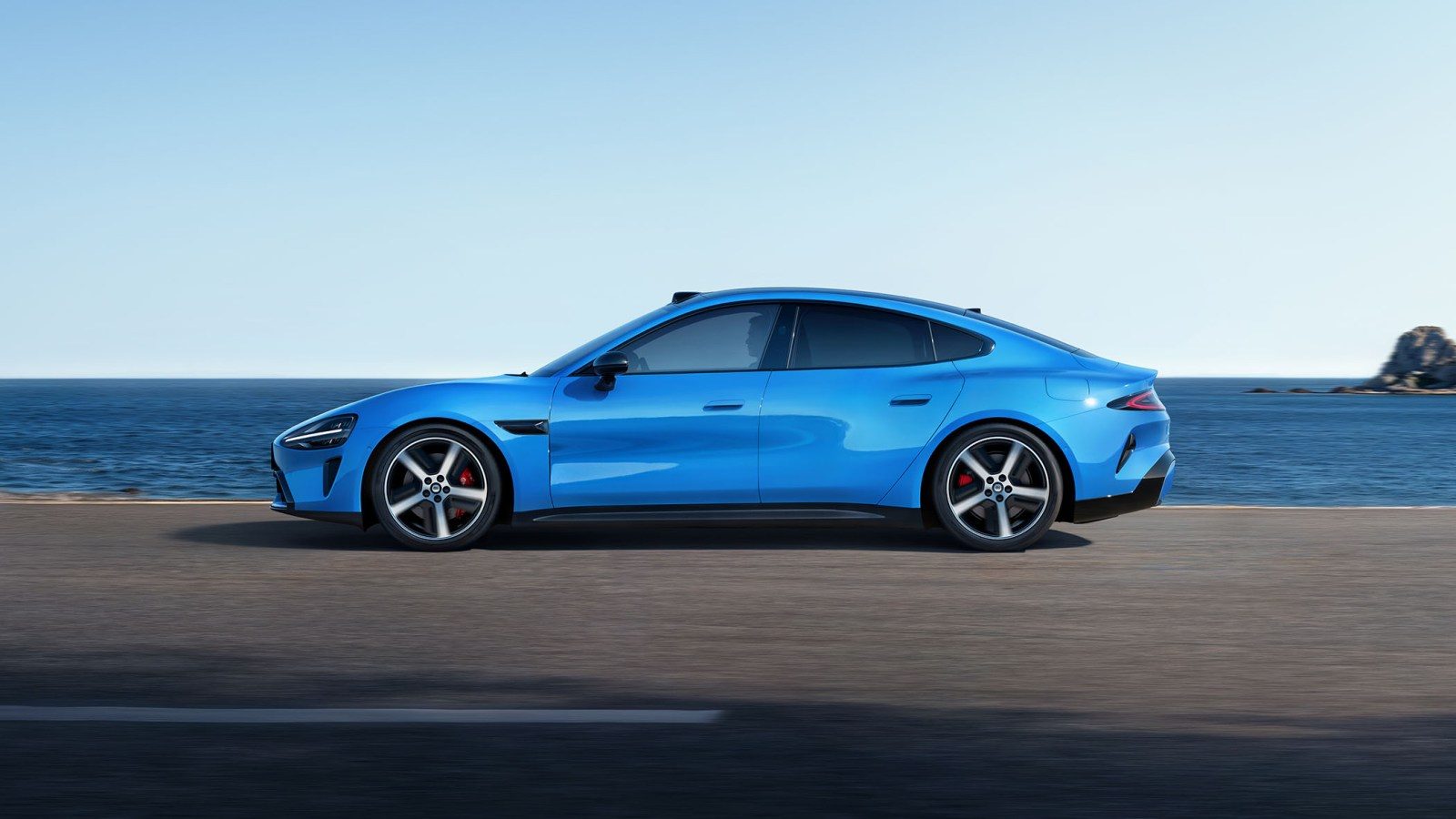

Xiaomi announced on Monday that cumulative deliveries of its SU7 sedan series have surpassed 500,000 units, 28.5 months after the model first went on sale.
The milestone was disclosed in a post on Weibo, where the company thanked owners for their support and outlined the sedan’s three key product launches since its debut.
The first-generation SU7 launched on March 28, 2024, with deliveries beginning on April 3 — marking the tech giant’s debut in the automotive industry.
The high-performance SU7 Ultra followed on February 27, 2025, and the second-generation SU7 was unveiled on March 19, 2026.
Lei Jun, Xiaomi‘s co-founder and Chief Executive, has previously framed the brand’s ambition as building a car comparable to Porsche and Tesla, while delivering an intelligent and comfortable ownership experience.
However, the 500,000-unit figure masks a significant year-over-year decline in the SU7’s monthly run rate.
Through the first seven months of 2026, the SU7 accumulated 101,540 deliveries — a 43.6% drop compared with the same period in 2025.
The sedan delivered 21,044 units in July, up 3.1% from June but down 13.8% from a year earlier, according to China Passenger Car Association (CPCA) data.
Much of the early-year weakness stemmed from the generational transition.
Xiaomi halted first-generation production after 370,000 units in February 2026 to prepare for the refreshed model, leaving deliveries at just 1,133 in January and 218 in February.
Since the new SU7 entered full production in April, the sedan has averaged about 23,000 units per month — stabilizing around a lower ceiling than the first generation reached during the second half of 2025.
The first-generation SU7 delivered 258,164 units across 2025, making it the best-selling premium electric sedan in China and outselling the Tesla Model 3’s 200,361 registrations in the country that year.
The new-generation SU7, launched on the evening of March 19, retained the model’s design language and added three exterior colors.
The SU7 has outsold its main competitor in every month since April — when both cars were selling current-generation versions — accumulating 101,540 units against 68,533 for Tesla‘s sedan through July.
Pricing landed at 219,900 yuan ($32,600) for the Standard, 249,900 yuan ($37,100) for the Pro, and 303,900 yuan ($45,100) for the Max.
The launch price was 10,000 yuan lower than the pre-order price that Xiaomi had disclosed in January, settling just 4,000 yuan above the outgoing first-generation model’s entry point.
The refreshed sedan secured 15,000 orders in its first 34 minutes on launch night, with locked orders surpassing 40,000 within weeks and exceeding 80,000 by early May.
Total EV Deliveries Exceed 760,000
Including the YU7 SUV, launched a year ago, Xiaomi‘s cumulative deliveries now surpass 760,000 vehicles.
The YU7 has been the stronger volume contributor in 2026, accounting for 114,782 deliveries in the January-to-July period versus the SU7’s 101,540, giving the SUV a 53.1% share of Xiaomi‘s total output.
Across both models, Xiaomi reached 500,000 total deliveries in about 20 months — November 2025 — making it the fastest among China’s EV startups to hit that mark.
Li Auto took 46 months to reach the same figure in September 2023, Leapmotor needed 64 months to get there in October 2024, and both Nio and XPeng took approximately 70 months, crossing the threshold in mid-2024.
China’s NEV market has expanded significantly since those earlier brands began delivering, which makes the pace less directly comparable, but the gap remains wide even after accounting for the broader market tailwind.
Growth has slowed considerably from 2025’s rapid expansion.
Xiaomi delivered 31,267 vehicles in July, up just 2.7% year-over-year and down 10.0% from June.
Through seven months, total deliveries reached 216,322 units — equivalent to 39.3% of the company’s 550,000-unit annual target.
Annual Target
The arithmetic is challenging.
To deliver 550,000 vehicles by year-end, Xiaomi must average about 66,700 units per month from August through December — more than double July’s pace.
The highest monthly total the existing two-model lineup has ever reached was 50,212 units, set in December 2025.
The company is counting on the Sky Nomad extended-range series, introduced on July 30, to provide the necessary volume lift.
The series marks Xiaomi‘s first entry into the extended-range electric vehicle segment, with the seven-seat N90 Max priced at 299,900 yuan ($44,500) and the five-seat N70 Max at 259,900 yuan ($38,500).
Deliveries are scheduled to begin in September.
Chinese outlet Cailian reported in early August that Sky Nomad pre-orders may have exceeded 100,000 units, though the estimate was not based on official data.
Even if broadly accurate, converting reservations into deliveries depends on how quickly Xiaomi ramps production at its Beijing facility, which received regulatory clearance to build extended-range models only in June.
The company delivered 411,082 vehicles in 2025, surpassing its revised target of 400,000 units.
The 550,000-unit goal for 2026 represents a 33.8% increase from the prior year. Overseas sales are not expected until the second half of 2027.