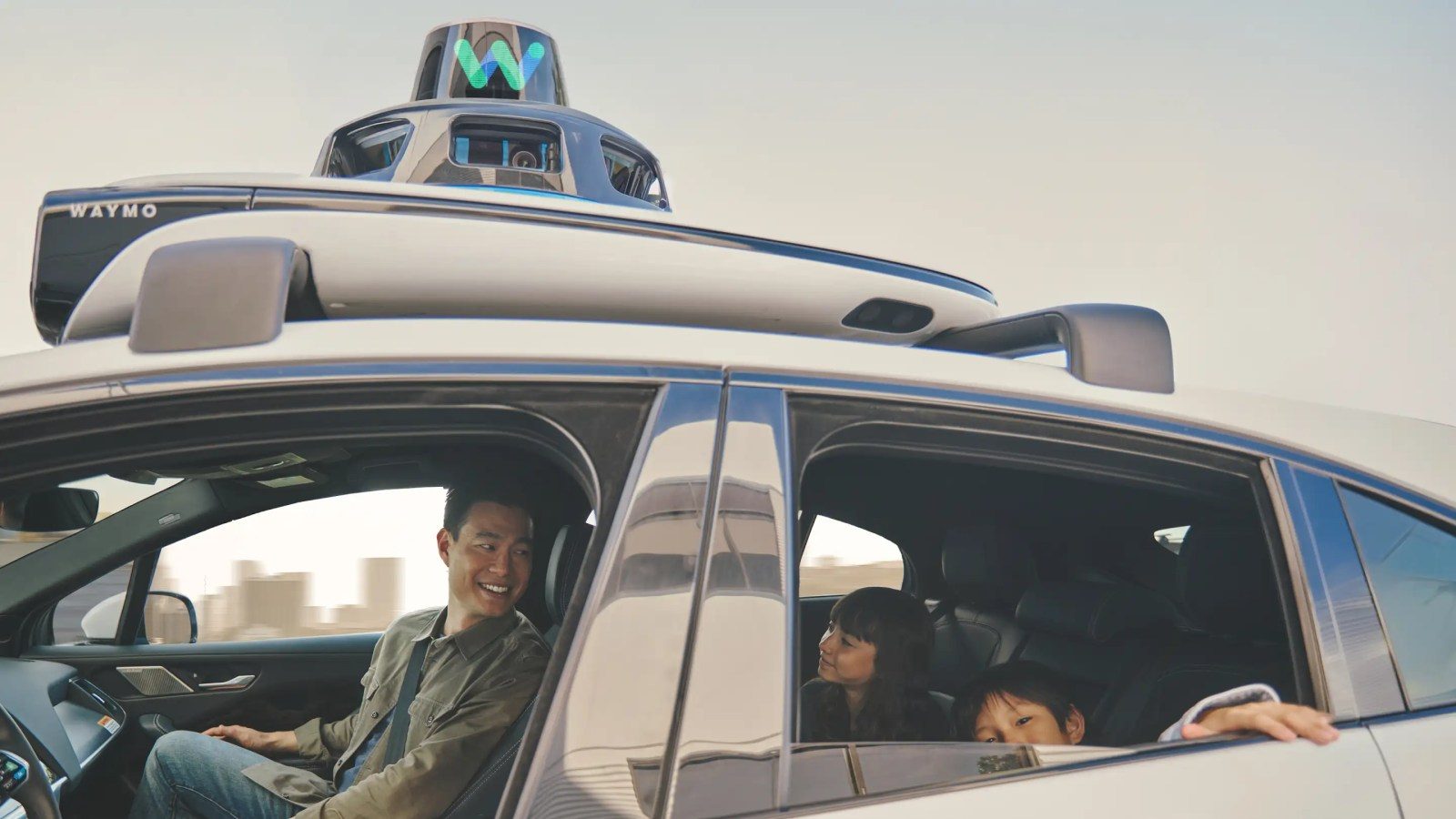

Waymo has registered a local subsidiary in South Korea, extending the Alphabet-owned autonomous driving company into a second Asian country — as it prepares to launch its service in Tokyo, Japan later this year.
Records from the Supreme Court of Korea’s Internet Registry Office (대법원 인터넷등기소) show ‘Waymo Korea Limited’ (웨이모코리아 유한회사) was established on July 24 and entered the Seoul Central District Court commercial registry under registration number 110114-0040637.
The filing was first noticed by X user ‘Tslachan’ on Tuesday.
The entity is registered as a yuhan hoesa, a Korean limited company structure commonly used by foreign multinationals establishing local subsidiaries.
Share capital stands at 150 million won ($109,000), with a unit contribution of 100 won per unit.
Business Purposes
The registry filing lists several explicitly stated business purposes.
Among them are development, supply, consulting and maintenance of autonomous driving systems and software, research on autonomous driving technology, and — notably — passenger automobile transportation based on autonomous driving technology.
The inclusion of a passenger transport purpose is significant.
Under Korean corporate law, a company can only conduct activities within the scope of its registered corporate purpose.
By listing ride-hailing operations from the outset, Waymo has positioned the entity to pursue commercial robotaxi services once regulations allow, without requiring a subsequent amendment to its articles of incorporation.
European Expansion
The Korean subsidiary was established just weeks after Waymo registered corporate entities in Germany, France, Spain and the Netherlands, all within a narrow window during June 2026.
Waymo Germany GmbH was incorporated in Munich on May 13 and entered the commercial register on June 15.
Waymo France was registered in Paris on June 23 with €100,000 in share capital. Waymo Iberia SL was incorporated in Madrid on June 9, and a Dutch entity followed shortly after.
Before those European filings, Waymo‘s only confirmed international markets were Japan and the United Kingdom.
Executives said in March that a commercial launch in Tokyo could be ready within months, with testing alongside local partner Nihon Kotsu already under way.
London remains a confirmed future market, though no commercial launch date has been set.
Korea’s geographic proximity to Japan — where Waymo has been accumulating road data since April 2025 — makes the Korean filing a logical next step in an Asia-Pacific cluster strategy.
South Korea operates under left-hand-drive traffic rules, however — unlike Japan and the UK — which could simplify certain aspects of vehicle adaptation and fleet logistics.
Same Leadership as European Entities
Two US-based officers were named in the filing.
Steven Seunsuk Hahn (선석한), listed as representative director, serves as Waymo‘s Deputy General Counsel, covering commercial, corporate and employment matters.
Kelly Kaul Francis, listed as director, is a finance controller at the company.
Both names are identical to the gérants appointed to Waymo France, the Paris-based subsidiary registered in June.
Hahn and Francis also appear in corporate filings for the company’s other recently incorporated European entities.
The repeated use of the same officers across multiple jurisdictions is consistent with a centrally coordinated legal expansion campaign rather than standalone local initiatives.
Regulatory Hurdles Remain
South Korea does not currently permit fully driverless commercial robotaxi services on public roads.
The country’s taxi system operates under a manned vehicle quota framework, where local governments issue licences to taxi companies or individual drivers within regional fleet caps.
Paid autonomous transportation is allowed only within 55 designated pilot zones nationwide, a limited scope that has so far restricted commercial deployment to domestic operators Kakao Mobility and SWM.
The Ministry of Land, Infrastructure and Transport convened a consultative body in January 2026 comprising taxi industry representatives, labour unions, platform companies and autonomous vehicle firms to discuss robotaxi implementation.
The government’s stated goal remains commercialisation of Level 4 autonomous driving by 2027, but regulatory and political resistance — particularly from the taxi industry, where licences function as tradeable financial assets — has complicated progress.
The Seoul Economic Daily reported in March that Waymo had been engaging with the Ministry of Land through a local government relations firm since 2025, inquiring about autonomous driving regulations and introducing its technology.
At the time, a ministry official said the government had not received any performance certification applications from Waymo.
Google’s Map Advantage
A critical enabler for Waymo‘s potential Korean operations arrived in February, when South Korea ended a nearly 20-year ban on exporting high-precision map data and conditionally approved Google’s request to access 1:5,000 scale geographic information.
The decision, shaped in part by US trade pressure, allows Google to process raw map data on domestic servers and provide full navigation features in the country for the first time.
High-precision maps are foundational to Waymo‘s autonomous driving stack, which relies on detailed pre-mapped environments layered with real-time sensor data.
Industry observers in Korea have noted that Google’s map access could give Waymo a significant advantage over domestic competitors that have historically relied on the data asymmetry as a competitive moat.
Hyundai
South Korean automaker Hyundai is pursuing a parallel but distinct path in Korea.
Hyundai‘s US autonomy unit, Motional, plans a fully driverless Level 4 robotaxi launch in Las Vegas by the end of 2026 using the IONIQ 5, with executives saying Korea is a candidate for expansion only once that service is proven.
The company has also partnered with Nvidia to deepen Motional’s Level 4 development, and domestically leads a 200-vehicle robotaxi trial in Gwangju alongside Kia and Samsung — though critics warn its scale could crowd out smaller Korean AV startups.
Foreign Companies
Waymo is not the only foreign autonomous driving company eyeing the Korean market.
Baidu’s Apollo Go announced its official entry into South Korea in February, marking the Chinese service’s first expansion into an Asian market beyond mainland China and Hong Kong.
Apollo Go has been expanding aggressively across the Middle East and Europe through partnerships with Uber and Lyft.