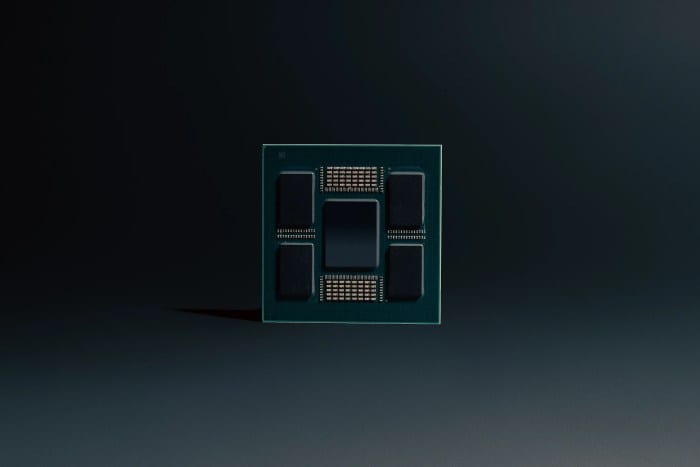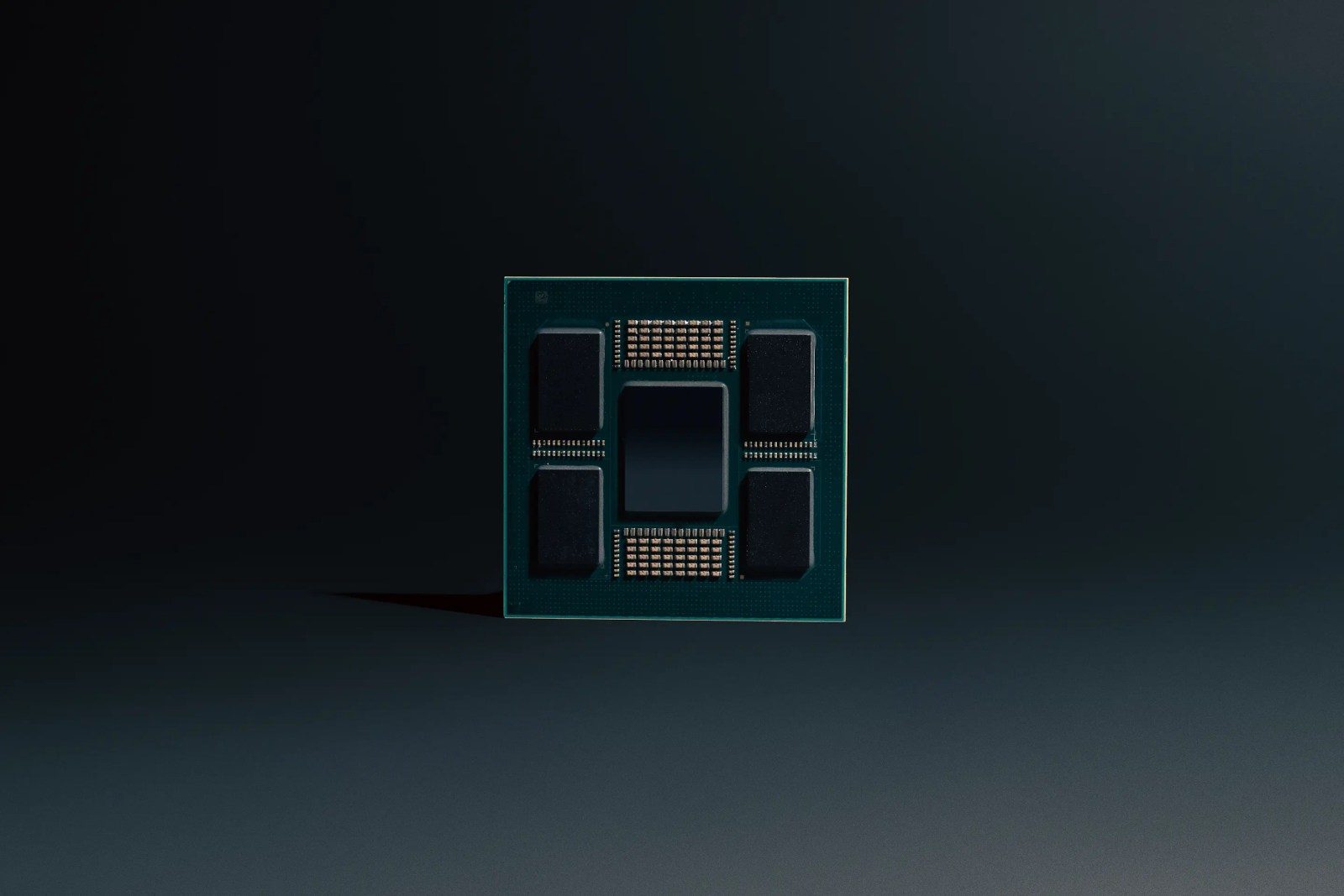

Alphabet’s Waymo unveiled a purpose-built 5-nanometer chip on Thursday that now powers the compute system inside its robotaxis, the company’s first public disclosure of custom silicon of its own design.
The application-specific integrated circuit, or ASIC, is in production in Waymo’s latest robotaxi generation, the company said.
The Zeekr-built vehicle Waymo launched recently is now being equipped with the chip. The company did not frame the chip as a move away from suppliers.
Waymo now starts diversifying its chip supply beyond third parties such as Nvidia, while Waymo’s post names Nvidia among partners it works alongside.
According to the company, the chip delivers more than 1,000 TOPS — trillions of operations per second — dedicated to front-end sensor processing and machine-learning models, rather than to total system compute.
That figure sits alongside the 1,000 INT8 TOPS Nvidia lists for its DRIVE AGX Thor platform, though the two are not directly comparable.
Waymo has not stated the precision behind its number, Nvidia also cites Thor at up to 2,000 FP4 TFLOPS, and Thor is a centralised system-on-chip that handles driving, cockpit and infotainment workloads, where Waymo‘s part processes sensor data before it reaches the company’s main machine-learning system.
Waymo described the chip as “a specialized ML powerhouse engineered exclusively to process, fuse, and run advanced neural networks on raw sensor data in real time.”
Sensors and Algorithms
The ASIC was developed alongside its proprietary sensors and software algorithms rather than as a standalone hardware project.
Developing silicon, sensors and algorithms side by side lets the company push the limits of sensor fidelity, bandwidth efficiency and quantisation, Waymo said, and run a mix of models from sparse convolutions to dense transformers.
The chip’s specialized accelerators extract information from raw LiDAR, radar, and camera streams in real time, including temporal denoising that Waymo said delivers superior low-light perception.
Processed data feeds into a purpose-built inference engine that runs sensor-fusion ML models.
Waymo said its latest system processes high-fidelity data from 13 high-resolution cameras simultaneously and in real time, revealing environmental details that conventional cameras miss.
The company did not publish a full sensor count for the vehicle, and did not state that every sensor routes through the new chip.
Broader Overhaul
The ASIC is one component of a larger compute redesign that Waymo described as an “ML-primary architecture.”
The full onboard system pairs the custom chip with CPUs, GPUs, and other accelerators from industry partners.
Waymo listed AMD, Micron, Nvidia, Samsung, SanDisk, Socionext, and TSMC as collaborators — and said the chip is one of several custom components it is developing — placing the ASIC alongside external silicon rather than in place of it.
The company further added that it has scaled raw onboard compute power by 20x in eight years while engineering the entire stack for ultra-low latency, minimizing the delay from the moment a sensor captures a pixel to the moment the vehicle acts.
Waymo described its compute architecture as built around three principles: responsiveness, with all processing handled onboard in milliseconds, ruggedization, with hardware designed for constant vibration, shock, and extreme temperatures, and redundancy, with two independent compute units running full parallel workloads so that one can seamlessly take over if the other faults.
Proactive safety and redundancy are built in natively because no human is available to take over, the company wrote, describing the compute as two independent engines.
The system integrates with the vehicle’s liquid cooling to sustain peak performance across climate extremes — from freezing Midwest winters to Phoenix summer heat.
Waymo also emphasized that the compute overhaul preserves trunk space, runs silently, and maximizes battery efficiency.
The post was written by Satish Jeyachandran, VP of Engineering, and Daniel Rosenband, Compute Lead. Jeyachandran also authored Waymo‘s February announcement that its sixth-generation Driver had begun fully driverless operations.
Waymo said it will present further detail on its compute work at the Hot Chips conference.
Ojai Fleet Ramp
The chip disclosure arrived one day after Waymo opened the Ojai to all riders across its three largest markets.
Customers in Los Angeles, Phoenix, and San Francisco may now be matched with the new robotaxi when hailing a ride through the Waymo One app.
Once enough Ojais are in the fleet, riders will be able to choose between the new vehicle and the older Jaguar I-Pace.
Waymo had roughly 300 Ojai robotaxis in its commercial fleet as of Wednesday, a company spokesperson told TechCrunch.
The company said it plans to roll out the Ojai in Denver, Las Vegas, and San Diego later this year.
The Ojai — manufactured by Geely’s Zeekr in Ningbo, China, and outfitted with Waymo‘s sixth-generation Driver system at a facility in Mesa, Arizona — represents a shift toward purpose-built robotaxis.
The company said the shift will help it reduce costs while offering roomier, more accessible spaces for riders.
Waymo remains the leading US robotaxi operator by scale.
Rivals Tesla and Amazon‘s Zoox are expanding their own autonomous vehicle programs, but neither yet matches Waymo‘s geographic reach or ride volume.
The company completes more than 500,000 paid rides per week and expanded across eleven cities in the US — and has begun corporate registrations in Europe, including in Spain and France.
Alphabet’s Broader Chip Push
The custom chip effort fits within a wider Alphabet strategy to develop in-house silicon and manage the soaring costs of AI computing infrastructure.
Google already designs its own Tensor Processing Units for data-center AI workloads and has been deepening chip partnerships across its business lines.
Waymo‘s ASIC is fabricated on TSMC’s 5nm process node.
While no longer TSMC’s most advanced offering, the node remains widely used across the semiconductor industry for high-performance chips.