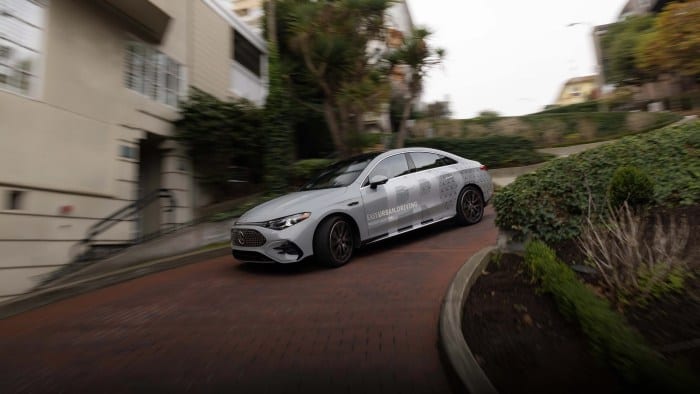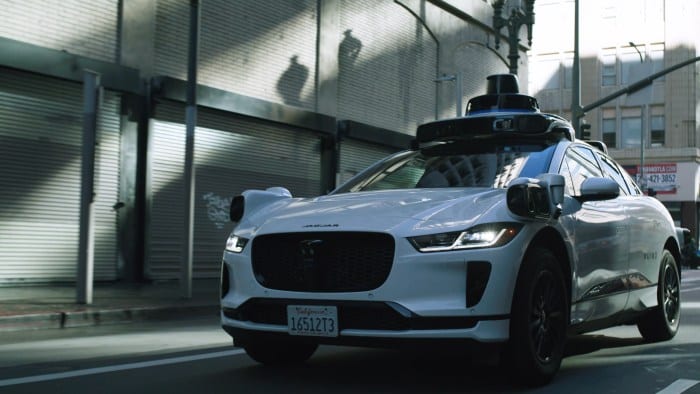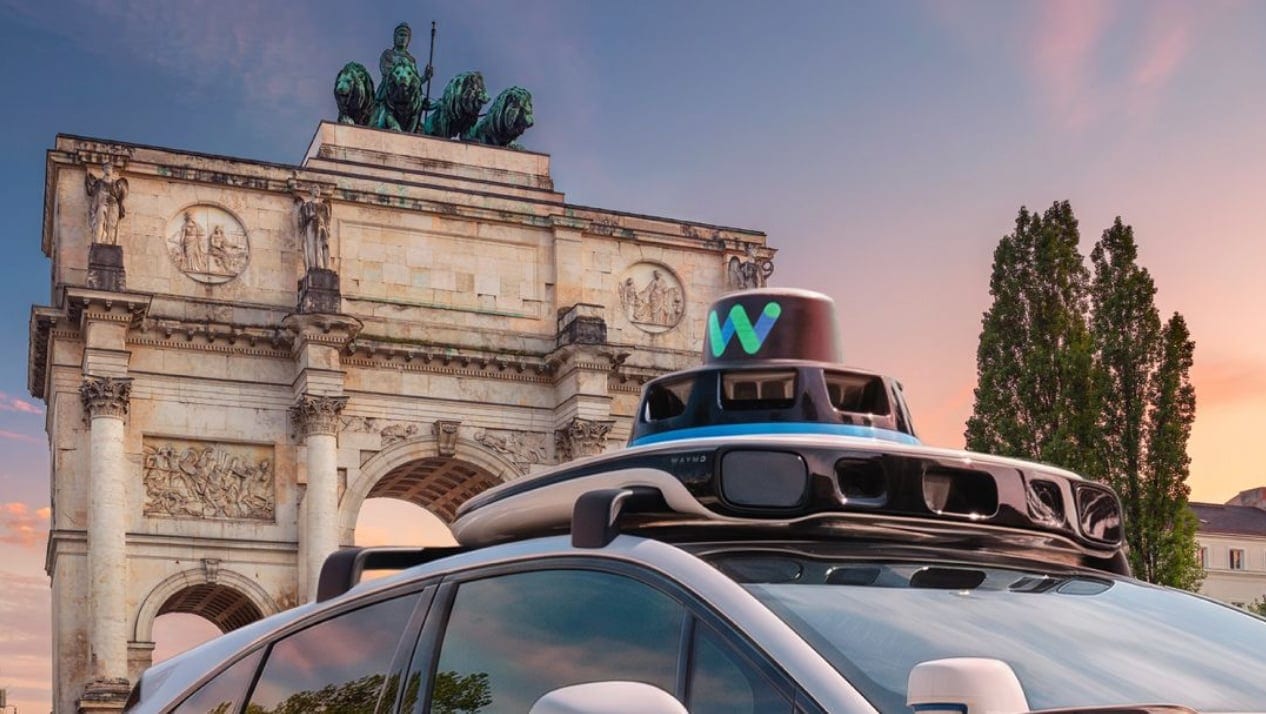

Waymo said on Tuesday it will begin laying the groundwork for a fully autonomous ride-hailing service in Munich, its first German market and second in Europe, with commercial rides targeted for the end of 2027.
Vehicles will appear on Munich’s streets “in the coming weeks,” the company said, initially driven manually while it builds high-definition maps of the local street network.
Supervised autonomous testing with trained specialists behind the wheel follows.
“This validation period will ensure the Waymo Driver adapts seamlessly to Munich’s distinct driving conditions before we aim to open commercial ride-hailing to the public towards the end of 2027,” the company wrote.
Berlin Says the Law Is Already There
The announcement carried a notably long statement from Christian Hirte, parliamentary state secretary at the Federal Ministry of Transport, framing Waymo’s arrival as validation of German regulation.
“We have already put in place the legal framework for this,” Hirte said. “Waymo, the world’s leading provider of commercial robotaxi services, has now recognised Germany’s potential as a location offering legal certainty.”
He added that Waymo “is currently planning to start regular commercial operation of autonomous vehicles on the German market for the first time,” and that its interest “proves that regular autonomous mobility services can work here.”
The same statement contained a caution. “We must now leverage the strengths of our economy and develop autonomous mobility solutions from within Europe,” Hirte said. “Our goal must be to ensure that we in Europe not only use these technologies but also develop and operate them here.”
A federal official welcoming an American operator while arguing Europe should build and run its own is an unusual pairing to place in a company announcement.
Bavaria Wants Speed
Florian Herrmann, Head of the Bavarian State Chancellery, tied the decision to the state’s industrial base and pushed for faster deployment.
“Bavaria is determined to live up to its pioneering role and be an international leader in autonomous driving,” he said, citing manufacturers, suppliers, research and an AI ecosystem strengthened through the state’s Hightech Agenda.
“Now we need to move quickly from testing to real-world deployment,” Herrmann said. “To achieve this, we will continue to improve the framework conditions, cut red tape and remove regulatory barriers.”
London
Waymo announced London in October 2025 with a target of 2026 — a runway of about fourteen months, similar to the one it has now given itself in Munich.
Ten months later, London has not launched.
Roughly 100 Jaguar I-PACEs have been testing across about 100 square miles and 19 boroughs since the spring, with safety operators aboard throughout. Waymo’s UK page still describes Autonomous Specialists on board during early trials.
The obstacle has been regulatory. Transport for London warned in April that no autonomous vehicle currently meets its standards and that it would not hesitate to refuse licences for unproven services. A freedom of information response dated July 23 confirmed TfL was still developing its approach to consent requests.
Britain’s Automated Passenger Services permit, issued by the Driver and Vehicle Standards Agency, is a separate approval from private hire licensing. When Transport for London granted licences to Wayve’s fleet on August 5 — the first for autonomous passenger vehicles in the city — it required a licensed human safety driver.
Germany legislated earlier, permitting Level 4 operation in defined areas, which is what Hirte’s reference to legal certainty points to. Whether that translates into a faster path to driverless operation is the question Munich will answer.
Munich Is Not Neutral Ground
Waymo registered Waymo Germany GmbH with articles of association dated May 13 and entry in the Munich commercial register on June 15, listing Google’s Munich office as its address.
Job advertisements for test drivers and vehicle trainers appeared in Berlin and Munich around the same time.
At the time, the company told Bloomberg only that it was engaging with officials around the world to lay the groundwork for global operations.
At a London press conference in June, Waymo’s Head of Business development, Nicole Gavel, listed the cities the company intended to enter — London, Tokyo, Nashville, Denver, Las Vegas and New York. Germany was not among them.
Munich is BMW’s home city, an hour from Mercedes-Benz in Stuttgart and close to Volkswagen’s software unit Cariad. Uber and Momenta have separately announced Level 4 testing there.
Co-Chief Executive Tekedra Mawakana said Munich “is a world-class hub for mobility and engineering, and becoming part of this city marks an important milestone in our global expansion,” adding that Waymo would invest in local fleet operations and create high-skilled jobs.
The company did not name a fleet partner, as it did with Moove in London.
The Safety Numbers Have Grown
Waymo said it has completed more than 20 million trips and serves hundreds of thousands of commercial rides a week.
Its safety claim, given in kilometres rather than the miles it usually cites, covers more than 350 million fully autonomous kilometres — about 218 million miles — and asserts 16 times fewer serious injury crashes than human drivers, 14 times fewer pedestrian crashes with injury and six times fewer cyclist crashes with injury.
Those multiples are higher than the five times fewer injury-causing collisions and 12 times fewer pedestrian incidents the company cited when it announced London last October.