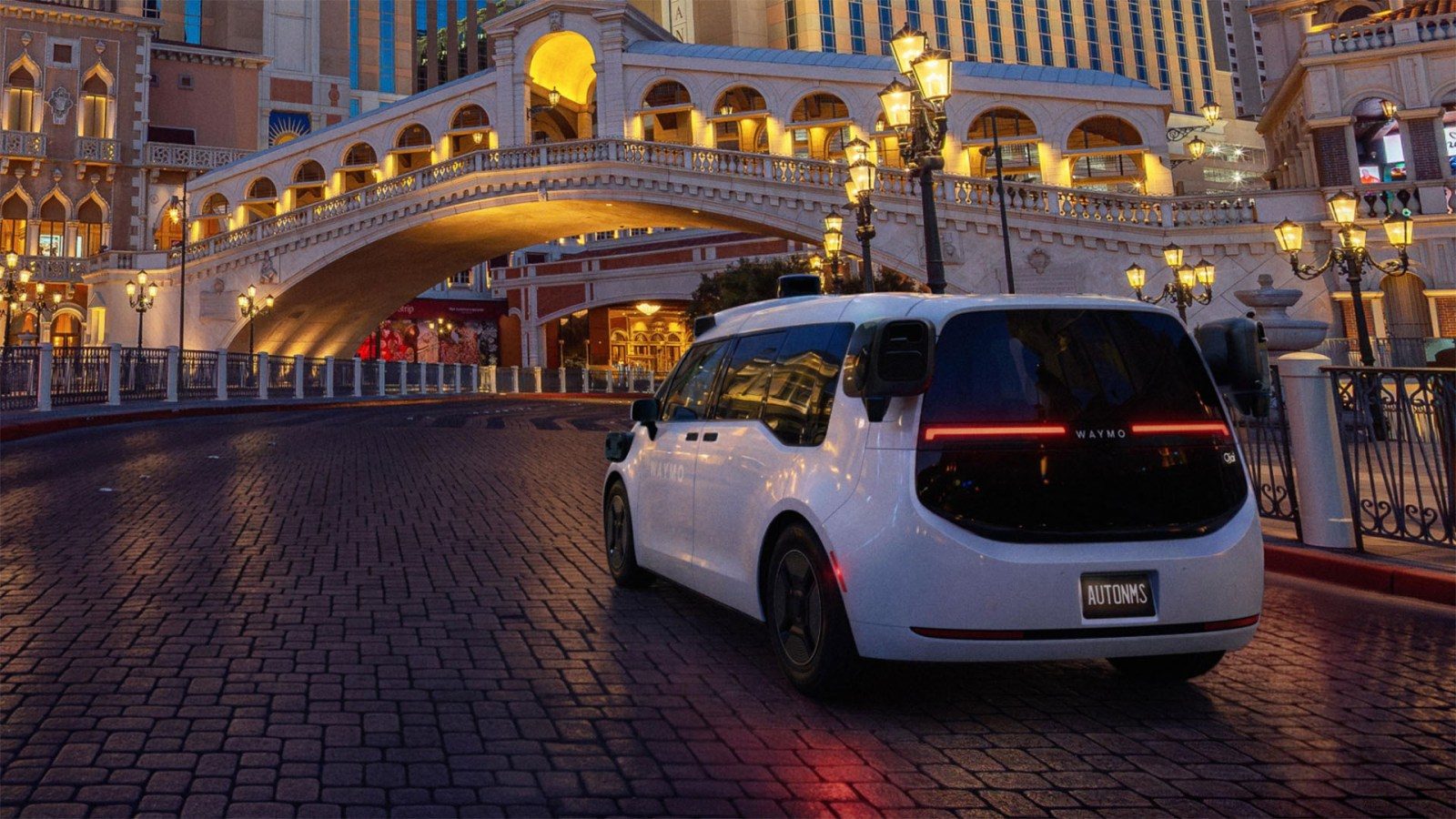

Waymo‘s Vice President of Onboard Software Srikanth Thirumalai wrote in a blog post on Wednesday that a driver-assistance system cannot be improved into a self-driving one, publishing the argument eight days before Tesla holds a launch event for a vehicle built on that premise.
Simply improving a Level 2 driver-assist system for full autonomy is “a false summit,” the company wrote on Wednesday in a post setting out ten lessons from more than 200 million fully autonomous miles.
True Level 4 maturity, it said, requires a purpose-built system “hardened by the uncompromising experience of driving without a human in the car.”
The post never mentions Tesla, whose Full Self-Driving is a Level 2 system and whose robotaxi service runs on Model Y vehicles operating that software.
On September 3, Tesla holds an invitation-only event in Austin for the Cybercab, a two-seat vehicle with no steering wheel and no pedals.
The Tenth Lesson
The false-summit passage is the last of the ten and the least hedged.
“There is no substitute for actual fully autonomous miles,” wrote Srikanth Thirumalai, Waymo‘s VP.
Billions of miles in simulation or under human supervision do not substitute, because a system “only truly matures when it is solely responsible for the driving task.”
Full autonomy, the post argues, exposes a system to what it calls the true gravity of its decisions, and surfaces situations that human supervision or simulation “might unconsciously smooth over.”
The distinction matters commercially as well as technically. Tesla‘s central claim has been that a fleet of consumer cars running supervised software generates the data that produces autonomy.
Waymo is arguing that the supervision itself contaminates the result.
Three More Contested Points
The first four lessons address the two debates the post itself calls the most heavily contested in the field’s history, and each lands on a position Tesla holds.
On sensors: “Cameras are incredible, but they aren’t enough.”
After 200 million real-world miles, the post says, the data is clear that safe autonomous operation at scale requires more, with LiDAR supplying three-dimensional geometry, cameras the semantic reading of signs and lights, and radar acting as what it calls a dynamic sentinel that sees through rain, fog and dust.
On mapping, Waymo describes high-definition maps as a prior, “another input—like our sensors, but acting as a mental memory,” freeing onboard compute for what is dynamic or new.
On end-to-end systems the language is sharpest.
“AI is powerful, but it isn’t magic,” the post says. Architectures that take raw pixels and output steering commands “run the risk of black box failures,” and Waymo has added an independent onboard validation layer that checks every proposed trajectory against physics and traffic law — a choice it calls “non-negotiable for safely scaling at L4.”
The company is equally pointed about its own history, describing the industry’s early approach of one model per task as “modular spaghetti” that becomes unmaintainable at scale, and describing its automated critic as the guard against a driver “grading its own homework.”
What Happens in Seven Days
Tesla began Cybercab production at Giga Texas in April and started testing the vehicle without pedals or steering wheel in Austin at the end of June. Employee rides began in July.
What is scheduled for September 3 is narrower than the word launch implies. The event is invitation-only, drawn from a rider sweepstakes and direct invitations, with age verification at the door.
Tesla‘s own robotaxi page says the Cybercab will offer rides in future without giving a public timeline, a fare or a service area.
A regulatory question is unresolved. Federal Motor Vehicle Safety Standard 135 requires a foot-operated service brake, which the Cybercab does not have.
Tesla has said the vehicle will not be subject to the exemption process that caps non-compliant vehicles at 2,500 a year — the route Waymo and Cruise historically used.
The Cost Battle
Nothing in the ten lessons addresses price, and price is where the pressure sits.
Waymo‘s fleet is built on the Jaguar I-Pace, which retails near $70,000 before autonomy hardware.
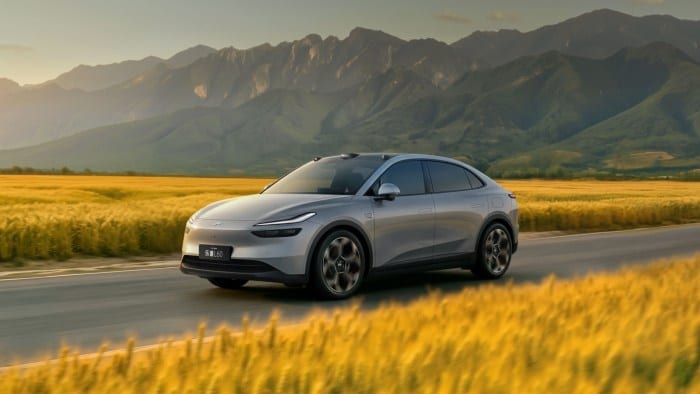
Its newest platform, the Ojai, is based on a Chinese minivan from Zeekr costing about $40,000, fitted with 13 cameras, four LiDARs and six radars.
The Cybercab has been estimated at $20,000 to $25,000, built on a line Tesla lists at above 125,000 units of annual capacity, with the company making both vehicle and software.
Morgan Stanley has put Tesla‘s robotaxi cost near $0.81 a mile against $1.36 to $1.43 for Waymo.
ARK Invest projects the Cybercab below $0.20 a mile by 2030 against roughly $0.40 for Waymo, a figure Musk has endorsed.
EV found in April that Tesla was undercutting Waymo by roughly half on the same Dallas route.
Tesla rates the Cybercab at about 165 watt-hours per mile, the most efficient vehicle it has built.
The Gap Running the Other Way
Scale is not close.
Waymo operates between 3,500 and 4,000 driverless vehicles across eleven US metropolitan markets, completes more than 500,000 paid trips a week and has logged over 200 million fully autonomous miles.
It raised $16 billion at a $126 billion valuation and targets more than one million weekly trips by year-end.
Tesla‘s driverless service runs in limited areas of Austin, Dallas, Houston, Miami, Orlando and Tampa, and its cumulative unsupervised mileage is a small fraction of Waymo‘s.
EV reported in August 2025 that a Rivian board member and former Waymo chief executive criticised Tesla’s robotaxi, and in October that Waymo’s co-chief executive aimed indirect criticism at the company over transparency.
In December, Musk wrote that Waymo never really had a chance.
In March, Waymo’s call for national robotaxi standards drew a public rebuke from a Tesla engineer.