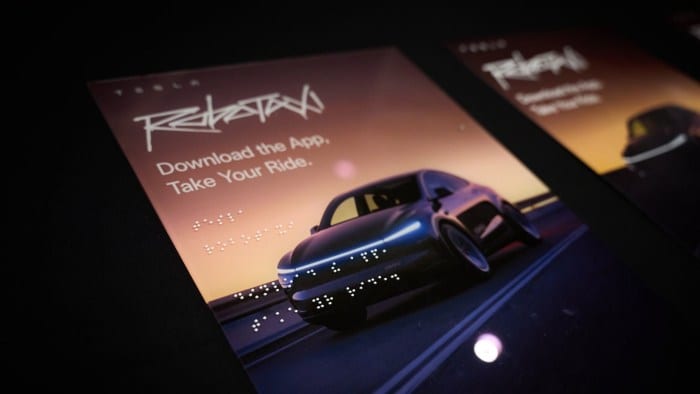

Nevada’s Transportation Authority (NTA) on Thursday unanimously approved commercial robotaxi permits for Tesla, Waymo, and Uber.
Together the three permits clear up to 7,000 autonomous vehicles for deployment across Clark County — home to Las Vegas — over the next 12 months. Several outlets, including TechCrunch, reported the combined figure as 8,000 while listing the same three allocations, which sum to 7,000.
Tesla secured the largest allocation at up to 5,000 robotaxis, while the Alphabet-backed autonomous vehicle subsidiary received approval for up to 1,000.
Uber was granted a matching 1,000-vehicle authorization that it will operate through partnerships with Hyundai subsidiary Motional and Amazon-owned Zoox.
Zoox already holds a separate autonomous vehicle network company permit allowing 100 robotaxis in the state.
What the Permit Replaces
Tesla applied to the authority in early June as an autonomous vehicle network company, seeking to operate across all of Clark County with up to 5,000 vehicles in its first 12 months, and naming Harry Reid International Airport and Henderson Executive Airport as pickup locations.
Regulators granted ten vehicles instead, without publicly explaining the reduction.
That interim order confined Tesla to a regulator-approved geofence on the Las Vegas Strip corridor, capped speeds at 45 miles per hour, barred pickups at Harry Reid International, required vehicles to display a “robotaxi” label and required human supervision.
Thursday’s vote replaces that order eleven weeks after the original application.
Tesla‘s investor and largest shareholder Sawyer Merritt, who watched the authority’s four-hour general session live, wrote on X that the new authorization also permits Tesla to operate elsewhere in Nevada provided it notifies the commission before expanding its geofence.
Contemporaneous accounts of the hearing describe the permits as covering Clark County, and the authority has not published an order confirming a statewide scope.
Tesla Targets 2,500 Vehicles in Year One
Eric Early, Tesla‘s Cybercab Chief Engineer, told the commission the company will not come close to deploying 5,000 vehicles in the permit’s first year.
“The 5,000 has always been a ceiling for us,” Early said at the hearing.
Tesla chose the higher cap over a 2,500-vehicle alternative to preserve flexibility as autonomous vehicle adoption accelerates, he said, citing the pace of change across the sector and customer demand in cities where other operators have already launched.
Early said Tesla would be extremely happy and satisfied to reach 2,500 vehicles, or somewhat more, within 12 months — roughly half the permitted ceiling.
Early framed the constraint as operational rather than technological, pointing to scaling fleet maintenance, charging infrastructure, insurance and vehicle inspections to match the pace of deployment.
Tesla must still complete administrative requirements including vehicle inspections, insurance filings, and rate disclosures before commercial operations can begin.
Merritt estimated that process would take roughly 30 days.
Early also pitched Tesla‘s vertical integration as a competitive edge. “Our products are mass scalable.
Everything is fully integrated and vertically integrated,” he said, adding that design, engineering, and manufacturing are “100% in source, 100% in America.”
Early also pitched Tesla‘s vertical integration as a competitive edge, describing the products as mass scalable and saying design, engineering and manufacturing are wholly in-house and wholly American.
Opposition From Taxi Industry
Livery Operators Association representatives and local taxi companies opposed the approvals, arguing the permits moved “too far, too fast,” according to TechCrunch.
Kimberly Maxson-Rushton, a lawyer representing the association, cited two concerns at the hearing: oversaturation of the commercial transportation market and overcrowding on the roadways, specifically in the Golden Triangle — an area between the airport and Las Vegas Boulevard where most autonomous vehicle testing has occurred to date.
Uber pitched itself as the middle ground, advocating for a hybrid approach that integrates human drivers and robotaxis on a single ride-hailing network rather than flooding the market all at once.
Uber has separately lobbied for a regulatory framework requiring robotaxis to operate on platforms that also employ human drivers — a stance that has put it at odds with Waymo.
Tesla Arrives Third on the Strip
Thursday’s vote does not open the Las Vegas market. Zoox began paid rides on the Strip this month and is running roughly 50 vehicles there, while Waymo entered fully driverless operations in Las Vegas in early July.
Tesla was the third autonomous operator to reach the Strip, and the fleet it requested in June was fifty times the size of either incumbent’s permitted count.
Waymo filed its own Nevada application in June and Uber’s autonomous subsidiary began the process in July, with both still under review until Thursday.
Las Vegas Fills a Gap for Tesla
Nevada’s approval arrives as Tesla works to close a widening gap between its robotaxi expansion promises and actual deployments.
At its fourth-quarter earnings call on January 28, the company committed to robotaxi service in seven new cities during the first half of 2026: Dallas, Houston, Phoenix, Miami, Orlando, Tampa, and Las Vegas.
Dallas and Houston were the only two to launch within that window, both opening with unsupervised rides in April.
When Tesla reported first-quarter results, its investor deck quietly shifted the remaining five cities from a firm “1H 2026” timeline to the vaguer “preparations underway.”
Miami opened first among that trailing group in early July, days into the second half.
Orlando and Tampa followed before Tesla‘s Q2 earnings call on July 30, though service in both Florida cities has been limited to low-traffic outskirts rather than urban centers.
Phoenix, where roughly 60 robotaxi-configured Model Ys were staged in a parking lot as early as April, still lacks a commercial launch. Las Vegas, now permitted, has not started operations either.
Five of the seven cities Tesla originally promised by end of June are now operational in some form — Phoenix and Las Vegas remain outstanding as of late August.
Cybercab Approaching Service
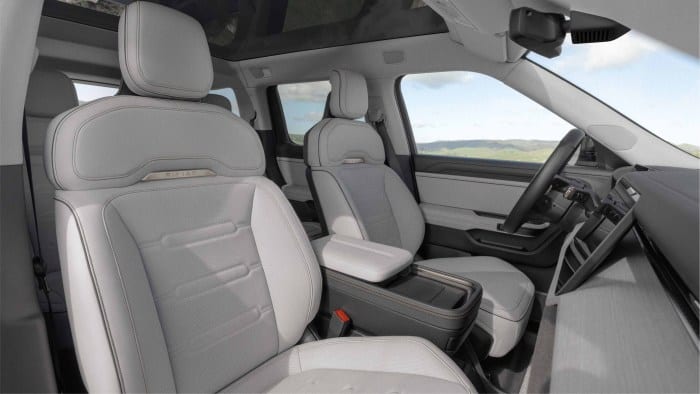
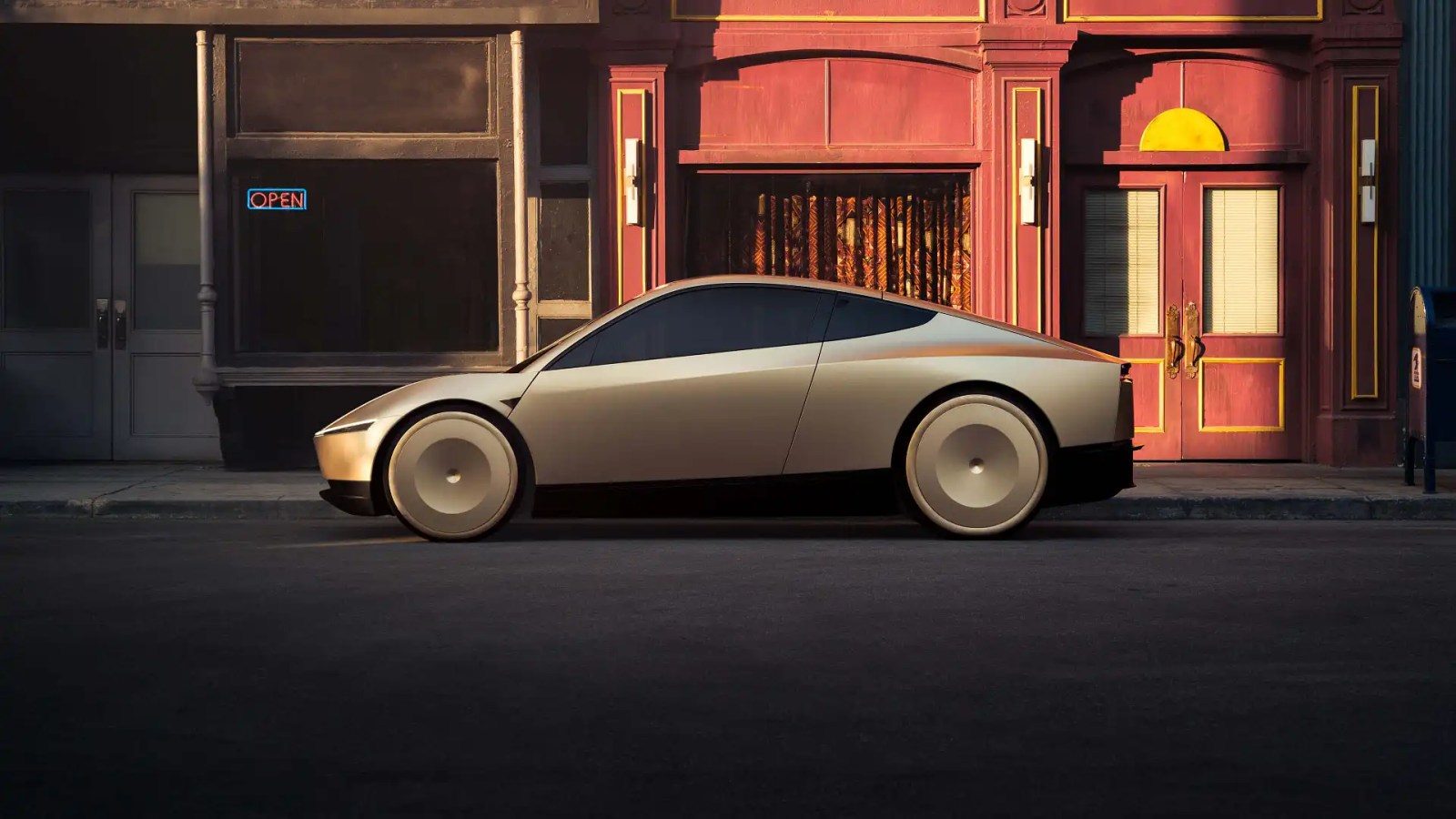
Nevada’s approval lands as Tesla prepares to introduce the Cybercab — its purpose-built two-seat robotaxi with no steering wheel or pedals — into commercial service for the first time.
Tesla‘s official Robotaxi account on X announced a sweepstakes on August 18 giving riders a chance to attend a Cybercab launch event, with an entry window running through August 23 and winners to be notified by August 25.
Tesla confirmed the event will take place in Austin, but has not disclosed a specific date. Contest timing points to a launch before the end of August or in early September.
The first production Cybercab rolled off the line at Gigafactory Texas on February 17, with continuous volume production beginning in April.
A JPMorgan note published on Wednesday, following a tour of Tesla‘s Fremont factory, revealed the company is deliberately holding back Model Y additions to its robotaxi fleet in favor of the Cybercab.
Tesla has operated its robotaxi service exclusively with Model Y vehicles in every market to date.