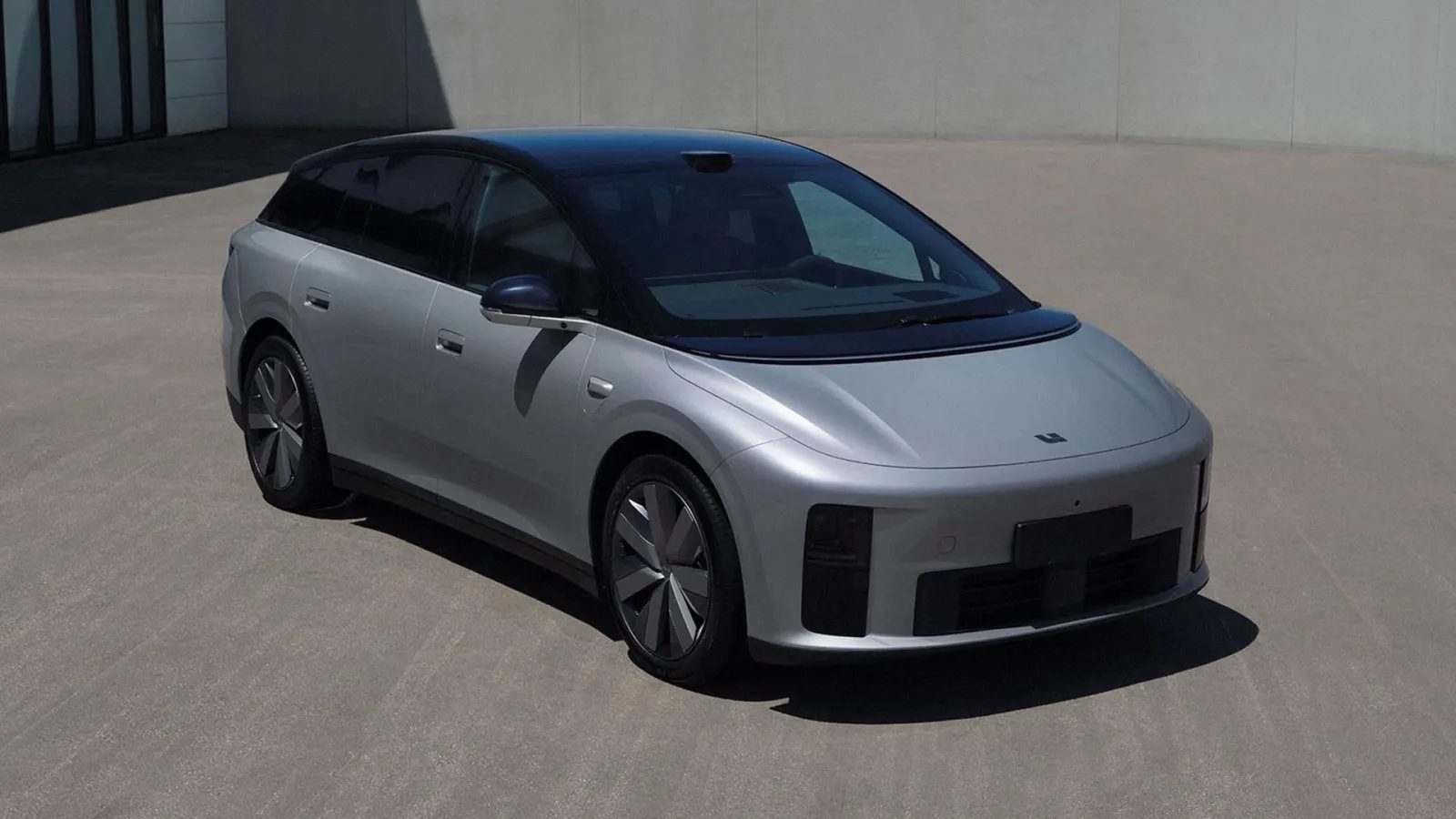

Li Auto filed the 2026 model year of its best-selling model as it prepares to begin deliveries in China of the revamped SUV in November.
The i6 SUV appeared in the Ministry of Industry and Information Technology’s latest product announcement on Tuesday with two battery assemblies, using cells from Sunwoda in one and CALB in the other.
CATL, the world’s largest battery maker which supplied the 2025 version alongside Sunwoda, is not in the filing. The CALB entry is new to Li Auto.
Chinese outlet 36Kr reported on Tuesday evening, citing industry sources, that the company is bringing in CALB as its third cell supplier and intends to put its cells in the fully electric models first, with the i6 the likely first vehicle.
Li Auto said on Monday that the refreshed i6 would carry its “self-developed 5C battery” and in-house Mach driver-assistance chip when pre-orders open in late September, with deliveries from early November.
The Beijing-based carmaker will design the lithium iron phosphate pack and assemble it, and buy cells from two suppliers, neither of them CATL.
Battery chief Liu Zhimin said at the L8 launch in June that Li Auto defines the cell chemistry, cell structure, pack and management system and has the cells made by Sunwoda through a 50:50 joint venture, in which Li Auto disclosed a further direct stake of 8.79% last week.
The CALB line adds a second manufacturer, and 36Kr’s account gives the history: the two companies talked in 2022, and Sunwoda got in first because it cooperated on engineering and was willing to open equity to Li Auto.
CALB is China’s third-largest battery supplier by shipments after CATL and BYD, one of the few besides CATL with a strong ternary-chemistry business, and already supplies XPeng, Leapmotor through a joint venture formed in 2025 with a 49:51 split, Huawei’s HIMA brands and Xiaomi, 36Kr said.
The 2026 Changes
The body is unchanged at 4,950 mm long, 1,935 mm wide and 1,655 mm high on a 3,000 mm wheelbase, with five seats, 20- or 21-inch wheels and a 200 km/h top speed.
The powertrains are the same as today’s: a single 250 kW rear motor, or a dual-motor version adding a 150 kW front unit.
Two hardware options are new.
The filing photographs show side LiDAR units mounted in the front door-handle housings alongside the existing cameras, and a rear LiDAR in the bumper, both optional.
Extra sensors on an optional basis would fit a higher assisted-driving trim built around the Mach chip, which on the current car’s AD Max trims, would take the place of Nvidia’s Thor-U.
The filing does not mention the chip.
An electrically retractable tow hitch is also optional, rated for 1,500 kg, and the filing notes it does not change the vehicle’s length.
Kerb weights are 2,395 or 2,460 kg for the single-motor car and 2,520 or 2,585 kg for the dual-motor, two figures each that usually indicate two battery sizes. Gross weights are 2,935 and 3,060 kg.
Against the 2025 Car
The 2025 i6 was filed in June 2025 under three product codes, two with CATL cells and one with Sunwoda cells, for an 87.3 kWh lithium iron phosphate pack.
Li Auto told buyers before the September launch that all 2025 deliveries would carry CATL cells.
When CATL supply fell short and waits reached 18 to 22 weeks, the company offered earlier delivery to customers who accepted Sunwoda packs, with a two-year or 40,000 km warranty extension, and in January told some customers their production slots had moved.
Many held out for CATL. The 2026 filing answers that episode by dropping CATL, keeping Sunwoda, adding CALB and bringing pack assembly in-house.
Kerb weights have moved. The 2025 car weighs 2,380 kg with rear-wheel drive and 2,515 kg with all-wheel drive.
The 2026 filing gives 2,395 or 2,460 kg and 2,520 or 2,585 kg. The lighter figures are within 15 kg of the old car and the heavier ones 65 to 70 kg above it, which points to a second, larger battery beside a base pack.
The filing gives no capacities. Gross weights rise by 65 and 70 kg to 2,935 and 3,060 kg.
The sensor options follow the L-series. The 2025 i6 carries one roof LiDAR.
The May filing for the 2026 L6 added optional side and rear solid-state units to bring it level with the flagships, and the i6 now gets the same, along with the retractable tow hitch that also debuted on the L6.
Dimensions, wheelbase, motors, tyre sizes and top speed are unchanged.
The Battery Line
Li Auto set out on Monday a lineup-wide shift to in-house batteries, saying CATL packs for the new Mega were about to run out and that the i9 would switch after launch.
Its stated reasons are margin and supply: vehicle margin fell to 9.4% in the second quarter from 19.4% a year earlier, and at the i6’s launch last September the CATL version carried an 18-to-22-week wait against two to four weeks for the Sunwoda version.
The i6 is the car that decides whether the strategy works.
It sold 16,979 units in August, up 10.1% from July’s 15,420 and 45.1% of Li Auto’s 37,679 deliveries, according to CPCA model data released on Tuesday, taking its 2026 total to 152,842. Its July output had been cut by about 4,000 units on a headlight-supply problem.
The same table shows the refreshed L6, launched in July with an in-house Sunwoda pack, reaching 9,918 in its first full month, within 82 units of the 10,000-a-month level management set as its target.
A pack Li Auto assembles itself from two cell suppliers is the company’s answer to both the margin and the queue.
36Kr‘s sources put the timing in the context of rising lithium carbonate and memory prices and a product year in which the L9 Livis, the new Mega and the i9 all land.