
RBC Capital Markets lowered its price target on Tesla on Monday while maintaining an Outperform rating on the stock, according to a new research note obtained by PriceTarget.
The firm trimmed the target by about 4%, to $480 from $500. The new target implies approximately a 55.2% upside based on Monday’s closing price of $309.22.
Analyst Tom Narayan cut his standalone intrinsic value for Tesla — the figure that strips out any merger premium — to $417 a share from $446.
The reduction was “largely driven by cuts to the robotaxi forecast,” and came days after Tesla‘s second-quarter earnings results.
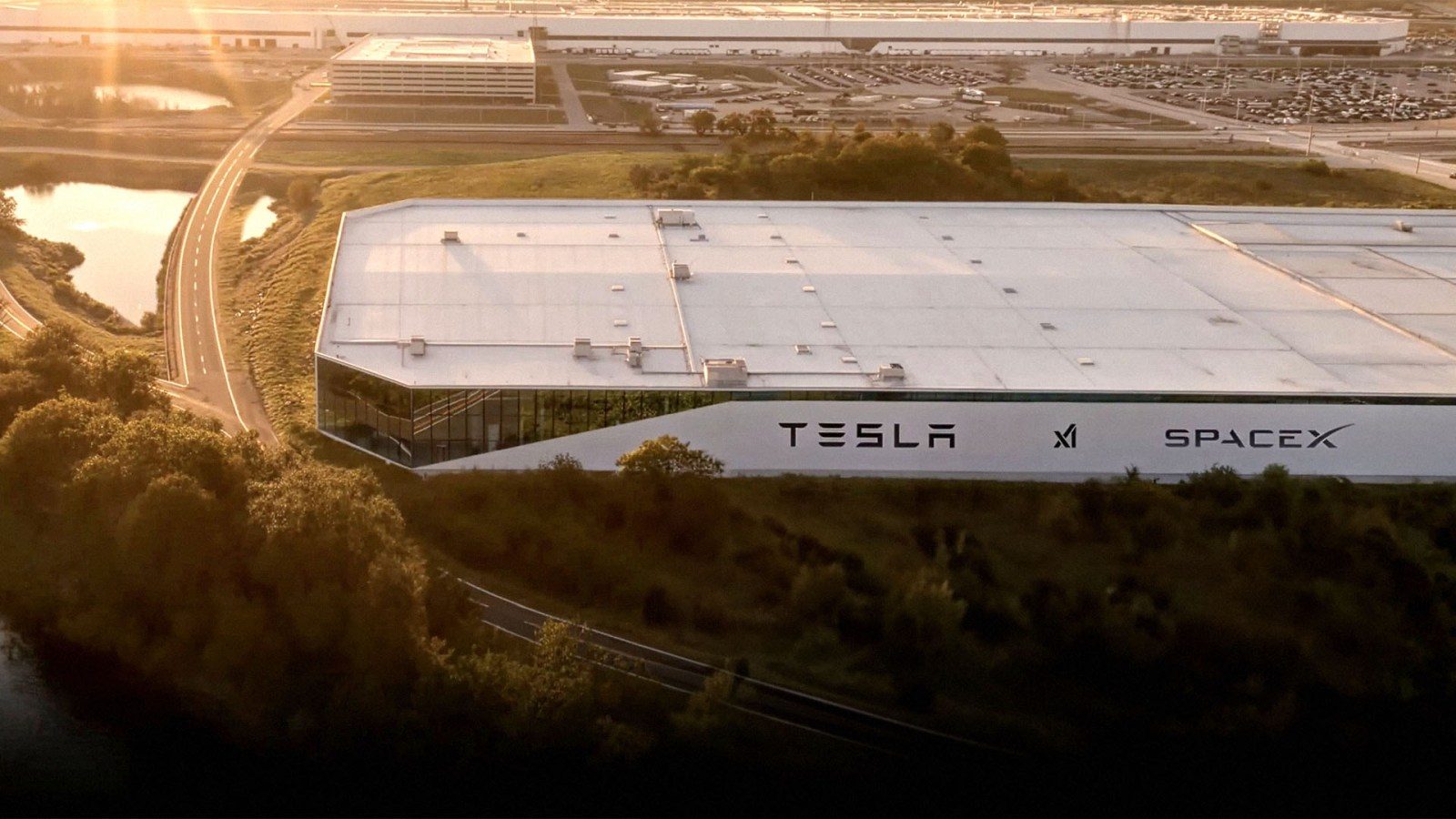
RBC framed a potential Tesla-SpaceX combination as creating what the firm described as “vertical integration from orbit to ground” — an ecosystem spanning connectivity, autonomous vehicles, and humanoid robotics that Narayan argued would be difficult for competitors to replicate.
The Terafab chip collaboration, in RBC’s view, represents the most tangible near-term synergy.
RBC had raised Tesla’s price target to $500 from $475 on July 7, by incorporating a 25–30% premium tied to unconfirmed reports of a potential SpaceX acquisition.
Tesla‘s stock was trading near $420 at the time.
SpaceX Merger
Despite the lower target, Narayan retained the SpaceX premium embedded in the $480 figure.
The most concrete near-term opportunity, in Narayan’s view, is the Terafab chip collaboration — joint development of proprietary silicon for Tesla‘s autonomous vehicles, Optimus, and SpaceX’s AI datacenter infrastructure — which would eliminate costly duplication across two compute-intensive companies.
RBC also identified a financial logic.
SpaceX’s negative free cash flow through at least 2030, by RBC’s estimates, would be backstopped by Tesla‘s cash generation.
The AI and space-dedicated company’s long-term growth trajectory, in turn, would be additive to Tesla shareholders waiting for the Robotaxi and Optimus businesses to mature.
Narayan set $480 as a potential offer price that could prove compelling for Tesla shareholders in an acquisition scenario.
Former Wedbush analyst Daniel Ives has separately put the probability of a combination at above 80% within the next year, describing the Terafab chip venture as a first step toward a merger the firm expects in 2027.
Musk was pressed by both shareholders and analysts during last week’s earnings call on whether he sees long-term synergistic value in combining the two businesses.
“The numerous collaborative initiatives discussed in this meeting clearly demonstrate that the degree of business overlap between the two companies continues to grow,” he stated, while refusing to comment on any corporate merger-related topics.
However, he argued that “there remains significant room for further synergy,” exemplifying with products including the Grok large language model (LLM) integrated into Tesla vehicles, Starlink terminals fully integrated into Cybercab and eventually all Tesla vehicles, among others.
The exchange marked Musk’s most direct public acknowledgement of the merger thesis.
Previous references had been limited to financial disclosures — the $2 billion equity stake, the Megapack and Cybertruck procurement, and the Terafab joint venture — rather than explicit discussion of a corporate combination.
Musk controls more than 82% of SpaceX’s voting power and roughly 20% of Tesla.
RBC has previously noted that existing Tesla shareholders would require a premium in any deal because Musk would control more than 50% of a combined entity.
Terafab Project
RBC identified the Terafab chip plant as the most tangible near-term synergy between the two companies.
“We estimate Tesla‘s proposed Terafab facility, developed in collaboration with SpaceX, could cost $55B with potential to expand to $119B,” the analyst wrote, adding that it comprises “~$10B for facility shell, ~$35B in wafer processing equipment, and remainder in packaging, utilities, chemical systems.”
A Tesla-SpaceX combination could meaningfully improve procurement terms, leading to potential cost synergies, according to him.
Narayan laid out the economic rationale for vertically integrating chip manufacturing. RBC estimates Tesla is targeting a cost per chip of roughly $3,000, approximately 10% of the roughly $30,000 market price for an Nvidia inference chip.
Assuming two chips per vehicle and one per Optimus unit, the firm projects chip-related expenses could rise from approximately $10 billion in 2026 to roughly $150 billion by 2050.
Sourced externally, RBC estimates that figure would reach approximately $1.5 trillion over the same period, implying vertical integration savings of well over $1 trillion.
For context, Tesla‘s entire market capitalisation stood at $1.22 trillion as of Monday’s close — meaning RBC’s estimated chip savings alone could exceed the company’s current equity value.
The company hired Intel veteran Gary Jiang in June as director of the Terafab project — the first senior leadership appointment to surface for the venture.
SpaceX estimated the initial investment at $55 billion and a total of $119 billion for all phases.
Tesla‘s SpaceX equity stake generated a $1.01 billion unrealized gain in the second quarter, a paper profit worth more than twice the company’s operating income for the period.
Robotaxi, FSD Expansion
Speaking about Robotaxi expansion — the topic that ultimately justified RBC’s trim — Chief Executive Elon Musk acknowledged fleet caution during the call.
He said even a single injury would generate worldwide headlines and prompt regulators to restrict operations.
Ashok Elluswamy, VP of AI Software, confirmed the fleet now runs FSD V15, with the same build planned for the Cybercab, production of which began during the quarter.
Cumulative paid robotaxi miles reached roughly 2.4 million by the end of June, but estimated monthly additions suggest growth slowed after peaking in March, as EV reported.
Tesla operated only about 175 registered vehicles across its Texas cities as of mid-July — far below the 1,000-vehicle year-end target Morgan Stanley had forecast in December 2025.
The service has expanded to Tampa and Orlando a day before the earnings call, though the coverage remained short of the targets laid out by management months ago, with Phoenix and Las Vegas yet to see its launch.
Tesla’s Q2 Earnings
Tesla posted record revenue of $28.2 billion, but operating income fell 57% year over year and operating margin contracted to 1.4% from 4.1% as the company poured capital into AI training, the Cybercab, and Optimus.
The stock crashed double digits the following session, erasing about $204 billion in market value in a single day.
Seven Wall Street firms cut their price targets on July 23, and Piper Sandler followed a day later.
By Monday’s close, shares had fallen roughly 26% from the pre-earnings level.