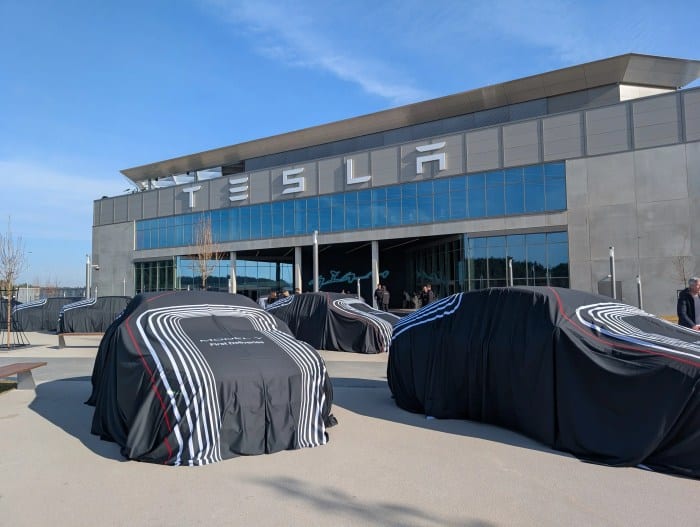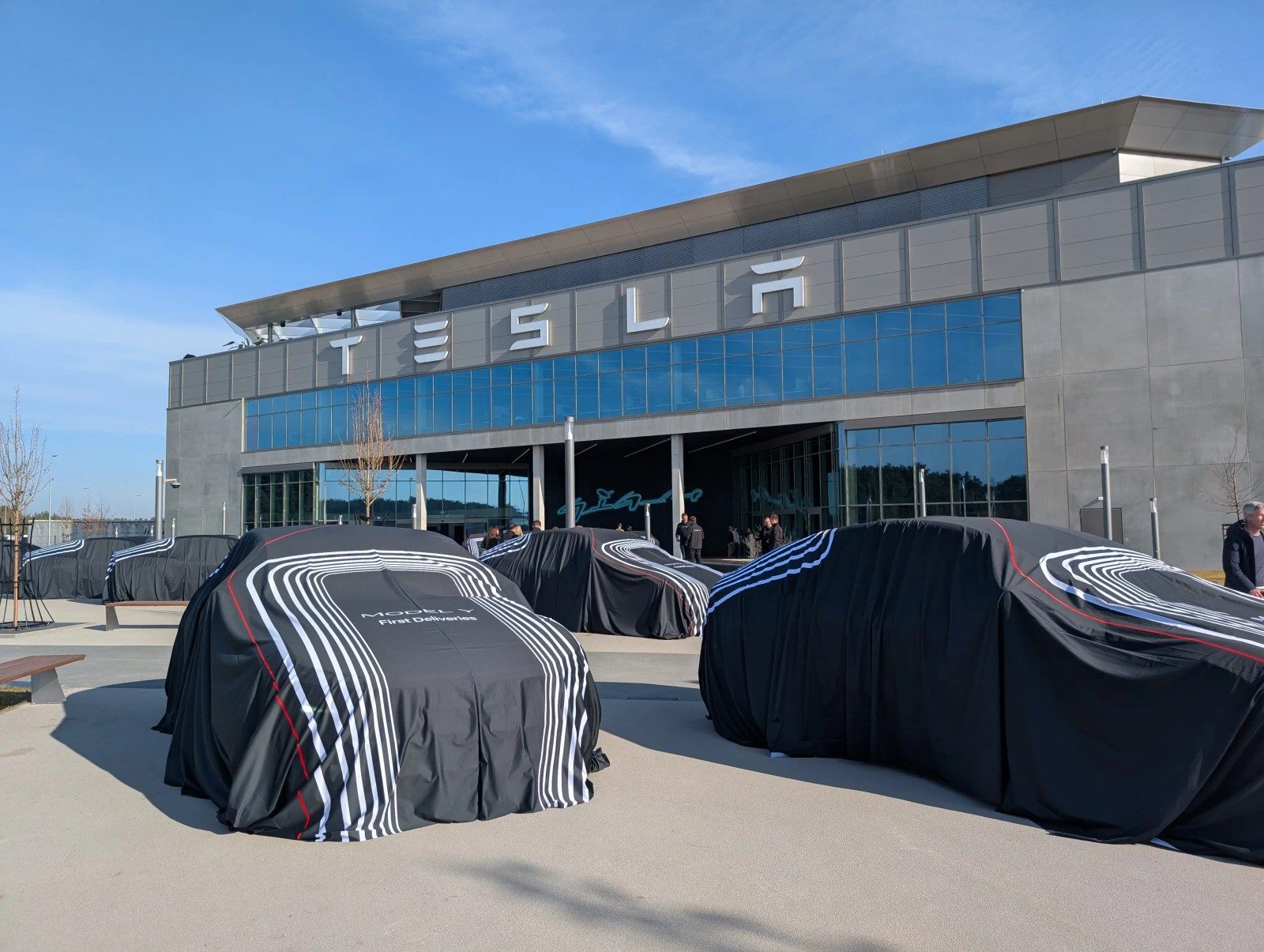

Tesla is preparing to seek approval for a second production hall at its Gigafactory Berlin-Brandenburg that would be more than twice the size of the existing one, reviving long-held plans to build up to one million vehicles a year at the site.
The hall, planned north of the current plant in Grünheide, would cover about 536,000 square meters, compared with about 219,000 square meters for the existing building, public broadcaster rbb reported on Wednesday.
Tesla intends to file the applications with the permitting authorities in December, with construction of the hall pencilled in for 2027 and the full expansion spread over about ten years, rbb said, citing its own information.
The company confirmed the plan in a statement to the broadcaster.
“As early as 2023, Tesla outlined the phased expansion of Gigafactory Berlin-Brandenburg in its application for a partial permit and set out the associated environmental impacts,” Tesla said.
“With the approval notice of October 15, 2024, its fundamental approvability was established,” the company said, adding that the planned partial permit application for the northern production building builds on that decision and would allow the building to be erected once granted.
Tesla has not said how many people the expansion would employ, according to rbb, which said earlier plans had put long-term headcount at the site at up to 42,000.
Water and Power
Water has been a particularly sensitive issue at Grünheide from the start, as part of the site lies in a water protection area.
Tesla plans an additional water cycle with its own wastewater treatment, which would eventually also treat sanitary wastewater, rbb reported.
The new hall and extra staff would raise the plant’s total water consumption, but the on-site treatment means no additional sanitary wastewater would go to municipal systems, according to the report.
The plant’s freshwater use fell by about a third to 304,734 cubic meters in 2025, from about 457,000 a year earlier, according to Tesla’s environmental statement published in September.
That equals 1.51 cubic meters per Model Y, down from 2.16, against a European industry average of 2.84 cubic meters that Tesla attributes to the European Automobile Manufacturers’ Association (ACEA).
Tesla said it recycled all process wastewater on site in 2025 and aims to hold water use per vehicle at that level as production grows, although total consumption could rise with additional staff.
The package also includes a dedicated electrical substation and an expanded water treatment plant, and Tesla invited local mayors and representatives of municipal utilities to the factory to brief them on the plans.
A Long Road to Approval
The plant received its final permit in March 2022, allowing up to 500,000 cars a year, and delivered its first Model Y vehicles that month.
Tesla’s plan to double capacity to one million cars and 100 GWh of battery production a year met resistance in 2024, when 65% of respondents in a non-binding local referendum in February rejected the original proposal.
Grünheide’s council approved a revised plan in May 2024 by 11 votes to six, cutting the forest area to be cleared to 47 hectares from more than 100, dpa reported.
Brandenburg’s environment agency then granted a first partial permit in October 2024, covering changes to existing facilities.
At the time, Plant Manager André Thierig said Tesla would not spend several billion euros on the expansion without clear signals from the market, and the larger build-out was put on hold.
The Ramp
The plant built about 202,000 vehicles in 2025, around 9,000 fewer than in 2024, and ran at 54% of capacity, according to Tesla Manufacturing Brandenburg SE’s 2025 annual report.
Revenue fell to about €7.1 billion ($7.9 billion) from about €7.7 billion ($8.6 billion), while net profit rose to €77.1 million ($86.1 million) from €56.8 million ($63.5 million), the report showed.
Demand has since recovered, and Tesla said in April it would hire 1,000 workers as European orders for the Model Y jumped. The plant marked its 750,000th vehicle in May.
Weekly output was to rise to 6,200 vehicles from July, and in June management told staff it would lift production by another fifth to 7,500 a week from October, adding a further 1,000 jobs, dpa reported.
At that rate the plant would build up to about 375,000 vehicles a year, according to the annual report, still well below the 500,000 it is permitted to make.
Including battery production, Tesla counts 3,500 new jobs at Grünheide this year.
The plant supplies more than 30 markets, including Canada, where US tariffs make cars from Germany cheaper than those from Tesla’s American plants, and Taiwan.
Output was still below 6,500 vehicles a week in early September, according to plant figures cited by Handelsblatt, and Tesla scheduled mandatory special shifts on September 18, 19 and 25 to close the gap.
The plant has cut its cycle time to about 45 seconds from around 80, Handelsblatt reported.
Tesla raised pay by an average of 4% to 5% from October 1, with production staff getting the full 5%, and now employs about 12,000 people at the site.
In Germany, Tesla’s registrations more than tripled in September to 12,552 vehicles, the highest monthly total since December 2022.
Globally, the company’s third-quarter deliveries fell 2.1% to 486,532 vehicles.
Thierig said in June that Tesla would keep building cars “for a very long time” even as it expands into AI, robotics and energy.
Battery Cells
Tesla is also adding cell production at the site, a plan Chief Executive Officer Elon Musk first announced in 2020 with up to 100 GWh a year before Tesla shelved it in 2022 to prioritize the United States.
It revived the plan in December 2025 with an initial 8 GWh a year from 2027, and Thierig said Tesla would by then have invested almost €1 billion ($1.1 billion) in the cell factory.
In May, Tesla more than doubled the target to 18 GWh a year of 4680-format cells, with an additional $250 million investment and more than 1,500 jobs.
The cells will be made with a dry-electrode process, which skips the solvent-based coating and energy-intensive drying ovens used in conventional cell production.
Meyer said Europe lacks a comparable ecosystem of potential suppliers and that producing cells economically in Europe is currently hardly possible in international competition.
Tesla has said experience in cell manufacturing is not a hiring criterion for the new jobs.
Labor Tensions
The expansion has been tied to a bitter dispute with IG Metall, Germany’s largest industrial union.
In a video message to staff ahead of the works council election in March, Musk said Tesla would not close the factory but realistically would not expand it either if outside organizations pushed the company in the wrong direction, Handelsblatt reported.
Thierig had said in December that he could not imagine decision-makers in the United States pushing ahead with the expansion if the vote went mainly IG Metall’s way.
The union sued Thierig for defamation in February over an email to staff accusing a union official of a criminal offense, a dispute that was later settled, according to taz.
The non-union list Giga United, led by Works Council Chair Michaela Schmitz, won about 41% of the vote in March, while IG Metall’s list fell to 31% from about 40% in 2024.
Lists without union ties took 24 of the 37 seats, and turnout was close to 90%, according to Thierig.
IG Metall has asked the labor court in Frankfurt (Oder) to annul the result, citing what it called intimidation and unequal treatment of the lists.
Tesla has consistently rejected a collective wage agreement for the plant.