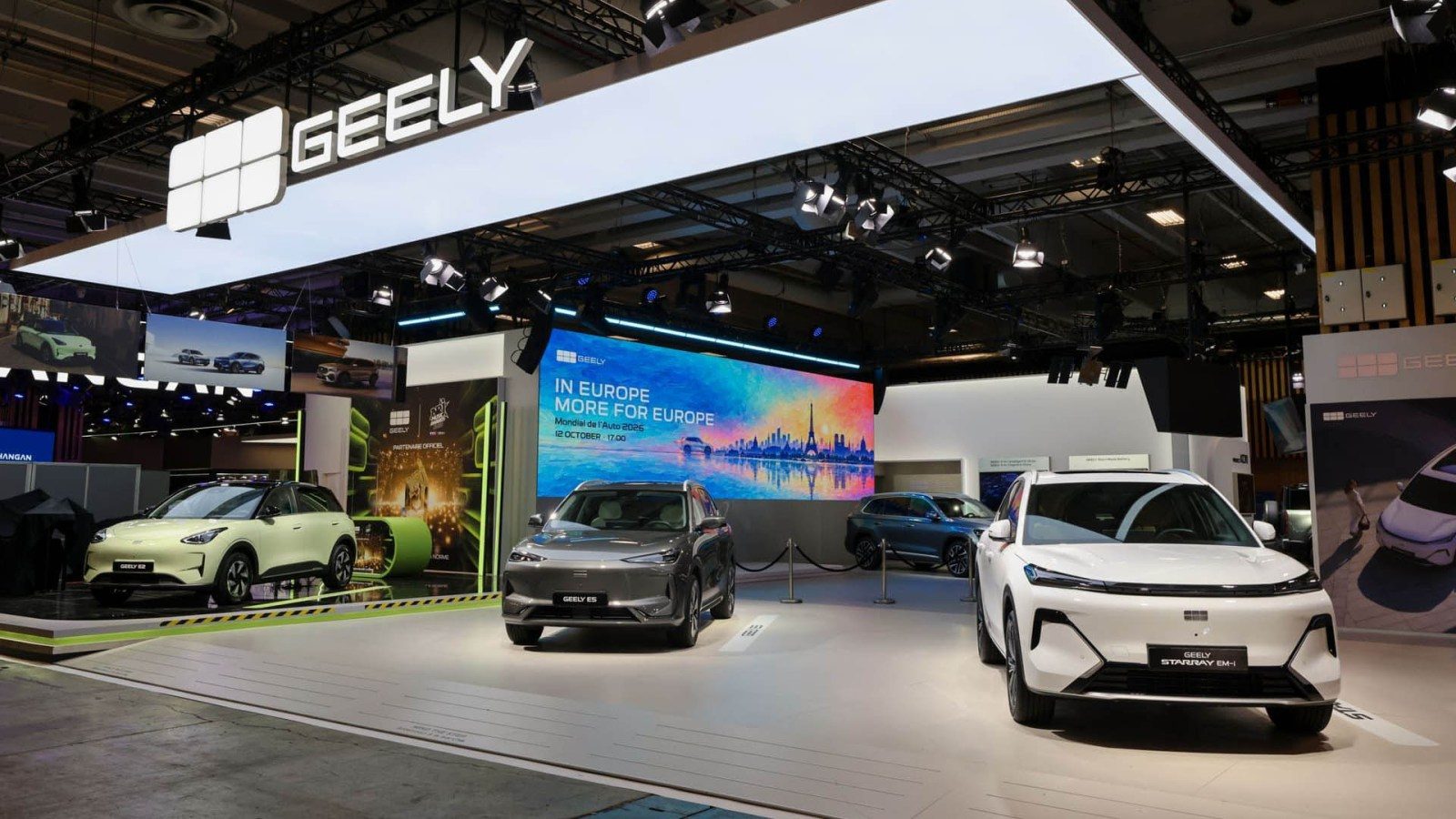

BYD, Geely and Chery, three of China’s largest car exporters, publicly backed last week’s understanding between Beijing and Brussels on hybrid vehicle trade on Wednesday, without referring to any limit on their shipments to Europe.
Earlier this week, the European carmakers’ association ACEA welcomed the understanding as a way to manage the arrival of Chinese brands “in an orderly way.”
The statements, published by the companies on Wednesday, praised the outcome of the second meeting of the China-EU trade and investment consultation mechanism, held in Beijing on October 8 and 9.
GAC and Great Wall Motor issued similar statements on the same day, as did the China Association of Automobile Manufacturers (CAAM).
GAC said the consensus would help “avoid an escalation of trade friction” and keep supply chains stable, while Great Wall said it would “fully push for the consensus to be implemented,” according to Chinese media reports.
CAAM said that “replacing confrontation with dialogue and resolving disputes through cooperation” was a rational choice in both sides’ fundamental interests.
None of the company statements mentioned export volumes, a quota or the halving of Chinese hybrid exports that EU Trade Commissioner Maroš Šefčovič has said the understanding opens up.
BYD Executive VP Stella Li said on Monday, at the Paris Auto Show, that she did not yet have the details of the agreement.
The EU plans a four-year safeguard capping Chinese hybrid imports at 350,000 in the first year, rising 6% a year, a number not mentioned by any official Beijing document — including Wednesday’s statements from the country’s largest exporters.
What the Companies Said
BYD said the outcome “effectively manages trade differences and avoids an escalation of friction,” and “takes into account the realities and reasonable concerns of the industries on both sides,” according to the translation of its Chinese statement.
It said the result had created “a stable, predictable and sustainable environment for cooperation” in China-EU hybrid vehicle trade.
The car and energy giant added that it looked forward to working with domestic peers “as responsible global industry participants” to promote “the healthy and orderly international development of China’s auto industry.”
The company also said it would keep innovating to cut greenhouse gas emissions and reliance on fossil fuels, restating its goal to “cool the Earth by 1°C.”
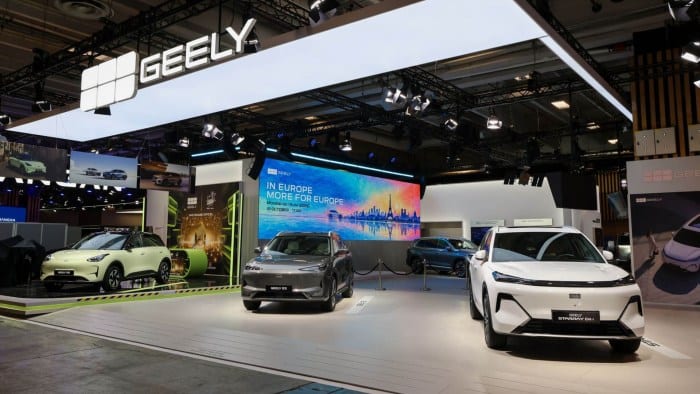
Zhejiang Geely Holding Group said it supported the three principles the two sides confirmed for hybrid trade, “respect for facts, non-discrimination and compliance,” which China’s commerce ministry set out on Monday.
The outcome “helps avoid an escalation of trade friction, stabilizes market expectations and strengthens companies’ confidence” in China-EU cooperation, Geely said.
“We look forward to the relevant consensus being implemented steadily,” it added.
Geely said it would actively expand exchanges and cooperation with European industrial partners and help keep the auto supply chain stable.
Chery said “open cooperation and mutual benefit are the common direction for the development of the global auto industry.”
It said the talks had created “a stable, fair and predictable environment” for deeper China-EU auto cooperation and that it welcomed both sides “continuing to meet each other halfway.”
The company said it would keep “deeply cultivating Europe and global markets” under its “In somewhere, For somewhere, Be somewhere” globalization approach.
The Exporters
Chery exported 943,817 vehicles in the first half of 2026, up 71.5% from a year earlier, including 191,062 in June.
BYD exported about 792,000 vehicles in the first six months, up 67.8%, according to CAAM data, even as its total sales fell 15.7% to 1,808,511. The company said it shipped 175,349 NEVs abroad in June alone.
Geely Automobile Holdings, the listed carmaker within Geely Holding, exported 474,228 vehicles in the first half, up 158%.
Geely Holding, whose brands also include Volvo Cars, Zeekr and Lynk & Co, sold a record 1,934,842 vehicles worldwide in the first half.
Together, those figures add up to more than 2.2 million vehicles, while China’s passenger car exports rose 71.7% to 4.432 million in the first half, according to CAAM.
BYD more than doubled its EU market share to 2.4% in the first half, according to the European Automobile Manufacturers’ Association (ACEA).
Building in Europe
All three are adding or planning production inside Europe, where locally built cars avoid EU duties on imports from China and would fall outside the planned hybrid quota, which applies by country of production.
Li said on Monday that the company was closely studying a plant in France, telling BFM Business at the Paris auto show that “France is on the shortlist because your energy is very competitively priced.”
“We’re going to try to have a second and a third factory in Europe,” she said, adding that BYD would “invest massively” in the region.
“I want people in France to say that BYD is a French company,” she said.
BYD’s first European car plant, in Hungary, is due to start production in the fourth quarter, about a year later than planned.
Hungary’s government is reviewing investment and subsidy agreements signed with Chinese companies under Viktor Orbán, Nikkei has reported.
“We want to have local engineering, local production and a local supply chain,” Chery’s Yin told Reuters.
Chery’s venture with Spanish partner Ebro at the former Nissan plant in Barcelona has been delayed, and a Chery spokesperson said in April the company was committed to starting production during 2026.
Ebro President Rafael Ruiz said at the time that production could begin at the end of 2026 or early in 2027.
Yin said in April that Chery preferred partnerships using existing factories in Europe to heavy investment in a new plant, and named France as a possible location.
Geely Auto agreed in July to take a 34% stake in a joint venture with Ford at its plant in Valencia, Spain, which will build two electric Geely models and three Ford vehicles from 2028.
Geely Holding already builds cars in Europe through Volvo Cars, which has plants in Ghent, Belgium, and Torslanda, Sweden.
Magna Steyr builds GAC‘s Aion V and Aion UT under contract at its plant in Graz, Austria.
The European Commission is also preparing “Made in Europe” rules that would require foreign carmakers to produce more locally and use European suppliers, according to Reuters.
The Understanding
China’s commerce ministry said on Monday that the two sides had agreed an arrangement allowing Chinese hybrid exports to rise from 2025 levels and that China’s quota would be no lower than that of any other source of EU imports.
The EU imported 107,000 hybrid cars from China in 2024 and 302,000 in 2025, according to EU data cited by the ministry.
Šefčovič said the understanding “opens the prospect of cutting China’s export by more than a half,” measured against imports projected for this year.
EU leaders will discuss the understanding at a summit in Brussels on October 15 and 16, and the Commission will act only if they back it.