
Tesla‘s public policy lead in Canada said Global Affairs Canada gives automakers advance notice of the maximum number of China-made vehicles they can expect to import in each period, offering an explanation for Tesla’s pause on Model 3 orders in the country.
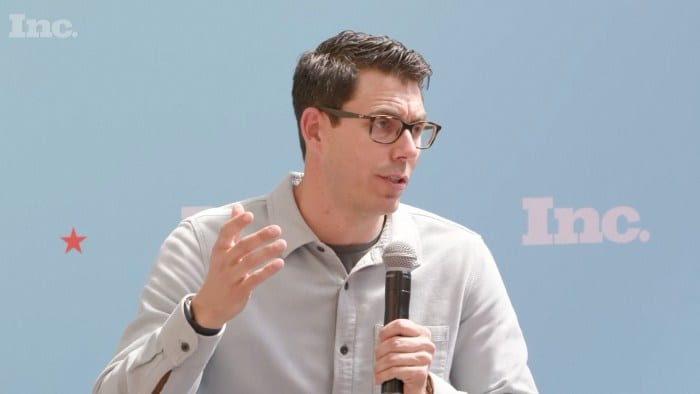
“Global Affairs Canada is providing in advance the maximum number of cars OEMs can expect to bring in for a period,” Iain Myrans, Tesla’s National Senior Manager for Public Policy and Business Development in Canada, wrote in a LinkedIn post on Tuesday.
“So, while the program outwardly looks like it is a first-come-first-served model, there is a lot more behind it,” he wrote.
Myrans said many people had asked him why Tesla stopped taking orders for the Model 3 Premium in Canada, and that “those who have been writing on this topic have missed some important information.”
He did not say how many vehicles Tesla could import, when it was told or whether other automakers had received similar figures.
Global Affairs Canada has not published any limits for individual automakers.
Ministerial Discretion
Myrans pointed to the legal basis of the quota, which allows up to 49,000 vehicles from China into Canada in the quota year from March 1, 2026, to February 28, 2027.
He wrote that while the limit is set under the Export and Import Permits Act and the Import Control List, “Section 8(1) of the Act gives the Minister discretion over quantity, persons, and permit conditions.”
That section says the Minister may issue import permits “in such quantity and of such quality, by such persons,” and “subject to such other terms and conditions as are described in the permit,” according to the text of the Act.
Myrans also wrote that the program’s notices say the Minister “will monitor for equitable access to permits, including by setting aside quota so no one OEM takes a disproportionate share.”
The current notice to importers, published on August 29, says the department will monitor permit applications and issuance “for the purpose of providing equitable access to the quota to eligible applicants.”
It adds that this “could include setting aside a portion of the available quota for the use of OEMs, including new entrants,” and does not refer to a disproportionate share.
The same notice states that “the quota is administered on a first-come, first-served (FCFS) basis,” with permits “issued on demand to eligible importers.”
Global Affairs Canada set out a share of the quota reserved for EVs with a free-on-board price of C$35,000 ($24,600) or less, rising from 10% in the second year to 50% in the fifth.
The Order Pause
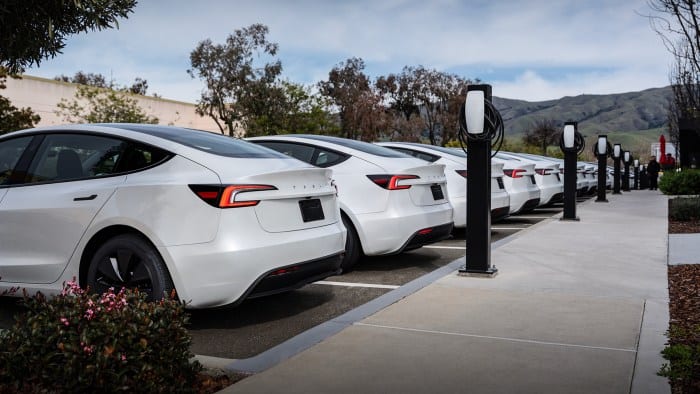
Tesla stopped taking orders on Monday for the rear-wheel-drive Model 3 Premium, priced from C$39,490 ($27,700), and the all-wheel-drive Premium, priced from C$49,990 ($35,100), both built in Shanghai.
A banner on its Canadian website said the Model 3 Premium orders were “paused after high demand exhausted Tesla’s import quota,” and that ordering would resume “if Govt of Canada issues more quota, expected March 2027.”
The Model 3 Performance, at C$74,990 ($52,600), remains available to order.
Tesla cut the Model 3’s Canadian starting price to C$39,490 in May after switching supply from the United States to Shanghai.
The Numbers
Imports from China used 15,603 of the 24,500 permits available in the first six-month period, leaving 8,897 that were carried into the second period, which runs to February 28 with 33,397 permits.
Only 328 vehicles had entered under the second period as of Global Affairs Canada’s October 9 report, all of them in September, including 160 electric passenger cars and 168 hybrid SUVs.
The government’s import data do not name automakers, and entry counts do not show how many permits any company holds.
Tesla is the only automaker known to have imported China-built passenger cars in volume under the quota. Officials had considered automaker-specific caps, Bloomberg reported in May.
Myrans has worked for Tesla in Canada since February 2017 and has held his current role since February 2020, according to his LinkedIn profile, which describes him as a member of Tesla’s Canadian leadership team and its “global policy lead for Robotaxi.”
He is registered as a federal lobbyist for Tesla Motors Canada with the title of Senior Managing Policy Advisor, according to Canada’s lobbying registry.
Before Tesla, he was Director of Policy in the office of Ontario’s Minister of the Environment and Climate Change from 2014 to 2017.