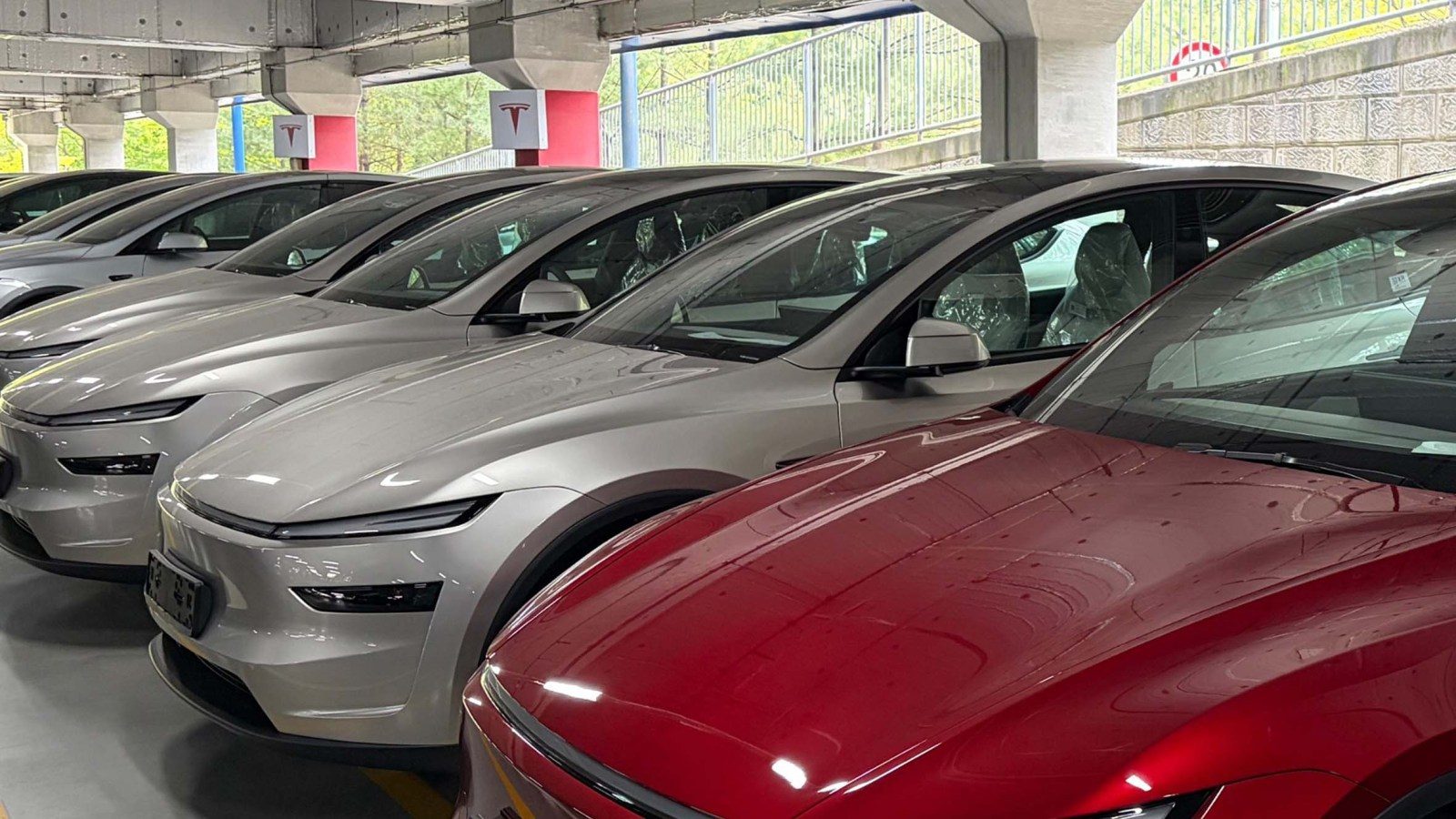

Tesla Korea raised prices across its Model 3 and Model Y lineup by up to 7 million won ($4,500) on Wednesday, a day after the South Korean government confirmed the company had passed its national electric vehicle subsidy eligibility evaluation.
The increases took effect on the same day the evaluation results became binding — and hit nearly every trim of Tesla‘s two best-selling models in the country.
Prices for the Model 3 Rear-Wheel Drive rose from 41.99 million won ($26,900) to 46.99 million won ($30,100), an increase of 5 million won ($3,200).
Tesla raised the pricing on the Model 3 Long Range by 7 million won ($4,500) — the steepest hike in the lineup — from 52.99 million won ($33,900) to 59.99 million won ($38,400).
The Model 3 Performance’s tag moved up by 5 million won ($3,200), from 64.99 million won ($41,600) to 69.99 million won ($44,800).
On the SUV side, prices for the Model Y Long Range AWD rose by 3 million won ($1,900) to 66.99 million won ($42,900), and the Model Y L six-seat variant saw the same increase, reaching 72.99 million won ($46,700).
The Model Y Premium RWD — Tesla‘s single best-selling imported vehicle in South Korea — was the only trim left unchanged at 49.99 million won ($32,000).
Subsidy Timing
South Korea’s Ministry of Climate, Energy and Environment announced the results of its subsidy eligibility evaluation on Tuesday, approving 27 companies across passenger vehicles, commercial trucks and buses.
Tesla was among the ten passenger vehicle companies selected under revised criteria, which for the first time expanded the assessment beyond vehicle performance to include technological development capabilities, supply chain contributions, after-sales service sustainability and safety management records.
BYD did not pass the evaluation, stripping the Chinese automaker of government purchase incentives in one of its fastest-growing export markets for the second half of 2026.
Other importers that qualified included Mercedes-Benz, BMW, VW Group, Volvo Cars and Polestar.
Under the current national subsidy programme, the government provides 1.68 million won ($1,100) for the Model 3 RWD, 4.2 million won ($2,700) for the Model 3 Long Range, 2 million won ($1,300) for the Model 3 Performance, 1.7 million won ($1,100) for the Model Y RWD, and 2.1 million won ($1,300) each for the Model Y Long Range AWD and Model Y L.
Buyers can receive additional subsidies from local governments on top of the national allocation.
In Seoul, combined subsidies can reach up to 7.5 million won ($4,800) per vehicle.
The price increases exceed the subsidy amounts in every case.
The Model 3 Long Range’s price rose by 7 million won while carrying a national subsidy of 4.2 million won — meaning the net cost to buyers increased by roughly 2.8 million won ($1,800) even after accounting for the government incentive.
Second Round of Hikes
Wednesday’s increases mark the second time Tesla has raised prices in Korea this year.
In April, the company hiked prices on the Model 3 Performance and Model Y Long Range AWD by 5 million won and 4 million won respectively, and raised the then-newly launched Model Y L by 5 million won.
Those increases came as Tesla became the first imported car brand in South Korea to exceed 10,000 monthly vehicle sales.
The Elon Musk-led company usually increases prices for its models when demand increases sharply, as also happened in Europe in recent months.
Combined with the April adjustments, some trims have risen sharply over a short period.
The Model 3 Performance’s price has climbed from 59.99 million won at the start of the year to 69.99 million won — a cumulative 10 million won ($6,400) increase, or 16.7%.
The Model Y Long Range AWD has risen by a combined 7 million won ($4,500) from its pre-April price of 59.99 million won to 66.99 million won.
Tesla in South Korea
South Korea has emerged as one of Tesla’s strongest markets globally.
The company registered a record 13,190 vehicles in April, surging 811.5% year over year and outselling BMW and Mercedes-Benz combined.
Monthly sales have risen sequentially since January, and Tesla has held the title of South Korea’s best-selling imported brand for multiple consecutive months.
Cumulative sales data from January through May 2026 show the Model Y Premium as the country’s top-selling imported vehicle with 28,449 units, with the Model 3 Long Range and Model Y Long Range also ranking among the best sellers.
Tesla currently sells four models in South Korea: the Model 3 sedan, the five-seat Model Y SUV, the six-seat Model Y L and the Cybertruck pick-up truck.
The Model 3 and Model Y are shipped from Giga Shanghai, while the Cybertruck is produced in the United States.
The Cybertruck is not eligible for EV subsidies as it is classified as a mid-size truck.
Goldman Sachs analyst Mark Delaney noted last month that South Korea and Australia have posted strong sales data on both a year-over-year and quarter-over-quarter basis through May, contributing to Tesla‘s second-quarter delivery trajectory tracking ahead of consensus.
FSD Approval
Tesla launched its Full Self-Driving (Supervised) software in South Korea last November, making the country the seventh global market to receive the system.
South Korea’s Korea Expressway Corporation tested the software in December and rated its highway performance as overall “excellent.”
FSD is currently available only on Model S, Model X and Cybertruck vehicles sold in the country, as those models are produced in the United States and enter under the South Korea-US Free Trade Agreement.
The Model 3 and Model Y, imported from Shanghai, face additional regulatory requirements that have delayed approval.
A job posting on Tesla‘s careers page, shared on X on Wednesday, showed the company is hiring a full-time Vehicle Operator in Busan for its Autopilot team under the AI & Robotics and Engineering and R&D divisions.
Vehicle Operators drive company-owned vehicles equipped with unreleased software builds to capture localised driving data, identify edge cases and report disengagements to the engineering team.
The listing describes the role as one focused on accelerating vehicle-level testing for all current and future Autopilot features.
Busan’s posting expands Tesla‘s Korean vehicle operator presence beyond the Seoul-based positions the company previously listed.
The hiring push also comes in the same week Tesla began rolling out FSD V14 Lite to Hardware 3 owners in the United States.
Tesla said in April that following the US deployment of V14 Lite for HW3 vehicles, it planned to expand the software to additional international markets — though no specific timeline was provided.
South Korea is expected to be one of those markets.