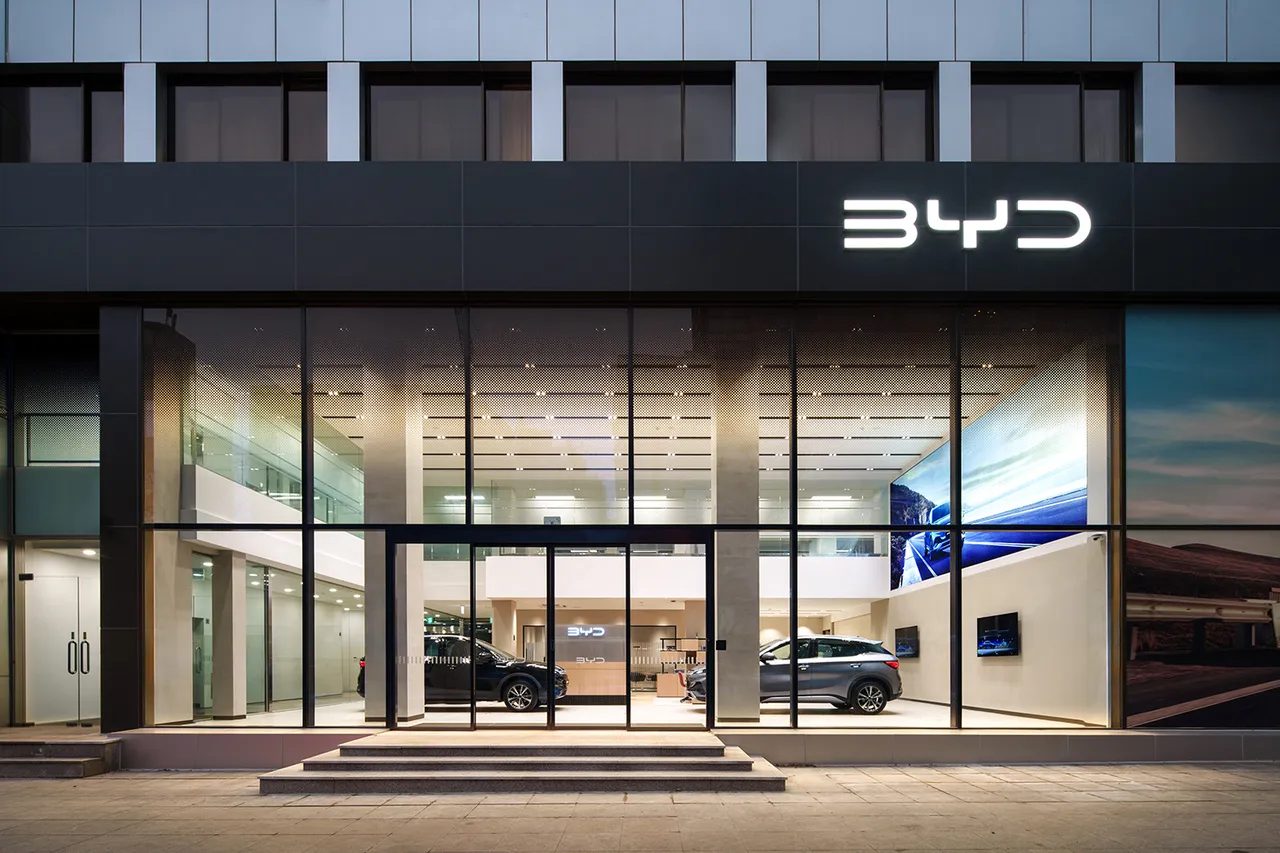

South Korea’s Ministry of Climate, Energy and Environment excluded BYD from its EV subsidy programme for the second half of 2026 — stripping the Chinese automaker of government purchase incentives in one of its fastest-growing export markets.
The ministry announced the results on Tuesday after evaluating 35 applications from automakers and importers.
Twenty-seven companies were selected across passenger vehicles, commercial trucks and buses, however, BYD Korea was not among them.
The evaluation was the first conducted under revised subsidy guidelines introduced this year.
Previous rounds focused primarily on vehicle performance, while the new criteria expands the assessment to include the company’s technological development capabilities, contribution to the domestic supply chain, response to environmental policies, sustainability of after-sales service and safety management record.
Companies Included
Ten passenger vehicle companies were approved, including Korean manufacturers Hyundai Motor, Kia, Renault Korea and KG Mobility.
Six importers also qualified: Mercedes-Benz, BMW, Volkswagen Group, Tesla, and Geely-backed Volvo Cars and Polestar.
Tesla‘s inclusion is notable.
The company has become the dominant imported brand in South Korea this year, registering over 10,000 vehicles per month for the past three consecutive months.
South Korea has emerged as one of Tesla‘s strongest markets globally, with the Model Y alone outselling most domestic electric vehicles by a wide margin.
A Blow at a Pivotal Moment
The exclusion arrives at a critical juncture for BYD‘s Korean operations.
The automaker registered 7,023 vehicles in South Korea from January through May, already surpassing the 6,097 units sold in all of 2025 — its first full year in the market.
BYD hit 10,000 cumulative sales in just 11 months of operations, the fastest any imported brand has reached that milestone in the country.
The Shenzhen-based automaker ranked fourth among imported brands by unit sales in April, behind Tesla, BMW and Mercedes-Benz, and ahead of Lexus, Toyota and Volkswagen.
In May, Chinese-made vehicles outsold Japanese brands in South Korea’s imported car market for the first time, the Korea Herald reported.
China captured a 6% market share against Japan’s 5.8%, driven entirely by BYD‘s 2,023 registrations, a figure that surpassed the combined total of Lexus, Toyota and Honda.
BYD Korea said in a statement that it respected the government’s policy decision.
“Expanding EV adoption is a goal that both the government and the industry should work toward together,” the company stated, adding that “BYD will continue to contribute to achieving the government’s policy objectives, advancing the industry, and protecting consumers’ interests.”
PHEV Debut in Korea
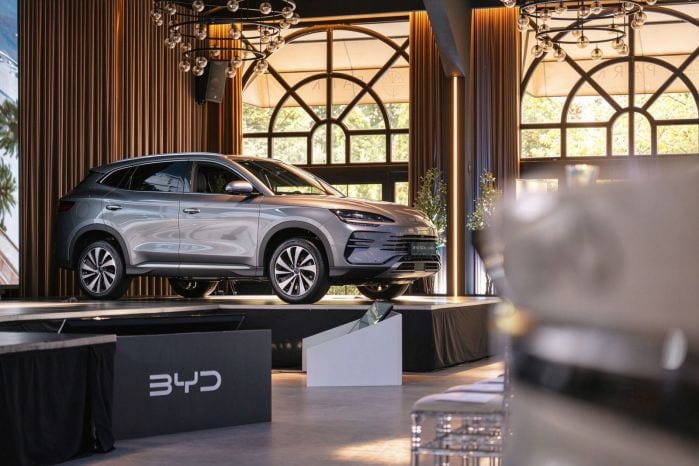
Just two days before the subsidy announcement, BYD unveiled the Sealion 6 DM-i at the Busan Mobility Show — its first plug-in hybrid vehicle (PHEV) in the Korean market.
Priced at 37.5 million won ($24,100), the vehicle targets the same midsize SUV segment as Kia‘s Sportage Hybrid.
BYD‘s General Manager for the Asia-Pacific Auto Sales Division Liu Xueliang told the Korea Herald at the event that Korea was adopting EVs at a much faster pace than Japan, where BYD debuted in 2023.
The PHEV launch was designed to bridge Korean consumers’ preference for hybrids with BYD‘s EV-centric technology.
Japan Precedent
South Korea is not the first Asian market to use subsidy policy as a lever against BYD.
Japan’s Ministry of Economy, Trade and Industry implemented revised clean energy vehicle subsidies on April 1, slashing BYD‘s per-vehicle subsidy from 350,000–400,000 yen ($2,200–$2,500) to a flat 150,000 yen ($940).
Toyota‘s bZ4X retained the maximum 1.3 million yen ($8,100) subsidy, while Tesla‘s Model Y and Model 3 saw their subsidies increased to 1.27 million yen ($7,900), largely because those vehicles use Panasonic batteries manufactured in Japan.
The impact was immediate.
BYD registered 363 passenger vehicles in Japan in May, a 12.7% year-over-year decline and the first monthly contraction of 2026 after four consecutive months of gains.
April registrations had already fallen sharply to 215 units from a March peak of 625.
The Japanese scoring criteria prioritise domestically manufactured battery packs, locally sourced supply chains and battery security provisions under Japan’s Economic Security Promotion Act.
South Korea’s revised framework applies a similar logic, rewarding companies that contribute to the domestic EV ecosystem over those that import finished vehicles.
Domestic vs Overseas
The Korean and Japanese subsidy setbacks compound broader challenges facing BYD at home.
Domestic passenger vehicle sales declined for eight consecutive months through April, falling 15.7% year over year to 314,100 units that month.
From January through April, BYD sold just over one million passenger vehicles in China, a 26.4% decline from the prior-year period.
The company’s first-quarter net profit fell 55.4% year over year to 4.09 billion yuan ($599 million) — the steepest quarterly drop since 2020 — as China’s price war intensified and Beijing’s removal of short-range PHEV purchase tax subsidies hit BYD‘s core hybrid business.
Overseas markets have become the counterweight.
Export volumes reached 134,542 passenger vehicles in April alone, up 70.9% year over year, and now account for 42.8% of total monthly sales — up from roughly 21% a year earlier.
BYD raised its 2026 overseas sales target to 1.5 million units from an initial 1.3 million.