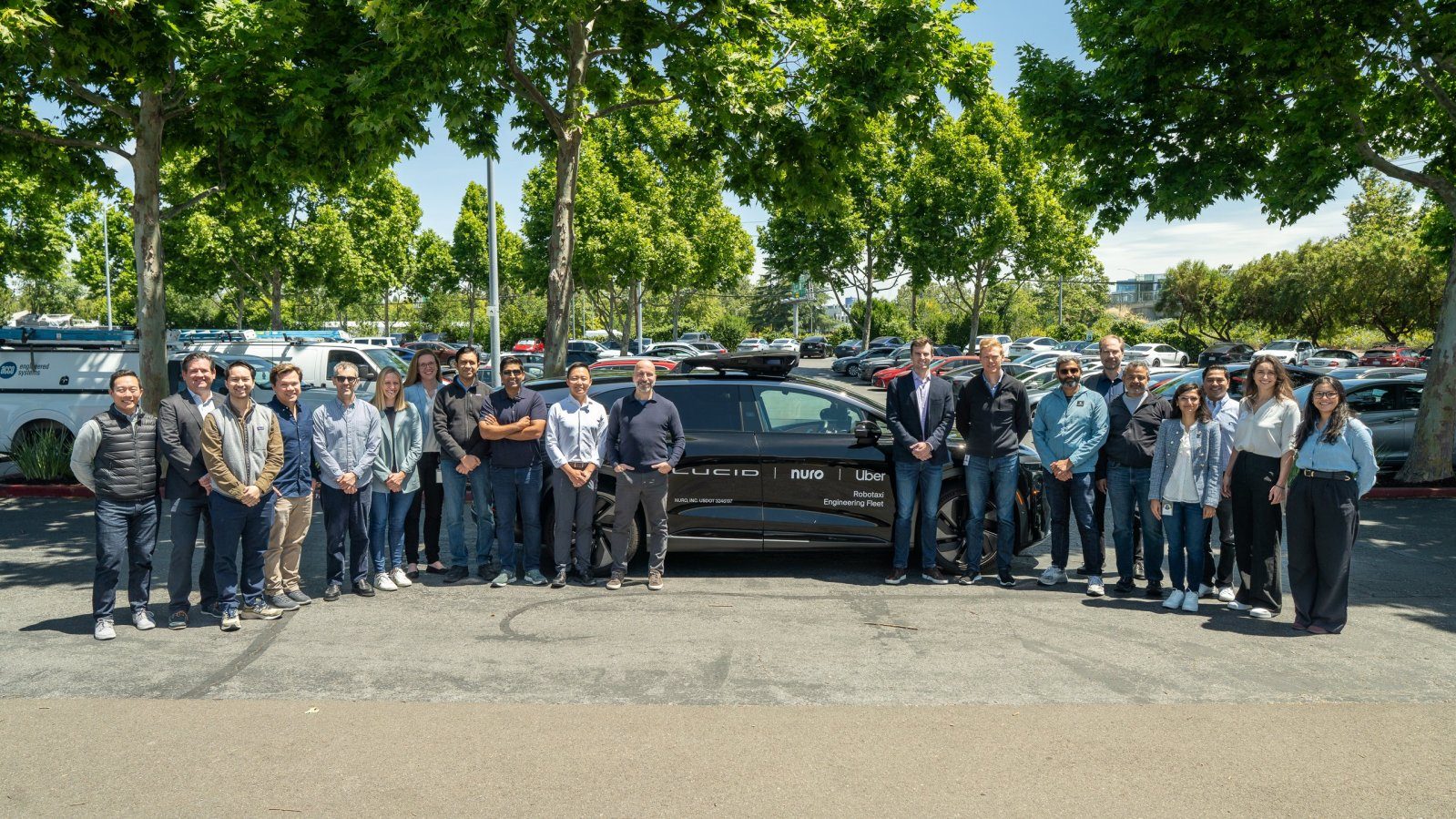

Nuro said on Tuesday that its robotaxi service with Lucid and Uber remains on track to launch in the San Francisco Bay Area “later this year,” after hosting members of the ride-hailing giant’s team at its headquarters.
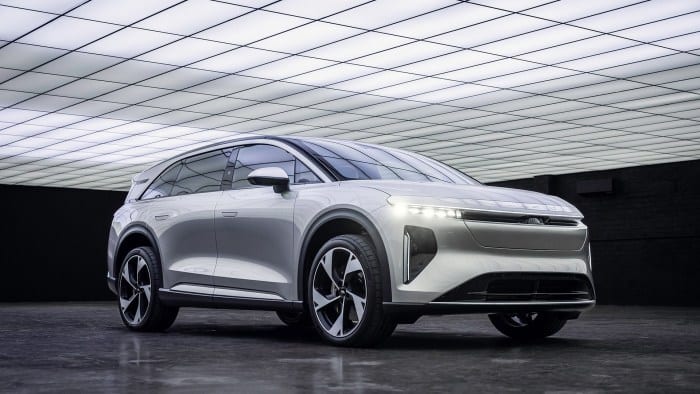
The autonomous driving company cited “great progress” across the three-way partnership involving Lucid‘s Gravity SUVs as a base, Nuro‘s autonomy stack as the brain, and Uber as the ride-hailing service platform.
“Thanks for visiting, @Uber team!” the company wrote. “Lots of great progress and momentum as the Uber, Nuro, and @LucidMotors teams come together to gear up for launch later this year.”
Nuro‘s post offers the latest public confirmation that the companies remain focused on their previously announced launch target — following a series of development milestones over recent months, including regulatory ones.
In May, the California Department of Motor Vehicles expanded Nuro’s existing driverless testing permit to include the Lucid Gravity, after previously holding the permit for six years for its low-speed autonomous delivery vehicles.
Days later, Nuro received a separate Drivered Pilot Permit from the California Public Utilities Commission, allowing the company to transport passengers during pilot testing with a safety driver on public roads.
Neither authorization permits paid commercial rides, but together they represent important regulatory milestones ahead of public deployment.
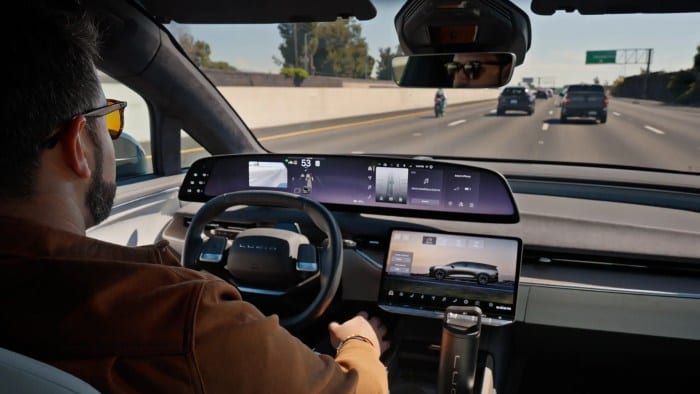
Uber and Nuro employees have already begun testing the complete customer experience in San Francisco by ordering robotaxis through the Uber app as engineers continue refining the service.
Latest Updates
In mid-June, Lucid‘s newly appointed CEO Silvio Napoli disclosed that the Saudi-backed EV maker was preparing to manufacture the first production validation robotaxis at its AMP-1 factory in Casa Grande, Arizona.
Following a visit to Nuro‘s headquarters, Napoli revealed that he had taken his first ride in a Lucid Gravity robotaxi alongside Nuro co-founder and co-CEO Jiajun Zhu.
“The integration of Nuro‘s technology into Lucid Gravity is impressive, and the speed of progress across Lucid Motors, Uber, and Nuro is even more so,” Napoli wrote on LinkedIn then.
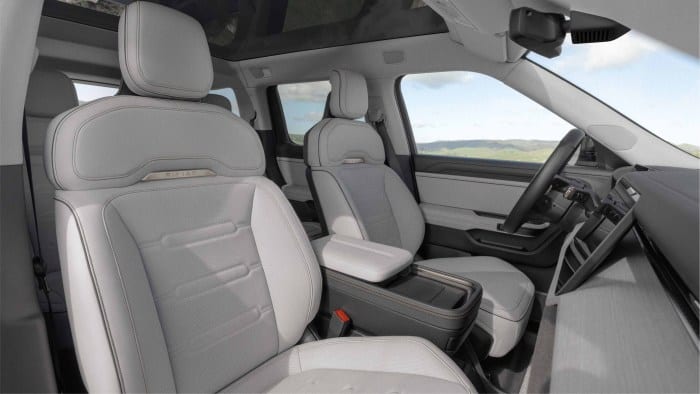
The robotaxi-spec Lucid Gravity is assembled at Lucid‘s Arizona manufacturing facility, where Nuro‘s autonomous driving hardware is integrated directly onto the production line.
The hardware package includes the company’s roof-mounted halo sensor module, multiple high-resolution cameras, solid-state LiDAR sensors, radar units, and a high-performance computing platform powered by Nvidia‘s DRIVE AGX Thor.
Once production is complete, Nuro installs and commissions its Level 4 autonomous driving software before the vehicles enter Uber‘s fleet.
Production validation vehicles represent one of the final steps before large-scale manufacturing begins, allowing engineers to verify assembly processes and vehicle quality under production conditions before customer deliveries.
Testing
Development of the program has accelerated significantly since the three companies announced their expanded partnership.
Nuro‘s engineering fleet now consists of approximately 100 Lucid-based robotaxis operating across California and Texas.
The vehicles are being validated through a combination of simulation, closed-course testing at Nuro‘s Las Vegas proving grounds, and supervised public-road testing with safety operators behind the wheel.
The company completed installation of its Level 4 autonomous system on the first Lucid Gravity robotaxi less than two months after the partnership was announced in July 2025.
Houston Announced
While the San Francisco Bay Area remains the first planned deployment market, the companies recently confirmed that Houston will become the second city to receive the service.
Commercial operations in Houston are planned to begin in mid-2027.
The partners said Houston was selected due to its size as the fourth-largest city in the United States, its wide variety of trip types, and what they described as a supportive regulatory environment for autonomous vehicles.
Nuro has operated in Houston since 2019 and has already conducted Level 4 autonomous driving on the city’s public roads, providing valuable experience in local traffic conditions, including rain, storms, and roadway debris.
Uber has also secured a 50,000-square-foot depot and dedicated charging facility in Houston, with construction expected to begin in early 2027 before commercial service launches.
The companies have previously said they intend to expand the robotaxi service into dozens of additional markets over time, although no further deployment cities have been announced.
Late last month, Uber confirmed that it is preparing a new autonomous-vehicle partnership in Phoenix — days after its robotaxis from Alphabet’s Waymo vanished from the app there, ending a nearly three-year arrangement in the city.
While the ride-hailing company has not named any partners, Lucid and Nuro appear to be logical candidates for the place.
Uber’s Commitment
Uber has steadily increased its financial and operational commitment to the partnership as development has progressed.
The company initially agreed to deploy at least 20,000 Lucid robotaxis over six years while separately investing $300 million in the EV manufacturer.
Earlier this year, Uber expanded that commitment to at least 35,000 vehicles and invested an additional $200 million in Lucid, bringing its total investment to $500 million.
The enlarged fleet will include both the Gravity SUV and vehicles based on Lucid‘s midsize platform.
Despite the increased investment, Uber’s Lucid stake has declined substantially in market value following weakness in the EV maker’s share price.