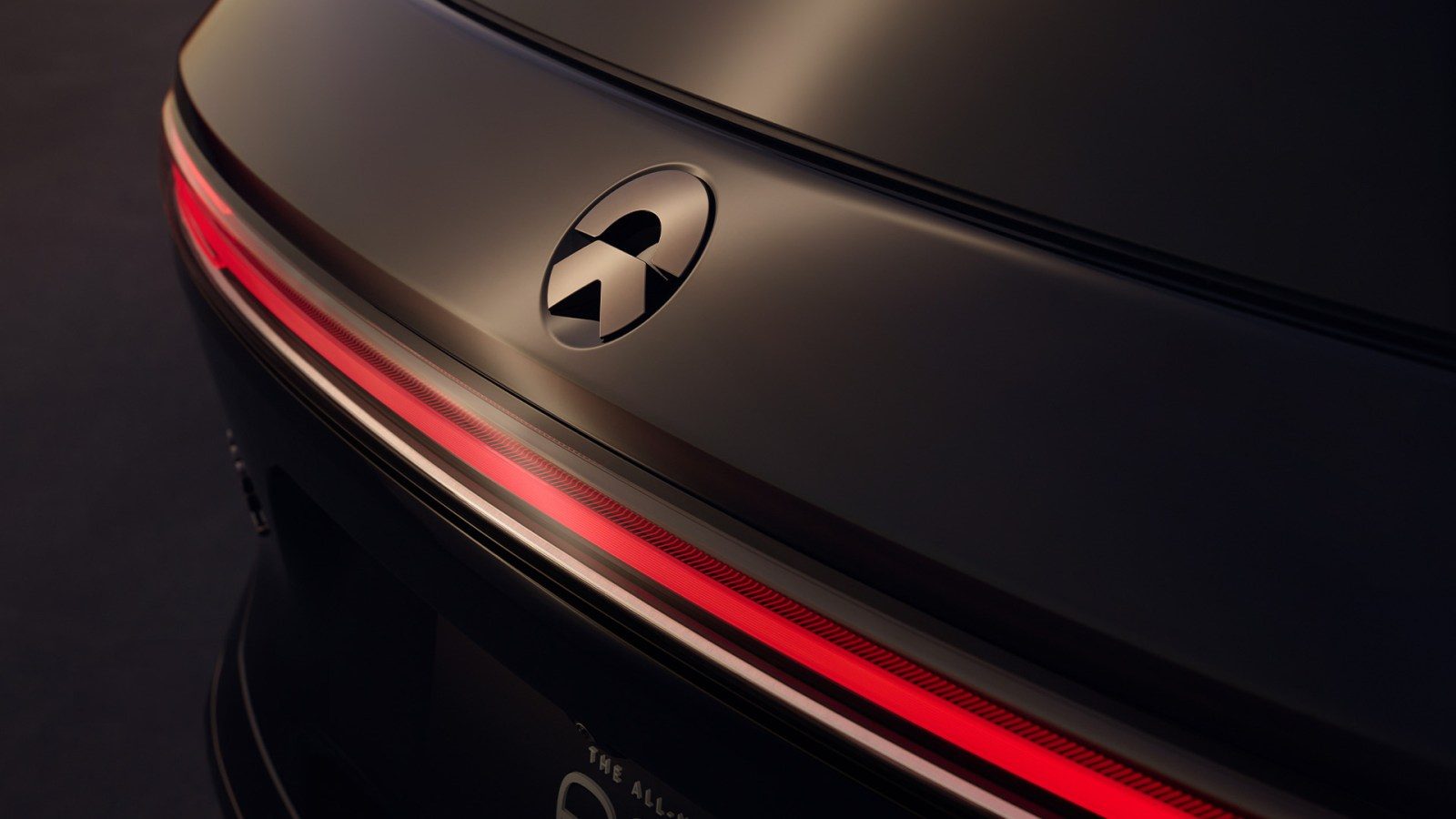

Nio will open pre-orders for a five-seat version of its best-selling ES8 on June 28, the company said on Monday, broadening its top-selling model into a new segment as it leans harder on large SUVs to carry sales.
Display cars for the five-seat ES8 will reach stores the same day, with the variant positioned to lead “premium large five-seat SUVs into the all-electric era,” Nio said in the announcement.
Deliveries are expected to begin in early July.
The company’s Associated VP of Branding and Communications, Ma Lin, wrote on Weibo that “the golden age of premium all-electric large five-seat SUVs is about to arrive,” adding that the model would push the segment further toward battery power.
No pricing or specifications have been disclosed, and the early-July delivery window restates earlier guidance from management rather than adding new detail.
The five-seat variant joins a third-generation ES8 sold so far only as a six- or seven-seat, three-row SUV starting at 406,800 yuan ($60,100).
Nio delivered the 120,000th unit of its best-selling model in China on Monday, another milestone for the third-generation ES8 as the SUV’s once-explosive delivery pace settles into a steady monthly rhythm.
The handover came roughly a month after the Nio ES8 reached 110,000 units in Nanjing on May 23, and about two months after the model set a record as the fastest large premium vehicle to reach 100,000 deliveries.
That record run took the third-generation ES8 to 100,000 deliveries in 215 days, which the company said was the quickest for any model priced above 400,000 yuan in China’s passenger-car market.
Below it sits the flagship ES9, the larger six-seat SUV that went on sale on May 27 from 498,000 yuan.
From ES7 to ES8
The car about to open for pre-orders did not begin life as an ES8.
On Nio’s second-quarter 2025 earnings call in September, founder and Chief Executive Officer William Li told investors the company would launch two large SUVs in 2026 alongside the Onvo L80 — the ES9 flagship and “the large five-seat SUV ES7.”
President Qin Lihong, speaking at an event in Shenzhen, called the car a five-seat ES8 for the first time and set an early-July launch.
The shift hardened on the first-quarter 2026 earnings call on May 21, when Li said the major new product for the second half would be “the five-seater version of the all-new ES8.”
On that call, the ES7 went unmentioned, its planned revival now folded into the ES8 family.
The ES7’s quiet end
At no point did Nio formally announce that the ES7 was finished.
Launched in August 2022 as a five-seat mid-to-large SUV, the model saw demand collapse, with sales falling 71.3% in 2024 to just 1,874 units and slipping to roughly 330 a month by January 2025.
The automaker pulled the ES7 from sale in China in early 2025 and removed it from its configurator by late February 2026, without ever issuing a discontinuation statement.
Analysts and Chinese media had urged the company to retire the ES7 well before it vanished, pointing to its overlap with the better-selling, refreshed ES6.
Nio has not said the five-seat ES8 is a replacement for the ES7, which was its worst-selling model in 2024, and has avoided linking the two in public.
Whether the new variant formally inherits the ES7’s place in the lineup is something the company has left unstated.
Why a five-seat ES8
Management has cast the move as filling a gap rather than splitting Nio’s own market.
On the first-quarter call, the company told investors the large five-seat SUV market is roughly three times the size of the three-row segment, appealing to buyers who want maximum cargo space without a third row.
Qin had signalled that demand months earlier.
In February, discussing smaller body styles, the president said he had heard from buyers — “especially female users” — that the current ES8 felt “a bit too large.”
On the risk of cannibalisation, Nio’s leadership has been emphatic.
Pressed at the Beijing Auto Show in April on whether the five-seat ES8 and the Onvo L80 would compete, Qin said: “if we don’t launch it, competitors will.”
He pointed to a price gap of more than 100,000 yuan ($16,100) between the two models and called both growth engines, arguing that the six-seat SUV market was already saturating.
Li, separately, argued that traditional large five-seat SUVs had failed to deliver on their promise of practicality.
The five-seat ES8, by contrast, rides on the same platform that has made the three-row version the company’s standout seller.
Management also pointed to a halo effect from the ES9, telling investors its pre-launch test drives had lifted ES8 orders by about 30% week-over-week, with little sign the two were cannibalising each other.
An SUV-led push
Nio is counting on the five-seat ES8 to anchor its second-half product run and to sustain a turnaround that only recently took hold.
The third-generation ES8 accounted for roughly 77% of Nio-brand deliveries in the first quarter and carries a gross margin of about 20%, making it the company’s profit engine since launching in September 2025.
Nio booked its first quarterly profit in the fourth quarter of 2025, a result driven largely by the ES8.
The model has also led China’s large-SUV sales charts for months on end.
Sustaining that run is central to Li’s pledge to deliver full-year profitability in 2026.
Li has framed 2026 as the start of what he calls a “third growth cycle,” targeting 40% to 50% annual sales growth driven primarily by large SUVs — the five-seat ES8, the Onvo L80, and the ES9.
The EV maker also plans to begin sales in Hong Kong in the second half of the year.