
Polestar‘s Head of Software Sven Bauer has left the Geely-backed EV maker after more than three years in the role, the executive announced on Friday.
The departure comes as the company continues to struggle with several software issues across all its production models.
Bauer posted about his exit on LinkedIn, describing his time at the Gothenburg-based brand as one of the most defining chapters of his career.
“Today marks my final day at Polestar,” Bauer wrote. “I am deeply grateful to have been right at the center of the automotive industry’s most fundamental transformation.”
Bauer joined Polestar in April 2023 from Cariad, Volkswagen Group‘s troubled in-house software subsidiary, where he served as Executive VP of Engineering for Advanced Driver Assistance and Autonomous Driving Systems.
It remains unclear whether he departed the company voluntarily or was asked to leave.
Polestar’s Software Landscape
Bauer’s tenure coincided with a period in which software quality became one of Polestar‘s most visible pain points.
The brand’s software stack is not uniform across its lineup.
The Polestar 3, built on Volvo‘s SPA2 platform alongside the EX90, runs Volvo Cars‘ centralized Superset tech stack and uses an Nvidia Drive core computer.
The Polestar 4, by contrast, sits on Geely‘s SEA architecture — debuted in 2020 and launched in 2021 with the Zeekr 001 — and leans on the broader Geely ecosystem for lower-level vehicle functions, connectivity, and telematics.
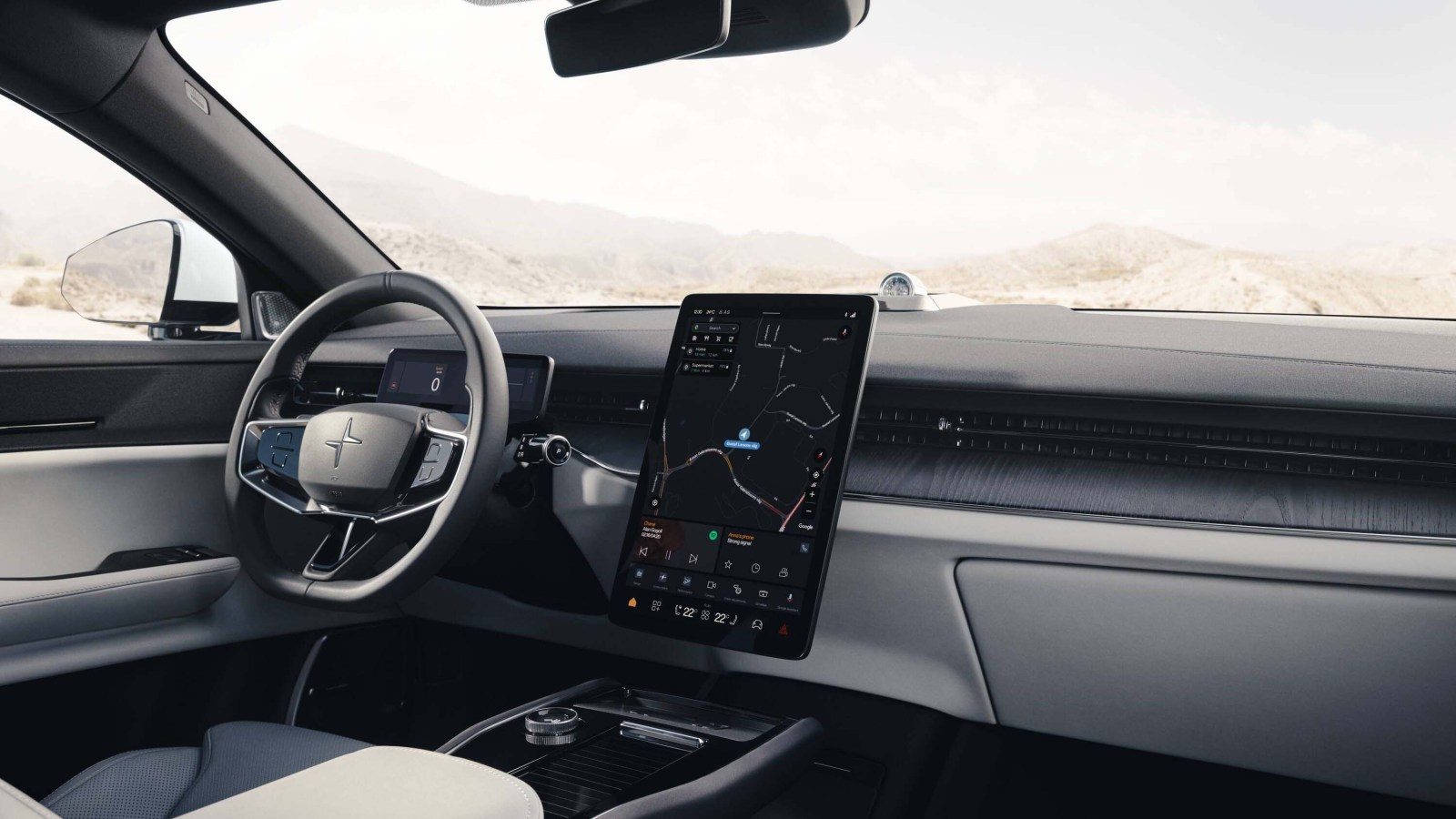
All current models run Google’s Android Automotive OS for the cabin infotainment layer, with a custom Polestar-developed interface on top.
Owners on Reddit’s r/Polestar and r/polestar3 forums have documented persistent issues including system faults throughout the last year, digital key failures requiring dealer visits, random sensor malfunctions, and software-imposed speed limits.
As of Friday, the Polestar 2, the brand’s oldest current model, has already been subject to 32 recalls in the US market since the 2020 launch, several of them software-related.
A recurring defect involving a synchronization error between the parking assist camera and infotainment system triggered multiple recall campaigns affecting nearly 28,000 units built between 2021 and 2025.
According to user accounts, eight of the 12 steering-wheel buttons in the Polestar 3 remained non-functional after a year — including basic volume and track controls — with features labeled “Coming Soon.”
The Polestar 4 has seen fewer systemic complaints, though owners reported update-related regressions including key detection failures and Apple CarPlay disruptions after specific firmware versions.
Polestar has addressed many of these problems through aggressive over-the-air update cycles.
On the Polestar 3, the brand also offered a free hardware upgrade from the original Nvidia Xavier-based core computer to the more powerful Nvidia Drive AGX Orin, increasing the computing capacity from about 30 to 254 trillions of operations per second (TOPS).
Chinese Software and US Ban
Bauer’s departure comes five weeks after the US Department of Commerce’s Bureau of Industry and Security declined to grant Polestar an authorization under the Connected Vehicle Rule.
The regulation bars manufacturers owned or controlled by China from selling connected vehicles in the US starting with the 2027 model year.
Software restrictions — covering vehicle connectivity systems, telematics, cellular modems, Wi-Fi and Bluetooth modules, and the software that enables them — take effect first.
Polestar‘s majority shareholder is PSD Investment, the personal holding company of Geely founder Li Shufu, which holds roughly 44% of the brand.
Geely Holding entities own an additional 20–24%, giving Chinese-linked shareholders approximately two-thirds control.
The ownership alone was enough to trigger the manufacturer prohibition.
Crucially, Polestar is more tightly woven into Geely’s structure than sister brand Volvo, sharing vehicle platforms and connected-car software with other Geely-controlled brands — an entanglement that matters under a rule aimed specifically at the connectivity and automated-driving layer where vehicle data is gathered and transmitted.
Volvo, which shares the same ultimate parent and builds cars at the same South Carolina plant, received its own authorization weeks before Polestar‘s application was rejected.
CEO Michael Lohscheller has called the ruling “pretty straightforward” and confirmed the company will not appeal.
The Commerce Department has not publicly disclosed the criteria that produced divergent outcomes for the two brands.
Since then, Polestar is now clearing remaining US inventory with discounts of up to $25,000 before the market closes to it.
Leadership Turnover Continues
Bauer is the latest in a string of senior departures from Polestar.
The brand replaced its CEO in October 2024 when founder Thomas Ingenlath was pushed out by Geely and succeeded by Lohscheller.
Design chief Maximilian Missoni left for BMW the same month. The CFO was replaced weeks later.
The Chief Commercial Officer was swapped out this January, and the head of North America departed after less than a year in the role. Four board directors also stepped down earlier this year.
Polestar posted wider losses and a sharp deterioration in gross margin in the first quarter of 2026. Second-quarter global retail sales fell 4.0% year on year.
Cariad Background
Bauer’s previous employer became one of the most expensive cautionary tales in the automotive software space.
Volkswagen invested roughly €12 billion ($13.8 billion) in Cariad, which was founded in 2020 with ambitions to build a unified software platform across the Group’s brands.
The unit was plagued by development setbacks that contributed to delays on key vehicle programs, including the Porsche Macan EV and Audi Q6 e-tron.
The most prominent of those partnerships is the $5.8 billion joint venture with Rivian, formalized in late 2024, under which VW will adopt the American EV maker’s zonal architecture and software stack for its next generation of electric vehicles.
Bauer left Cariad in April 2023, the same month he joined Polestar — roughly the period when Volkswagen was beginning to publicly acknowledge the scale of its software challenges and reorienting toward partner-led development.
Before Cariad, he was in a senior engineering leadership position at German giant Bosch, where he held roles that included overseeing global ADAS and automated driving software in Stuttgart and car multimedia development in China.