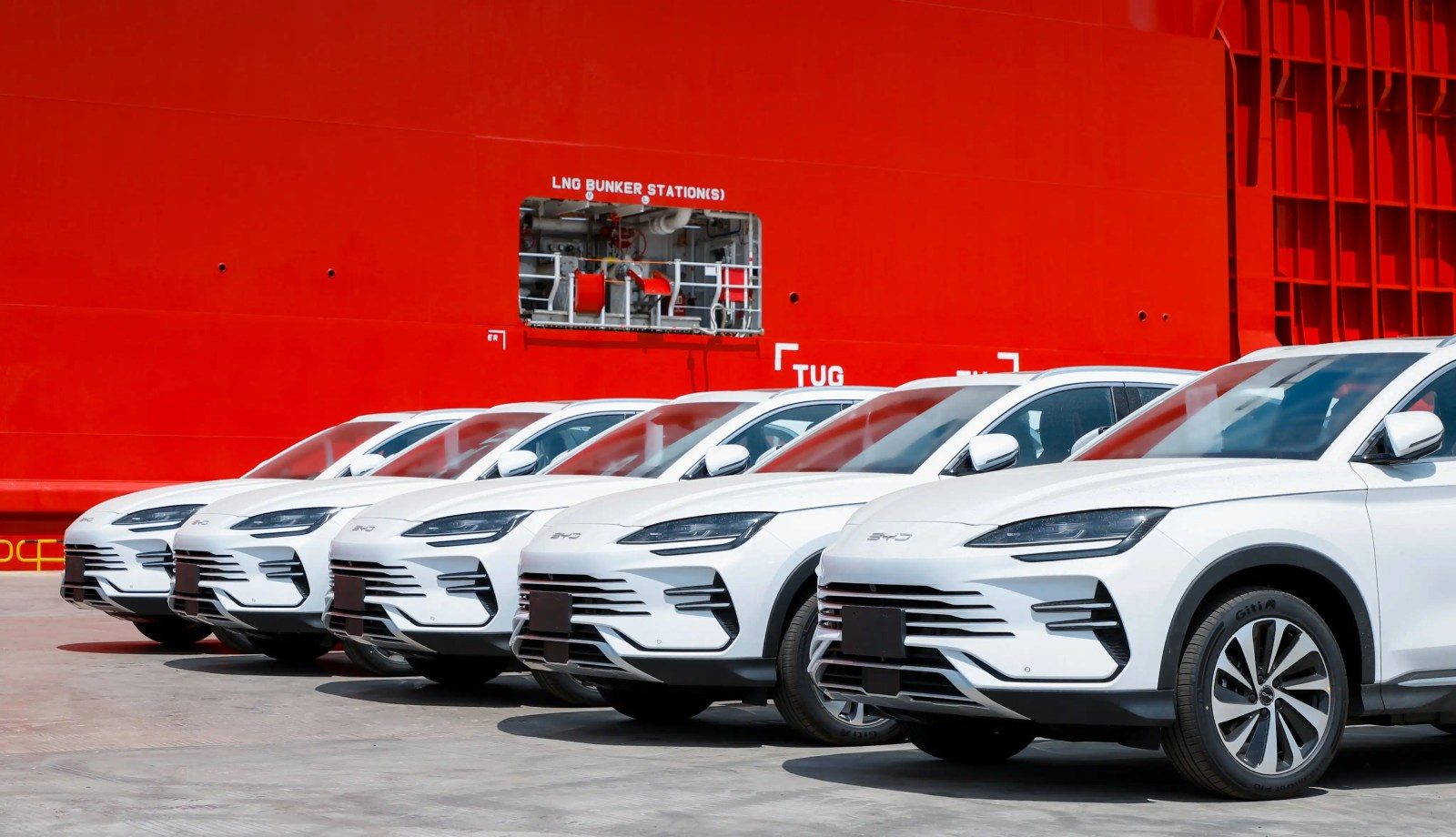

Canada’s 49,000-unit annual quota for Chinese-built EVs was designed to open the door for new entrants — however, the same system that lowered the tariff barrier is now constraining the pace at which Chinese automakers can build a viable retail presence.
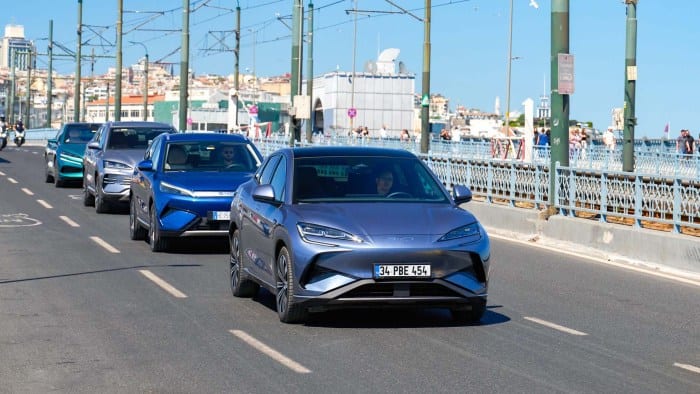
BYD, Chery and Geely — the three automakers leading the push into the Canadian market — are all scaling back their rollout plans and pushing back delivery timelines, a brokerage firm has told Automotive News Canada on Thursday.
While the three Chinese giants continue to line out their strategies, they have shifted to a more conservative approach.
“In phase one, they’re going to be very conservative,” DSMA’s Director of Asian market development Jason Zhao said.
Instead of the broad cross-country rollouts initially envisioned, the three companies are now looking at opening just one or two dealerships in each of Canada’s largest markets — Toronto, Vancouver, and Montreal — in the short term.
BYD had been expected to open as many as 20 stores in Canada this year. That figure now appears out of reach.
None of the three automakers has publicly detailed a complete Canadian distribution plan, and all three declined to comment.
Import Quota
The bottleneck is the 49,000-unit annual quota that Ottawa established under the trade deal struck with Beijing in January.
That pool must be shared among all brands importing China-built electric vehicles — not only the homegrown Chinese marques from BYD, Chery, and Geely, but also the Geely-controlled global brands Lotus, Polestar, and Volvo, each of which has shipped or plans to ship vehicles into Canada from Chinese factories.
Tesla, which has already begun assigning VINs to Shanghai-built Model 3 sedans bound for the Canadian market, is also positioned to claim a significant portion of the allocation.
With a single dealership investment in Toronto, Vancouver, or Montreal running into the millions of dollars, dealers would need to sell several hundred vehicles a year just to break even, Zhao noted.
The limited import quota does not support the throughput needed to sustain a 20-store network.
The Canadian government is also weighing whether to cap how much of the 49,000-unit quota any single automaker can claim, which could further constrain the volumes available to each brand.
Import permits are currently distributed on a first-come, first-served basis through August 31, while Ottawa consults on a longer-term allocation framework.
Dealership Interest
Despite the narrowing outlook, Canadian dealer appetite for the Chinese brands has not cooled — as DSMA has said to have received roughly 150 applications from groups seeking to partner with the incoming automakers.
Given the compressed timeline and the prime urban markets the companies are targeting in their initial phase, Zhao warned that only about 15 groups are positioned to move forward in the near term.
As ground-up construction could take over two years, automakers are now considering existing dealerships that can go through renovation — which alone takes about six months, according to the firm.
Vehicle Certification
Even as dealership preparations advance, the product timeline is slipping.
The Chinese automakers continue to work through Transport Canada’s vehicle certification process, but approvals are unlikely before the year-end — which pushes first customer deliveries into 2027.
The Canadian government pledged to support the automakers with timely vehicle certification as part of the January trade deal; however, Transport Canada has not provided clarity on how long the process will take.
According to industry experts, certifying a vehicle to Canadian standards from scratch could take around a year to do.
The certification process is another setback for Chinese brands, that gives already-certified brands a head start.
Tesla‘s Shanghai-built Model 3 is expected to begin Canadian deliveries as early as May or June, while Geely-backed Lotus has already shipped its first 18 vehicles to Canada under the quota.
Polestar and Volvo are evaluating whether to redirect their Chinese-made models to the Canadian market as well.
Broader Industry Headwinds
The slowdown lands amid a broader reckoning over the future of Canada’s auto industry.
This week, Magna International CEO Swamy Kotagiri urged policymakers to choose between protecting existing auto jobs and cutting vehicle prices for consumers, arguing the sector still lacks the policy clarity it needs to plan ahead.
“If we misdiagnose the problem, I think we will confidently deploy the wrong solution,” Kotagiri stated at an auto industry forum in Toronto.
At the same forum, RBC analysts warned that Canada could lose its entire vehicle assembly industry by 2040 in a worst-case scenario where duty-free access to the US market is not restored and Chinese-made EVs displace domestically built vehicles.
Managing director of RBC Thought Leadership Jordan Brennan told the forum “it would take generations for them to recover if we stop assembling vehicles in this country.”
Several political and labor-related figures have opposed the deal signed between Beijing and Ottawa.
The Conservative Party has pledged to scrap the quota entirely and ban Chinese-linked vehicle software, aligning with US rules that took effect a year ago.
Conservative shadow minister Raquel Dancho has consistently flagged the issue, while Ontario Premier Doug Ford has called the incoming vehicles “spy cars.”
As a response to the data security debate, Industry Minister Mélanie Joly confirmed earlier this month that the government is developing a regulatory framework to protect personal data collected by electric vehicles.
On the other side of the border, US lawmakers have introduced bipartisan legislation to bar Chinese-made vehicles and connected components from American roads.