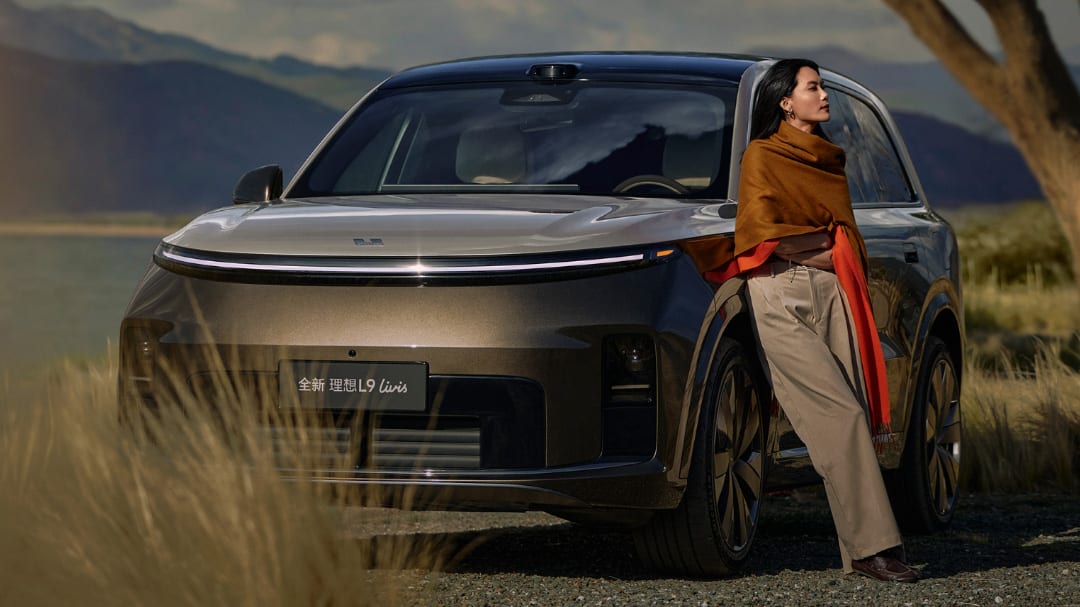

Beijing-based Li Auto launched flagship L9 Livis SUV on Friday with two trims — the Ultra edition starting at 459,800 yuan (approximately $67,700) and the Livis flagship edition at 509,800 yuan (approximately $75,100).
The new Li L9 features the brand’s in-house developed third-generation extended-range system with a pure electric range of 420 kilometers under China’s CLTC test cycle and a combined range of 1,650 kilometers.
The model’s top configuration is priced 9% below the previously announced pre-sale price of 559,800 yuan when it made its public debut at the Beijing Auto Show in late April.
Deliveries begin immediately, with first-launch period incentives bringing the effective starting prices substantially lower.
Li Auto is offering a 20,000-yuan cash discount during the launch period, plus a 10,000-yuan repurchase benefit for returning Li Auto owners.
The effective transaction price for the Livis trim is therefore 489,800 yuan ($72,200) for new buyers and 479,800 yuan ($70,700) for returning owners.
Li Auto also announced that an International Exclusive Version of the all-new Li L9 will launch in Q3 2026, beginning in Central Asia, the Middle East, and additional markets.
The Two-Trim Strategy
The all-new L9 launches in two configurations, with the Livis trim representing a 50,000-yuan ($7,400) premium over the Ultra.
The L9 Ultra at 459,800 yuan includes the company’s third-generation dual-chamber dual-valve magic carpet air suspension, electronic hydraulic braking (EHB), the Qualcomm Snapdragon 8797 Max chip, single M100 smart driving, and the standard suite of Li Auto flagship features.
The L9 Livis at 509,800 yuan upgrades five specific systems: 800V fully active suspension, wire-controlled mechanical brake (EMB), the Snapdragon flagship 8797 Elite chip, and dual M100 smart driving chips delivering 2,560 TOPS total computing power.
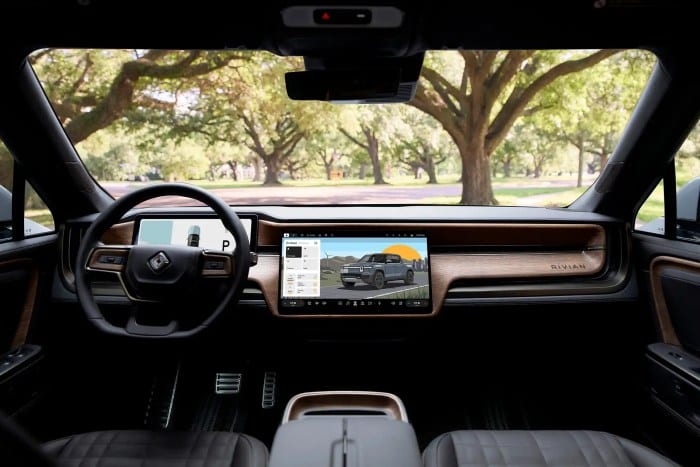
Both trims share the core technology stack: 72.7 kWh CATL battery with 5C supercharging, Li Auto’s in-house third-generation range extender, 420 kW dual-motor smart all-wheel drive with 4.9-second 0-100 km/h acceleration, 29-inch panoramic display, 21-inch 4K rear screen, steer-by-wire and four-wheel rear steering.
The Livis trim also receives an additional 15,000 yuan in free configuration upgrades versus the Ultra, primarily the 22-inch Livis-exclusive crystal grey wheels.
The pricing structure is editorially significant: with the Livis trim’s effective transaction price below 500,000 yuan after first-launch incentives, Li Auto is positioning a flagship vehicle with 800V active suspension and full wire-controlled chassis.
The International Version
The International Exclusive Version incorporates several dedicated localization adaptations the company says will ensure compliant operation outside China.
These include an email-based Li Auto App for international users, global charging compatibility, climate-specific performance and durability enhancements, navigation integrated with local mapping and traffic services, and a localized infotainment system.
The international version retains the core technological capabilities of the China-market vehicle while adapting to local charging standards, road conditions, and user preferences.
“That is the true value of a flagship embodied intelligence SUV. Our global expansion began in Central Asia and the Middle East, and Europe is already underway,” founder and CEO Li Xiang said on Friday. “Asia and Europe will be our next key battlegrounds.”
The Technology Stack
The new Li L9 features Li Auto’s in-house developed third-generation extended-range system with a pure electric range of 420 kilometers under China’s CLTC test cycle and a combined range of 1,650 kilometers.
The Livis trim’s 800V active suspension chassis generates over 10,000 N of lift force per wheel, with millisecond-level response time enabling what Li Auto describes as “anti-physics” body posture control during aggressive maneuvers.
Two in-house developed 5-nanometer M100 smart driving chips deliver a combined 2,560 TOPS of computing power, which Li Auto claims is three times that of Nvidia’s Thor-U used by mainstream competitors.
The vehicle is paired with four LiDAR sensors and Li Auto’s VLA 2.1 large model, which reduces end-to-end processing latency by 40% versus prior architectures, according to the company.
The In-House Chip Strategy
The L9 launch positions Li Auto as the third major Chinese EV maker with proprietary smart driving silicon — joining Nio, which has rolled out its Shenji NX9031 chip across all main-brand models and into Onvo sub-brand vehicles, and XPeng, which is applying its in-house Turing chip across its lineup.
The M100 is manufactured using a 5-nanometer automotive-grade process, with single-chip computing power of up to 1,280 TOPS — which Li Auto claims is the highest in the world for a production automotive chip.
The proprietary chip development reduces Li Auto’s dependence on Nvidia and gives the company tighter hardware-software integration for its VLA 2.1 model.
The European Buildout Accelerates
The L9 launch coincides with Li Auto’s most concrete commercial commitment to Europe to date.
As first reported by EV earlier this week, the company has appointed Zach Zhou — formerly responsible for Chery Automobile’s European corporate and fleet sales and a longtime XPeng overseas executive — as its Deputy General Manager of Europe.
Zhou’s profile also lists the role of Managing Director of Benelux, covering Belgium, the Netherlands, and Luxembourg.
Li Auto opened a German R&D center in early 2025, assembling a team focused on styling, power semiconductors, chassis systems, electric drivetrains, and regulatory certification for the European market.
Li Xiang’s L9 launch comments — “Europe is already underway” — represent the strongest public framing yet of Li Auto’s European commitment.
Domestic Pressure as the Catalyst
Li Auto’s push into Europe comes as the company faces sustained pressure in its home market.
The automaker delivered 34,085 vehicles in April 2026, essentially flat year-on-year and down 17% from March.
For the first four months of the year, deliveries totaled 129,227 units, up just 1.9% compared with the same period in 2025.
The company delivered 406,343 vehicles in 2025, falling 37% short of its revised 640,000-unit target.
Li Xiang announced a 20% growth target for 2026 during the fourth-quarter earnings call, with international expansion cited as one of the levers for reaching approximately 490,000 deliveries.