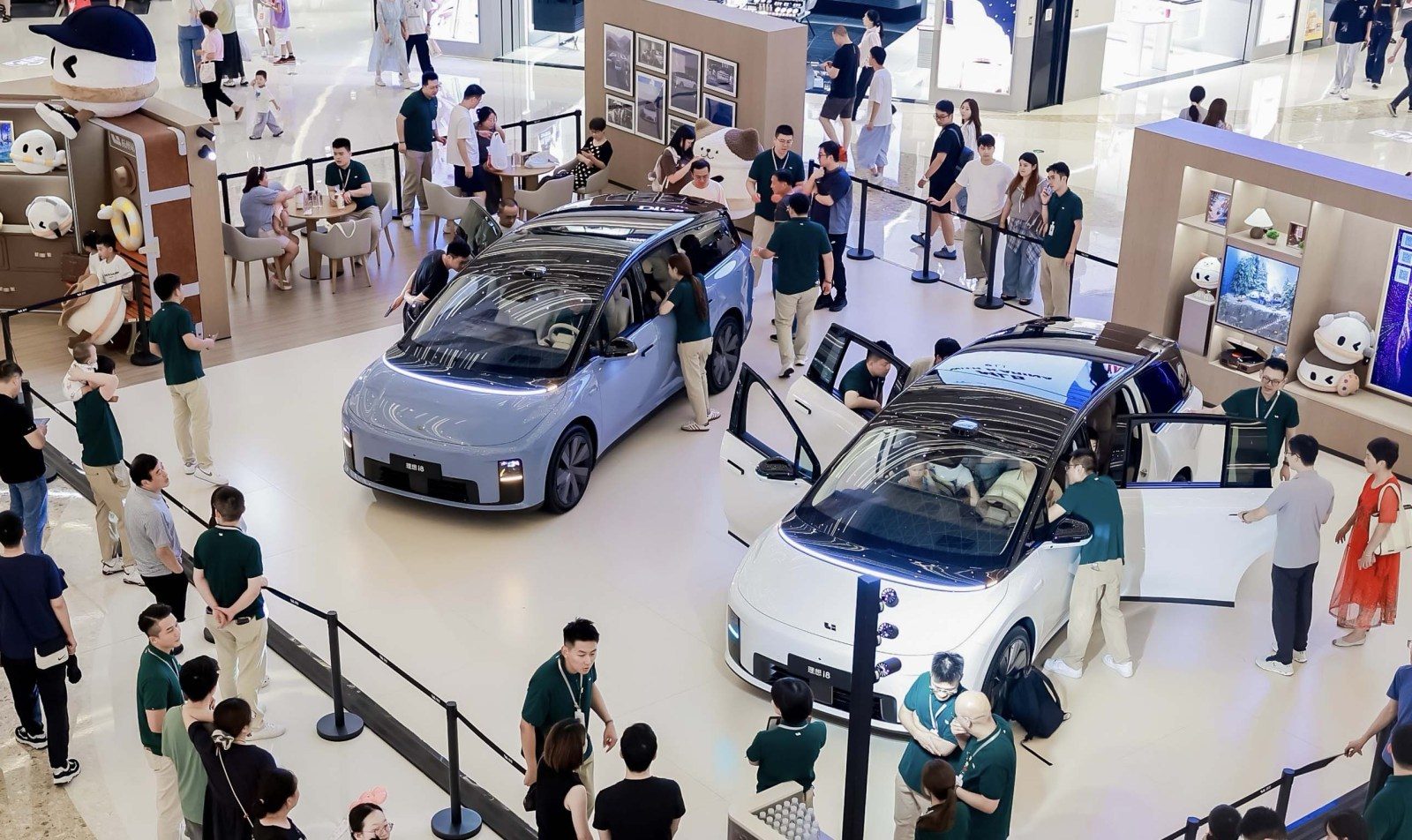

Li Auto delivered 99,964 vehicles in the third quarter, 36 short of the top of the 95,000 to 100,000 range it guided in August, as a strong August made up for a weaker September.
Third-quarter deliveries rose 7.2% from a year earlier and 1.7% from the second quarter, in line with the 7.3% growth at the top of its forecast. However, September deliveries fell 6.3% from a year earlier to 31,817, and 15.6% from August.
August’s 37,679 had been the company’s best month since March, and its 32.1% year-on-year rise had ended three straight months of decline.
Li Auto delivered 293,436 vehicles in the first nine months, down 1.2% from a year earlier.
Its cumulative deliveries reached 1,833,651 at the end of September.
Li Auto will enter Europe at the Paris Motor Show, which runs from October 12 to 18, presenting its i6 electric SUV, the company said.
Within or Above Guidance
The third quarter was the second in a row inside Li Auto’s forecast range.
It delivered 98,330 vehicles in the second quarter, within its 95,000 to 100,000 guidance, but down 11.5% from a year earlier. In the first quarter, it delivered 95,142, above its forecast of 85,000 to 90,000.
Li Auto will give fourth-quarter guidance with its third-quarter results.
The 20% Goal
Founder and CEO Li Xiang set a goal in March of raising sales by more than 20% this year.
“As core technologies and the new product matrix steadily land, we maintain our 20% full-year sales growth target,” he said on the first-quarter earnings call in May.
Growth of 20% on the 406,343 vehicles Li Auto delivered in 2025 would mean about 487,600 this year.
That would require 194,176 deliveries in the fourth quarter, an average of about 64,700 a month and 77.8% more than in the same period of 2025.
Li Auto’s best month this year was March, with 41,053.
A Lineup in Transition
Li Auto has replaced most of its lineup this year.
It delivered more than 10,000 units of the new L6 in September, the company said. The new L6 was launched in July, priced from 249,800 yuan ($37,300).
The company also launched the new MEGA multipurpose vehicle on September 2, from 509,800 yuan ($76,000), and the i9 electric SUV on September 16, at 369,800 yuan ($55,200).
The new L8 and L9 large SUVs went on sale in June and May.
“Currently, EREV and BEV each account for half of our total sales, and we expect BEV share to rise further as we launch more BEV models later this year,” Li Xiang said on the second-quarter call on August 26, referring to range-extended and battery-electric vehicles.
The i6 Delay
Li Auto’s best-selling fully electric model faces a gap in October.
The company moved the launch of the 2026 i6 to late October, while keeping the start of deliveries in early November, Head of Product Line Li Xinyang said on September 23.
Li Xiang said the updated model would only receive its conformity certificates around the end of October, so showroom cars could not be used for test drives before then.
The refreshed i6 adds side and rear LiDAR, a tow hitch and a second battery size.
Monthly i6 deliveries had exceeded 20,000 units from March to May, according to Li Auto.
Margins Under Pressure
Li Auto’s vehicle margin fell to 9.4% in the second quarter from 19.4% a year earlier, and it posted a net loss of 1.7 billion yuan ($251.3 million).
“We have made a decision not to pass the price increase over to our customers,” Li Xiang said on the August call, referring to higher component costs.
The company plans to use its own batteries in every model.
Europe Debut in Paris
Li Auto will be among more than a dozen Chinese brands at the show in Paris.
The model will be sold in Europe as the Li 6, with the Benelux countries as its first market.
“The Li i6 will be launching at the October Paris Motor Show and officially start selling in the European market in Q4,” Li Xiang said in August.
Li Auto had 485 retail stores in China at the end of September, two fewer than a month earlier, and 4,188 supercharging stations.