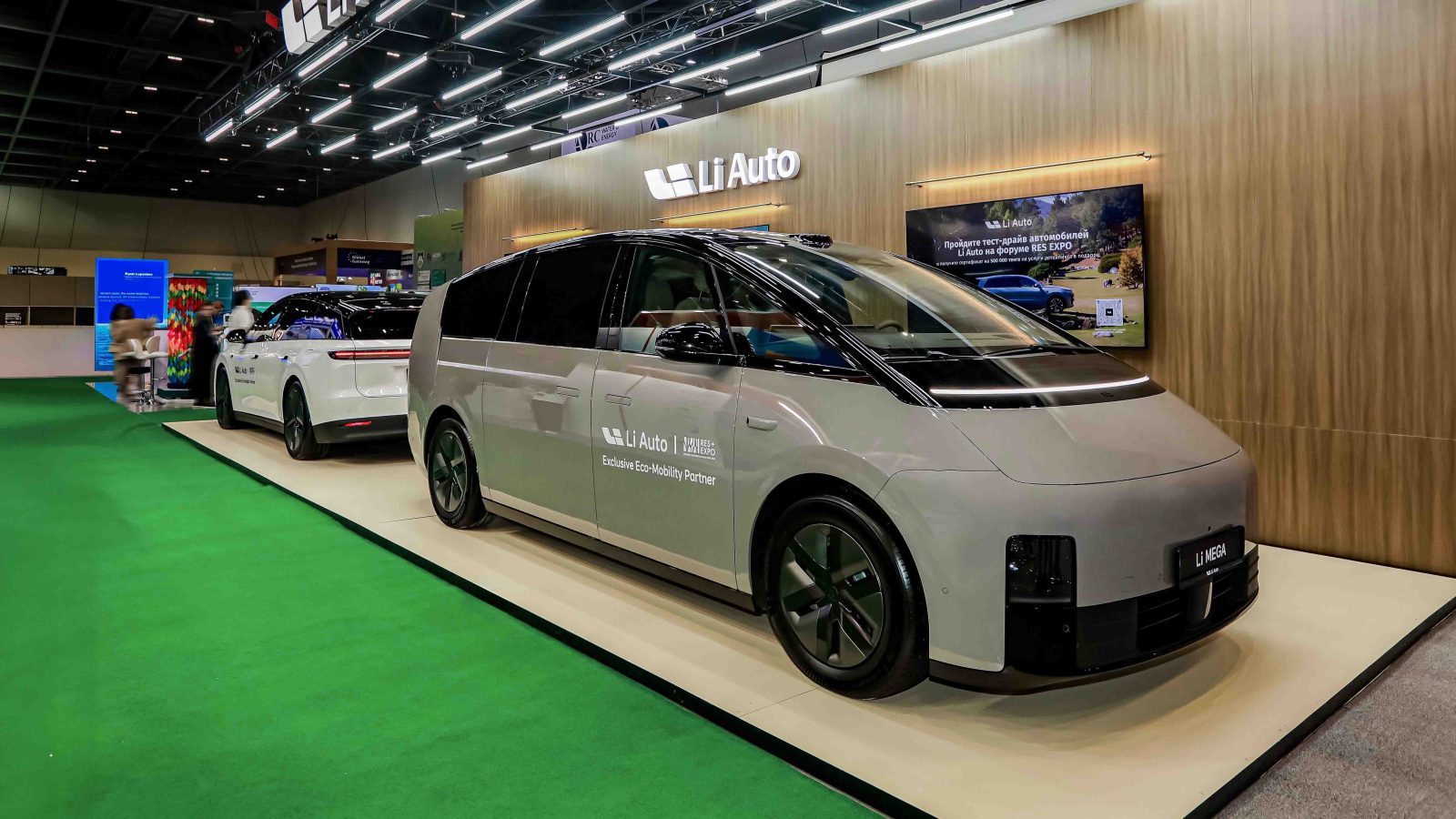

Li Auto has hived off its self-developed automotive AI chip business into a newly registered Shanghai company, a step that puts the Chinese carmaker’s in-house silicon effort on the same standalone footing as the premium rival Nio Inc.
Chip Innovation Intelligent Core (Shanghai) Technology Co. was registered last week with 100,000 yuan of capital, according to the business registry Tianyancha.
The unit is wholly owned by Shanghai Li Auto Technology Co. and ultimately controlled by Leading Ideal HK Limited, a Li Auto affiliate, with Wang Yang as its legal representative.
When approached by local media outlets, Li Auto declined to comment on the move.
The company is the main vehicle for Li Auto‘s chip programme, coordinating the architecture design, compiler, IP development, tape-out and automotive-grade validation of its Mach M100 series.
The M100 at the Centre
The M100 is Li Auto‘s bid for chip self-reliance.
The 5-nanometre processor, which the company bills as the first with a dynamic dataflow architecture, delivers 1,280 trillion operations per second (TOPs) per chip and completed tape-out in 2025.
The chip has since begun reaching production cars, including the L8 flagship and a dual-chip L9 Livis, after years in which Li Auto leaned on Nvidia and Horizon Robotics for its driver-assistance silicon.
Li Auto has said a single M100 rivals two to three of Nvidia’s Thor-U chips on real workloads, and founder Li Xiang has cast the in-house effort as a way to solve problems suppliers could not, rather than as chasing a trend.
The Chip Reaches Buyers
The spin-off comes as the M100 moves into Li Auto‘s higher-volume cars.
The company began the first customer deliveries this week of a redesigned L6, the extended-range SUV that has long been its best-selling entry model, after relaunching it on July 16.
The single “Ultra” trim, held at 249,800 yuan ($36,900), carries the Mach M100 and its 1,280 trillion operations per second as standard — the same chip as the flagship L9 — with an optional dual-M100 package lifting that to 2,560 and adding two more lidar units.
Deliveries of the outgoing L6 had collapsed to 915 units in June, less than a tenth of a year earlier, as buyers held out for the new version, and Li Auto‘s deliveries had slid for a second straight month.
Following Nio’s Playbook
The structure mirrors Nio, which spun its chip work into a separate company, Anhui Shenji Technology — known in English as GeniTech — in Hefei.
Shenji made its first solo appearance at Shanghai’s WAIC show last week, presenting chips for driving, robotics and AI inference.
Both units are filed under the same “technology promotion services” category and carry near-identical business scopes.
An External-Supply Question
The company has so far played down the idea. Its chief technology officer, Xie Yan, said in May that Li Auto‘s “supply is guaranteed,” describing a business that serves its own products rather than the open market.
Rivals have already crossed that line.
Nio began licensing its Shenji chip technology to a chip firm in late 2025 — its first outside chip revenue — and has since extended it to carmakers and robotics companies, while XPeng supplies its Turing chip to Volkswagen.
The spin-off lands amid a broad push by Chinese carmakers to design their own chips — alongside those two and BYD‘s Xuanji — as the industry shifts from buying critical components to defining them and hedges.
The chip push comes against a softer sales backdrop.
Li Auto delivered 30,895 vehicles in June, its lowest month of the quarter, capping a second quarter of 98,330 that held roughly flat with the first even as the company worked through a reset of its flagship L-series line-up.
The quarterly 98,330 edged 3.4% above the first quarter’s 95,142 but fell 11.5% below the 111,074 Li Auto delivered in the second quarter of 2025.
The June figure — down 7.4% from May — left the Beijing-headquartered carmaker with a first-half total of 193,472 vehicles.