
Li Auto delivered 30,895 vehicles in June, its lowest month of the quarter, capping a second quarter of 98,330 that held roughly flat with the first even as the company worked through a reset of its flagship L-series lineup.
The quarterly 98,330 edged 3.4% above the first quarter’s 95,142 but fell 11.5% below the 111,074 Li Auto delivered in the second quarter of 2025.
The June figure — down 7.4% from May — left the Beijing-headquartered carmaker with a first-half total of 193,472 vehicles.
The First-Half Baseline
Li Auto delivered 95,142 vehicles in the first quarter, up 2.5% year over year and ahead of its own guidance, though gross margin collapsed to 7.9% from 20.5% a year earlier and the company posted a net loss of 2.3 billion yuan.
April deliveries of 34,085 gave way to 33,350 in May and 30,895 in June, a steady month-by-month slide across the quarter as customers waited out the L-series transition.
The Li i6, the electric SUV that has carried volume since its production bottleneck cleared, delivered more than 20,000 units a month from March onward and surpassed 150,000 cumulative units in production by June.
Deutsche Bank estimated the model drew about 16,000 fresh orders during the month as its delivery wait shortened to three-to-five weeks, from four-to-six in May, a pace that implied roughly 20,000 i6 deliveries in June.
The reset left Li Auto leaning on that single strong seller while its older L-series models thinned, pushing the company back toward the “single-model blockbuster” approach it had used before its 2025 expansion.
The half’s 193,472 total ran 5.1% below the year-earlier 203,938, leaving Li Auto with under 40% of the roughly 490,000 vehicles its full-year target implies.
The L-Series Reset at the Center
Li Auto‘s second quarter centered on refreshing its core L-series SUVs, the range-extended models that built the company before its shift toward battery-electric i-series cars.
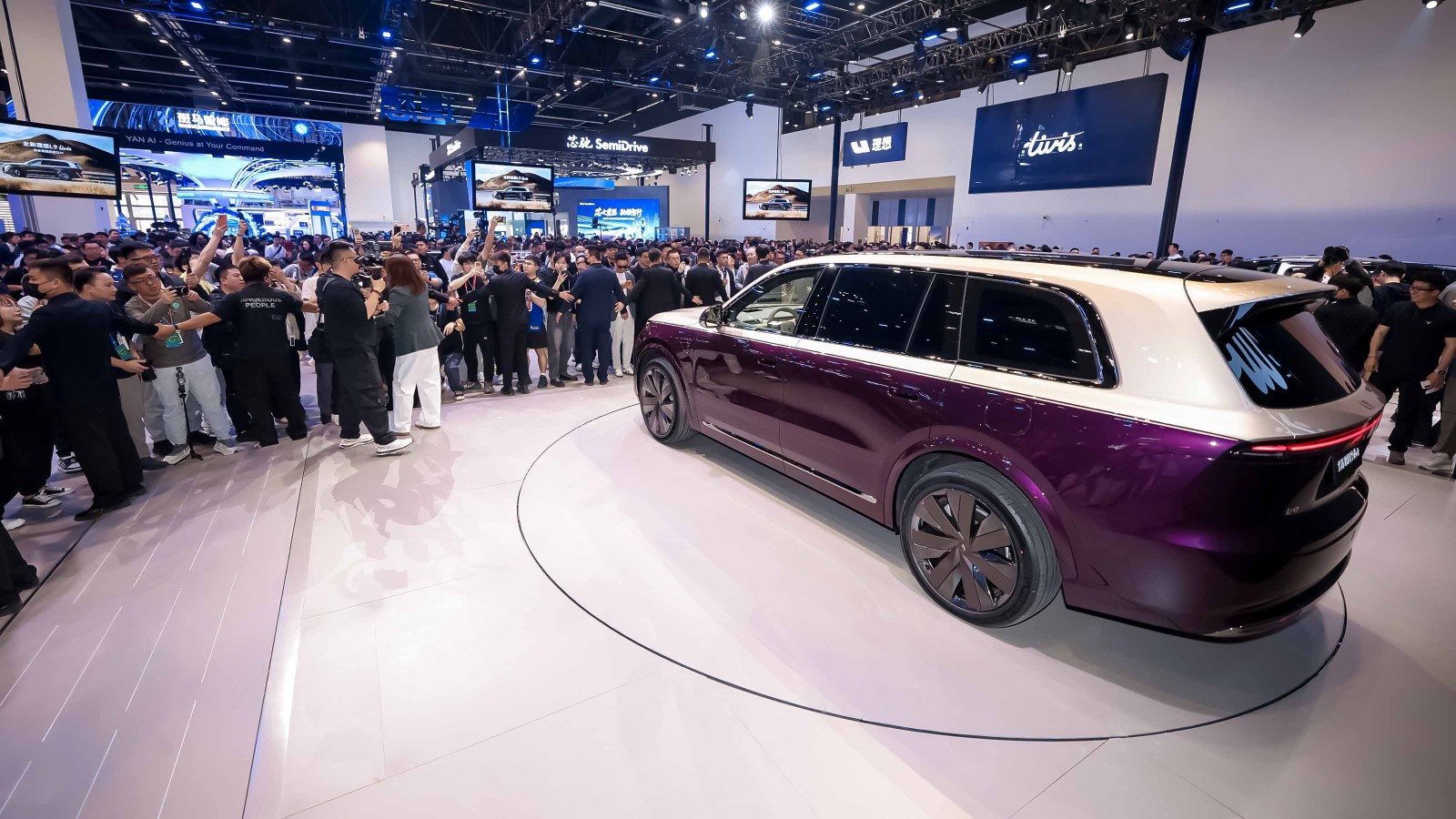
The company launched the all-new Li L9 Livis on May 15 with same-day deliveries, the flagship taking more than 10,000 Livis orders within two weeks, priced at 459,800 yuan for the Ultra and 509,800 yuan for the Livis — 9% below its 559,800-yuan pre-sale level.
The L9 carries Li Auto‘s in-house M100 chip, its first proprietary 5-nanometer automotive silicon, alongside a 360-degree LiDAR array and 800-volt active suspension, and its dual-M100 Livis trim delivers 2,560 TOPS.
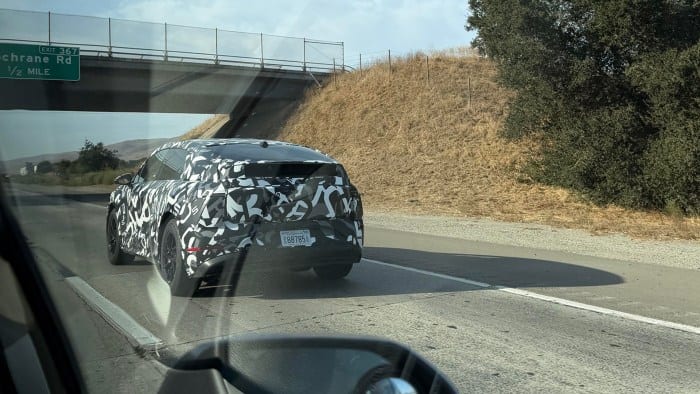
The all-new Li L8 followed on June 23 with deliveries the same week, switching from a six-seat to a five-seat layout to avoid cannibalizing the six-seat L9, and priced at 369,800 and 429,800 yuan across Ultra and Livis trims before a limited-time launch discount trimmed the starting points to 359,800 and 419,800 yuan.
The five-seat flagship pairs a 430-kilometer battery-only range with a 1,670-kilometer combined range, comes standard with four zero-gravity seats and a fully drive-by-wire chassis, and, as president Ma Donghui put it, was stretched to 5,135 millimeters on a 3,045-millimeter wheelbase to combine the sporty character of a BMW X5M with the spaciousness of a Maybach GLS.
Deutsche Bank called the pricing lower than the market had expected and pegged the new L8 at about 5,000 units a month, linking the aggressive move to softer L9 orders in June, while singling out the entry-level L6 — due in July — as the larger volume driver among the refreshed models.
Li Auto has said it will refresh all four of its extended-range SUVs in 2026, the L9 and L8 now done and the L6 next, with no timetable yet set for the L7.
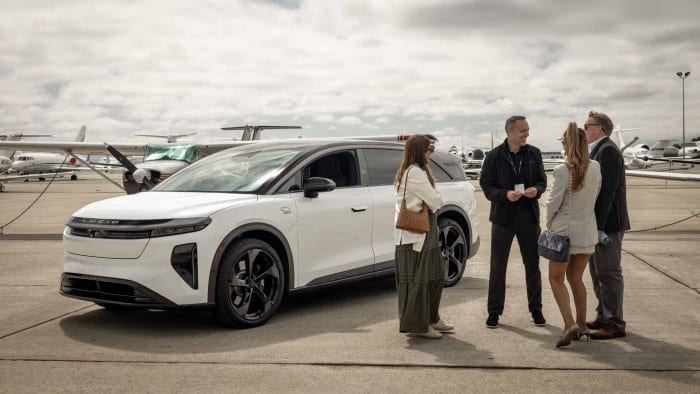
Li L8
Li Auto launched the all-new Li L8 on June 23, the second step in an L-series cycle that began with the L9 in May and continues with the L6 in July, a cadence the company is betting can re-accelerate deliveries into the second half.
The five-seat L8 carries a 72.7-kilowatt-hour battery and the dual-M100 configuration in its Livis trim, positioned to complement rather than compete with the six-seat L9.
The extended-range refresh is only half the plan, with the company leaning just as hard on its battery-electric i-series to carry second-half volume.
Li Auto has slated a pure-electric flagship SUV, the i9, for the fourth quarter, and refreshes of the i8 SUV and the Mega minivan — plus a cheaper single-motor i8 expected below 340,000 yuan.
Livis Day
The company held a “Livis Day” software and AI event on June 15, detailing its work across in-cabin interaction, foundation models, assisted driving, system agents and in-house chips, building on the MindVLA autonomous-driving model unveiled earlier in the year.
The refresh also carried a major assisted-driving update into the AD Pro trims of the revamped L6, L7, L8 and L9, developed with Horizon Robotics, while the higher AD Max trims move to Nvidia’s next-generation Thor-U chip.
Li Auto has also restructured its research organization around foundation models and a dedicated humanoid-robot division, planning its first two-wheeled factory robot later this year under a project codenamed Nexus, echoing Tesla‘s push into robotics.
Overseas Expansion
Li Auto signed dealership partnerships in the United Arab Emirates and Saudi Arabia, part of a second expansion wave that pairs the L-series with an international Li L9 due in the third quarter.
The company also picked the Benelux region as its first European market for the i6, set for the second half, and will make its European auto-show debut at the Paris Motor Show in October.
In Central Asia, parallel exports have already put an estimated 10,000 Li Auto vehicles on the road, owners the company now plans to fold into its official parts and software network, while a right-hand-drive Li Mega is due in Hong Kong and Singapore by year-end.
Full-Year Frame
Li Auto has guided to about 20% growth in 2026, implying roughly 490,000 deliveries, after a 2025 in which it delivered 406,343 vehicles and fell well short of a revised 640,000-unit target.
With 193,472 banked through June — under 40% of that goal — clearing even the low end now requires a second half roughly half again as large as the first, a step-up management has framed around a 3+2 growth plan built on sales-system reform and a clean generational handover of the L-series.