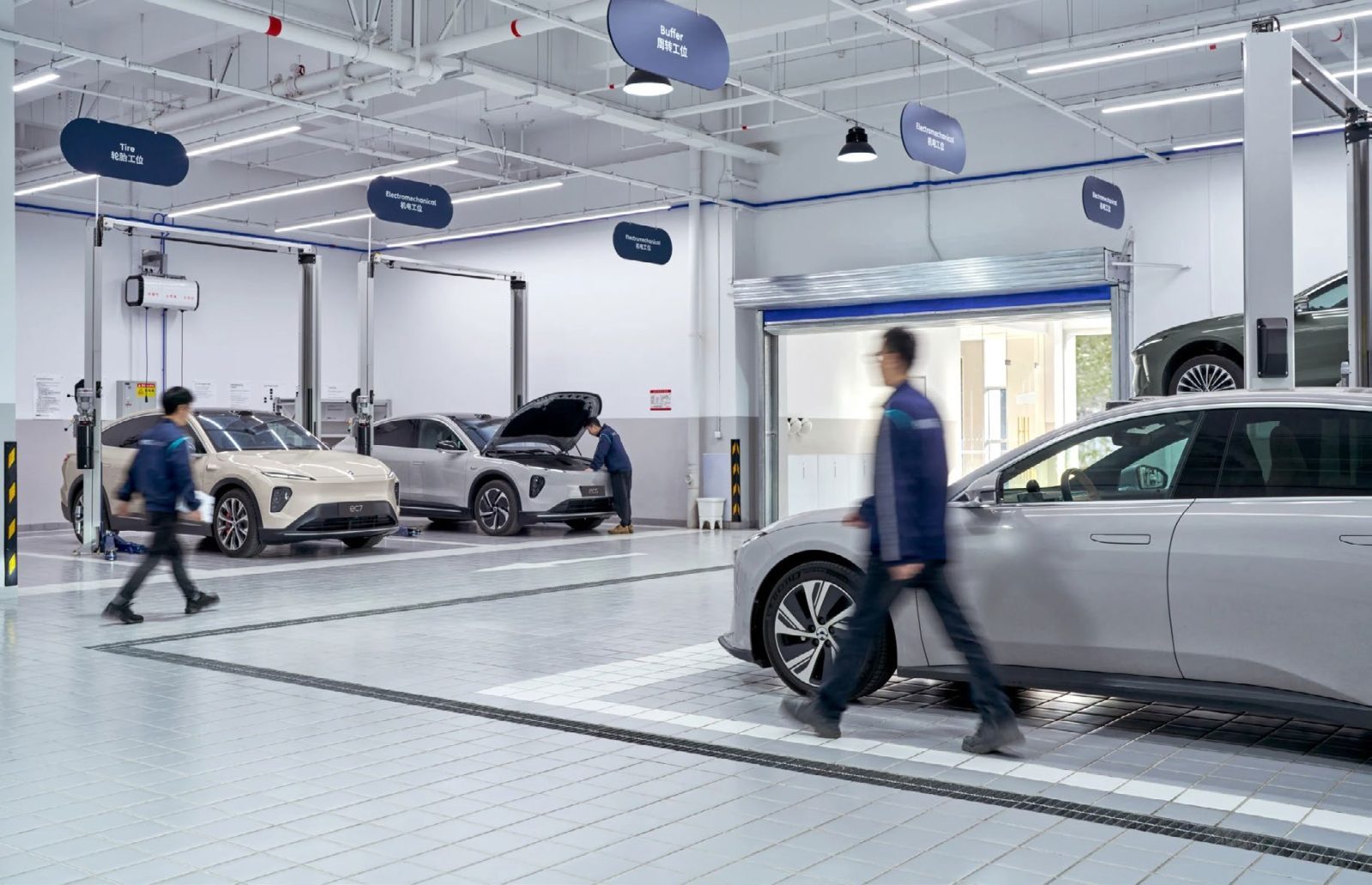

Nio ranked highest among premium brands in J.D. Power’s 2026 China New Energy Vehicle Customer Service Index for the second consecutive year, scoring 814 out of 1,000 points in the study released on Thursday.
The Shanghai-based EV maker also led all Chinese domestic brands, repeating its double win from the study’s inaugural 2025 edition — and widening its margin, after scoring 801 a year ago.
Huawei-backed Aito and BYD‘s ultra-luxury marque Yangwang ranked second among premium brands in a tie, each at 811.
Li Auto ranked highest among mass market brands at 793, also defending its 2025 title, when the Beijing-based automaker scored 788.
Geely’s Zeekr followed at 789, with XPeng third at 787.
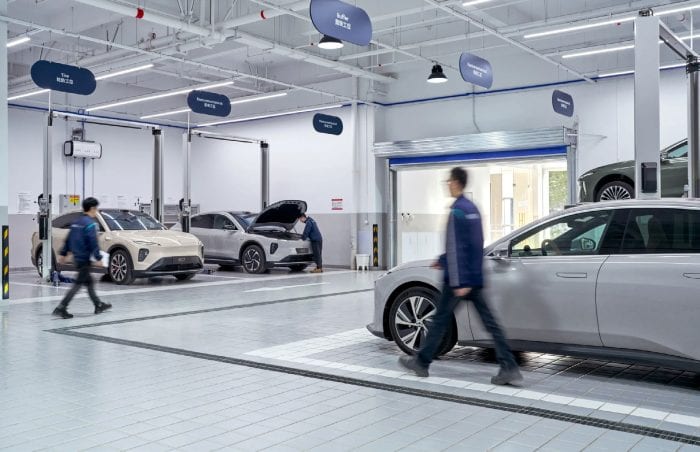
Industry-wide satisfaction with the after-sales service experience reached 778 points, up 3 from 2025, with the initial usage phase improving 3 points and service delivery rising 4.
The 2026 customer service study is based on responses from 13,708 owners across 81 major cities who purchased their NEV between January 2024 and February 2026, evaluating the service experience between 2 and 24 months of ownership.
Fieldwork ran from January through April 2026 and covered 56 brands, all with sufficient samples, covering seven factors: customer service, customer equity, energy service, service initiation, service reception, service process and service quality.
Domestic Brands Pull Ahead
The study points to a widening structural split by brand origin.
Domestic startup brands improved 6 points to 791 — the highest of any category — while domestic traditional brands rose 3 points to 774 and domestic affiliated brands added 2 points to reach 772.
International brands gained a single point to 778 and were the only group to record a decline in service quality, a landscape J.D. Power described as domestic brands leading while international brands face decelerating growth.
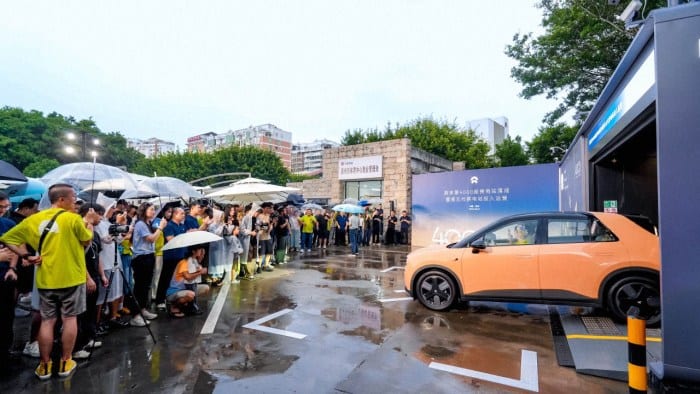
Energy service was the sole factor to rise across every brand category, up 10 points industry-wide, which the firm attributed to improving charging infrastructure in Tier 3 and Tier 4 cities.
In those areas, domestic brands significantly outpaced international rivals.
Service initiation gained 7 points and service reception 4, while usage consultation fell 5 points across the industry, a decline J.D. Power linked to shortcomings in response timeliness and problem-solving.
Smart-Feature Complexity
The incidence of usage issues reached 46.1% in 2026, up 12% year over year, with the negative impact of those issues amplifying to 1.8 times last year’s level.
Among owners reporting problems, 85.5% described non-fault issues such as operational difficulty or complexity — a gap the firm framed as a contradiction between the sophistication of smart features and user proficiency.
Channel resolution remains weak: only 36.6% of owners resolved their issue through a single channel, while more than 60% needed help across multiple channels.
The result is what J.D. Power calls extreme polarization — stable advocacy when nothing goes wrong, and sharply declining word of mouth once problems arise.
Generational dynamics compound the risk, as the increase in detractors among post-2000 owners who encounter issues runs at 3.8 times the rate seen among the post-1990 cohort, a divergence the firm characterized as a structural trend rather than a fluctuation.
Accident Repair Costs
NEV accident repair emerged as the study’s most acute pain point, combining high cost with low resolution.
Repair costs run 1.7 times those of internal combustion engine vehicles, and satisfaction among owners going through accident repairs sits 67 points below the general repair population.
Brands are also failing to act as the first port of call: while proactive manufacturer outreach reached 49.2% of affected customers, 42.2% turned to their insurer first.
Contacting a brand’s customer hotline produced the highest satisfaction score of any channel at 774 points, yet yielded a net promoter score of minus 10.5 — evidence, the firm said, that a friendly service attitude does not equal problem-solving, with hotlines acting as transfer stations that leave owners anxious after the call.
Some 88% of accidents qualify as high-frequency, low-severity cases below 10,000 yuan ($1,480), which J.D. Power said are especially prone to poor experiences under cumbersome processes, recommending express lanes for minor repairs and front-end authority for hotline staff.
Aftermarket Profits
The study describes an aftermarket growing in volume but not in value.
After-sales spending per vehicle rose 23.3% year over year, but wait times surged 45.6%, pushing service net promoter scores to what the firm called a dangerously low level.
Extended-range and plug-in hybrid vehicles form the profit backbone of the service business, while battery-electric vehicles primarily drive traffic.
Payment structures are shifting as well: deductions via credits and equity benefits have nearly doubled while cash payments shrank 10.9%, straining dealer liquidity.
Acceptance of ancillary services fell to 34.8%, down 2.2% year over year, with acceptance among plug-in hybrid owners dropping nearly 8% — a signal, per the study, that traditional hard-selling tactics are failing.
Pricing accuracy proved pivotal to loyalty: precise estimates lift net promoter scores by 41 points, but when budget deviations exceed 10%, the score swings from plus 41 to minus 23.
A Consistent Winner
The service result extends a sweep for Nio across J.D. Power’s 2026 China studies.
The premium brand topped both the luxury and domestic NEV segments of the inaugural Purchase Experience Index in June at 827 points, and its third-generation ES8 won the luxury BEV category of the NEV-APEAL product study in March.
Nio‘s record in the firm’s China quality research stretches back further, with the company claiming first place in its segment for a third consecutive year as early as 2022.
Satisfaction studies have tracked steady gains across the industry.
The 2025 product-appeal edition recorded a record-high industry average of 806 points, while ownership-cost dynamics such as residual values have become a monthly competitive scoreboard of their own.