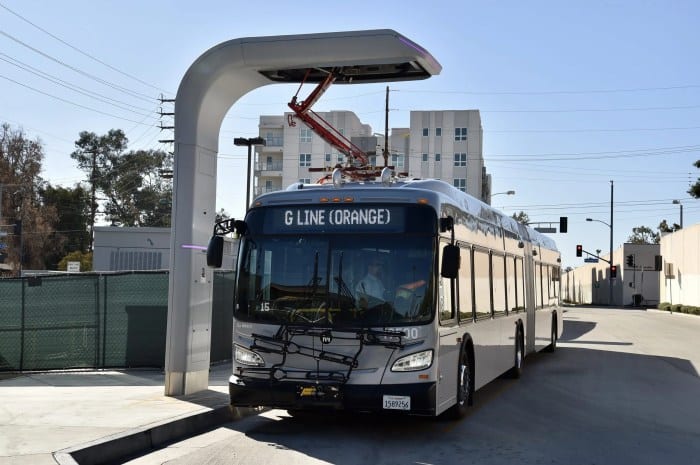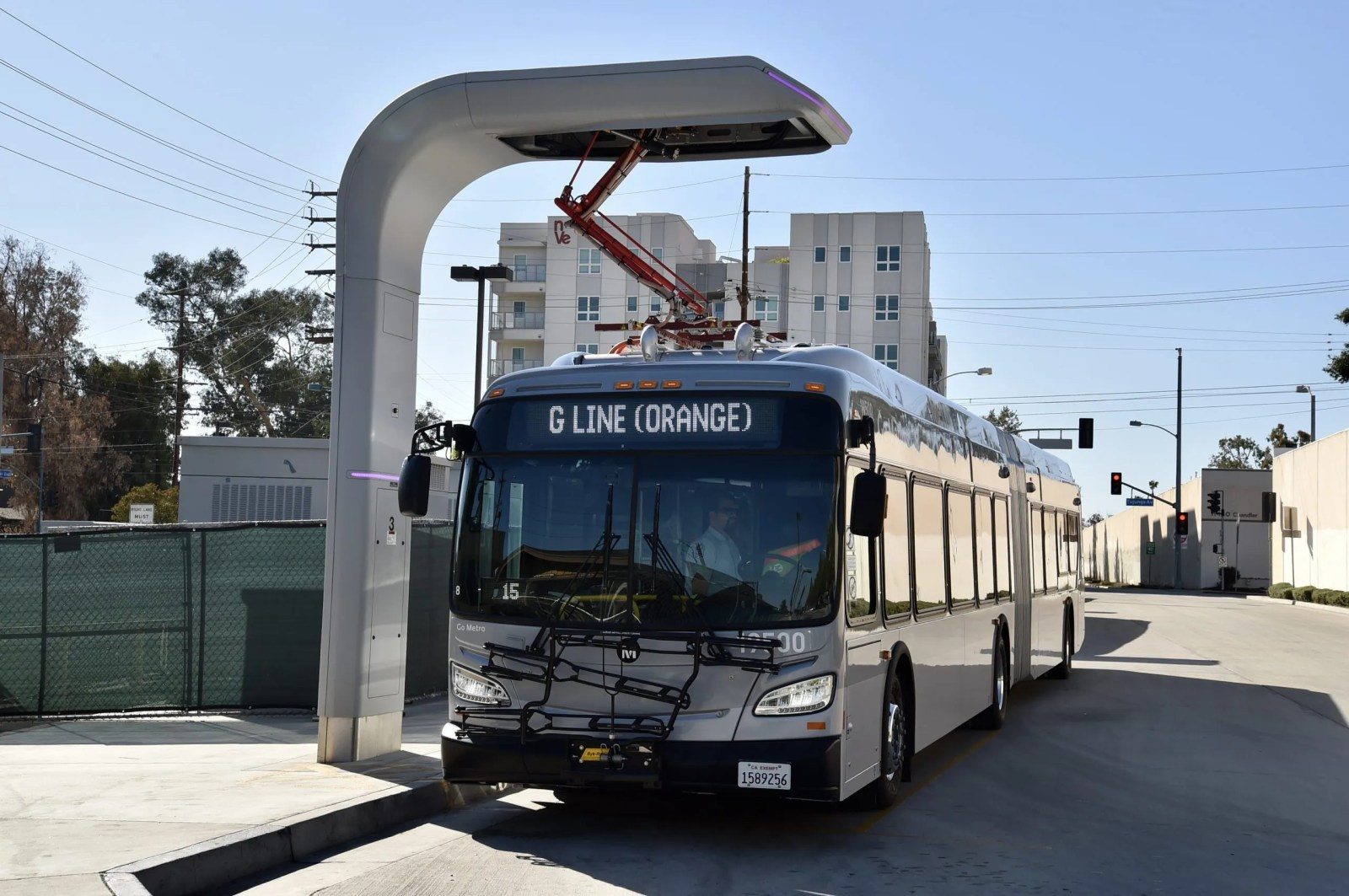

Los Angeles County Metropolitan Transportation Authority (LA Metro) approved on Thursday a $337.7 million contract for 220 40-foot battery-electric buses, awarding the base order to ElDorado National (California), or ENC — ahead of New Flyer and a BYD subsidiary.
The board voted 10-1, with Los Angeles County Supervisor Janice Hahn casting the only vote against, MyNewsLA reported.
Earthjustice called the order the second-largest electric transit bus purchase in the US.
According to the Sierra Club, the buses will more than double the number of electric buses in Metro’s fleet.
The base contract, which includes taxes and delivery, works out to about $1.53 million per bus.
Deliveries begin in spring 2028, as Los Angeles prepares to host the 2028 Olympic and Paralympic Games.
Metro risked losing $168 million in state grant funding for the purchase had the board not approved it, according to MyNewsLA.
Contract Terms and Options
ENC’s contract carries options for up to 1,600 additional battery-electric buses, for a potential total of 1,820 vehicles.
ENC priced the option buses at $2.39 billion, putting the full potential value of its bid at about $2.74 billion, according to the procurement summary.
Board members limited that exposure.
Los Angeles Mayor Karen Bass and City Councilmember Katy Yaroslavsky steered an amendment that approves the initial 220 buses and requires future board approval for any contract extensions, Streetsblog Los Angeles reported.
Under the amendment, any options must be exercised in increments of no more than 300 buses, and Metro keeps the right to decline them and rebid, according to MyNewsLA.
Metro staff had sought broader authority to extend the contract.
Metro will assign the buses mainly to Division 9 in El Monte and Division 18 in Carson.
From those depots, the buses will serve the North Hollywood to Pasadena bus rapid transit line and other local routes.
Metro estimates a range of 174 to 250 miles per charge.
Specifications include an integrated operator compartment, a collision-avoidance driver assistance system and an acoustic alert system for pedestrians.
A contract clause allows Metro to assign unused bus options to other municipal operators in the region.
ENC Beats New Flyer and BYD
Metro received three proposals in March.
ENC scored 833.92 of 1,000 points, followed by New Flyer at 769.26 and RIDE Mobility at 633.57.
RIDE Mobility, a Pasadena-based US subsidiary of BYD, proposed building the buses at its plant in Lancaster, California.
BYD’s unit bid $374.1 million for the base order, below New Flyer’s $402.2 million but above ENC’s price.
RIDE scored 47.58 of 200 points for experience and past performance, the lowest of the three bidders on that criterion.
New Flyer, which proposed building the buses in Anniston, Alabama, scored 5.50 of 50 points on Metro’s US Employment Program.
Metro’s evaluators noted New Flyer made no commitments on new hires or retained workers and submitted no contract-specific labor forms.
ENC will build the buses in Riverside, California. REV Group, ENC’s former parent, announced plans to shut the business in January 2024.
Pasadena-based Rivaz Inc. acquired ENC in October 2024, and said in April 2025 that it expected to resume production and deliveries in June 2025.
Metro has bought 554 ENC compressed natural gas buses since a 2017 contract.
Labor advocates criticized the selection of ENC, a non-union manufacturer, according to Streetsblog.
ENC offered a battery-electric model, the Axess, under REV Group, but Hahn said the company “has only built 16 electric buses,” MyNewsLA reported.
One proposer filed a protest in July.
Metro denied the protest in August and rejected the appeal on September 10.
The award follows a cancelled first attempt.
Metro scrapped an earlier solicitation in November 2025, citing unmet safety requirements, deviations from its terms and a battery-electric bus price 7.4% above its independent cost estimate.
Staff also cited the entry of new battery-electric bus manufacturers into the US market after that tender was issued.
Fleet Share and Labor Standards
Before the vote, Metro had electrified just under 7.0% of its bus fleet, according to Earthjustice.
Metro operates about 2,000 buses, Streetsblog reported. The Sierra Club said the purchase will lift the electric share of Metro’s fleet from less than 7.0% to 17.0%.
Earthjustice said the 220 buses will electrify more than 10.0% of the fleet and put Los Angeles on track to reach 20.0%.
Earthjustice further compared the order with other Olympic host cities.
Paris electrified nearly 1,000 buses ahead of the 2024 Summer Games, while Milan electrified half its bus fleet before the 2026 Winter Games, the group said.
Jennifer Cardenas, a Clean Transportation for All campaign organizer at the Sierra Club, called the approval “a major win for cleaner air.”
She said Metro “must ensure these investments create good, family-sustaining union jobs by upholding strong labor standards.”
Earthjustice joined several labor unions in supporting a resolution on job quality in clean energy procurement.
State Mandate
California’s Innovative Clean Transit regulation, adopted by the California Air Resources Board (CARB) in December2018, requires large transit agencies to make 25.0% of bus purchases zero-emission from 2023.
Under the rule, the share rises to 50.0% in 2026 and 100.0% in 2029.
CARB’s goal is for all California transit fleets to be fully zero-emission by 2040.
Metro says it has met all “state-mandated program requirements a decade earlier than the ICT mandate of 2029.”
San Francisco’s transit agency is moving in the opposite direction.
San Francisco Municipal Transportation Agency’s board voted on September 1 to seek five one-year exemptions covering 2027 through 2031.
SFMTA plans to buy 378 diesel-hybrid buses instead of battery-electric models.
According to GrowSF, the delay would avoid $223 million in higher vehicle costs and postpone $229 million in charging infrastructure, a combined $452 million.
CARB must still approve the exemptions.
BYD’s Bus Business in Europe
BYD ranked fourth in Europe’s electric bus market in 2025, with an 11.2% share.
Electric bus registrations in Europe rose 48% to 11,607 units in 2025, according to DVV Media Group data for buses over 8 tonnes, excluding trolleybuses.
BYD registered 1,305 buses, up 206.0% year over year.
Zhengzhou-based Yutong Bus led the market with 1,801 units, followed by MAN with 1,409 and Daimler with 1,395.
The Chinese giant builds electric buses for European customers at its plant in Komárom, Hungary, and is setting up its European headquarters and R&D center in Budapest.
In North America, RIDE builds transit buses, school buses and trucks at the Lancaster plant.
BYD’s bus assembly plant in Newmarket, Ontario, which built buses for the Toronto Transit Commission, no longer operates after BYD’s lease on the site ended.