
Chinese carmakers are betting on Western celebrities and motoring personalities to put their names and faces behind their flagship vehicles, in a marketing push that has accelerated sharply in 2026.
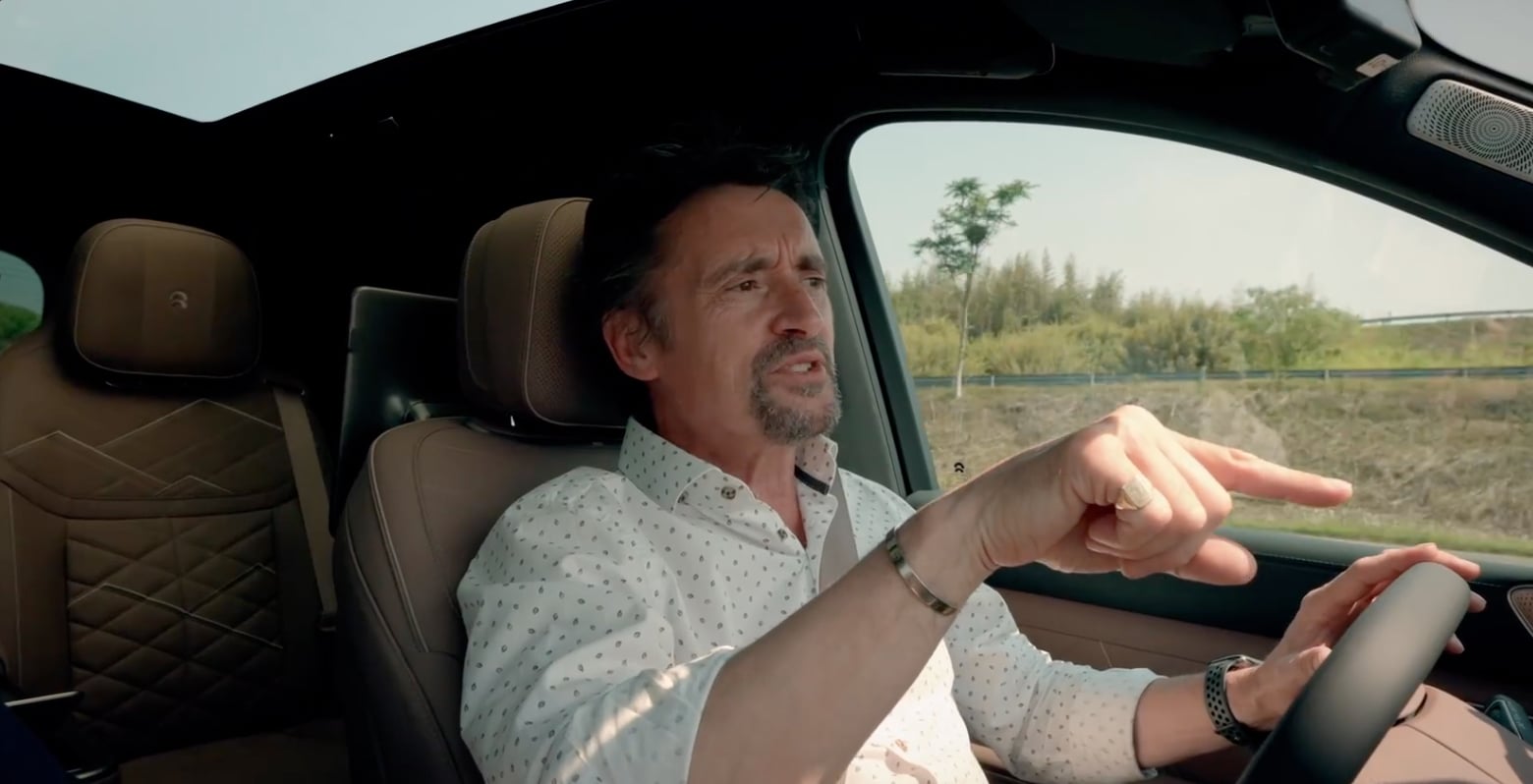
Within months, Chery named football striker Robert Lewandowski its global ambassador, Xiaomi signed Arsenal midfielder Declan Rice for its YU7 SUV, BYD‘s premium Denza marque enlisted former James Bond star Daniel Craig, and former Top Gear presenter Richard Hammond fronted branded films for both Nio and Zeekr.
The signings
Chery unveiled Lewandowski at its European operations centre in Barcelona on May 18, handing the FC Barcelona striker a Tiggo 9 plug-in hybrid and tying the partnership to a “For Family” line.
Weeks later, Xiaomi recruited Rice, announcing the deal on Weibo and naming the England international the “experience officer” for its YU7, a direct rival to the Tesla Model Y.
Rice, posting in Chinese, called the YU7 “a truly stunning SUV,” praise from a Premier League champion for a brand that does not yet sell outside China and plans to reach Europe in 2027.
A Bond for Denza
BYD reached furthest into Hollywood, signing Craig on March 25 as global ambassador for Denza, the premium sub-brand it is pushing into Europe.
Craig fronted Denza‘s first European launch, the Z9 GT shooting brake, unveiled at the Palais Garnier opera house in Paris on April 8, and stars in a commercial titled “Everything is Changing” that BYD released in May.
Stella Li, BYD‘s Executive VP, said Craig represents “a powerful combination of strength, sophistication and authenticity,” casting the actor as a bridge to European luxury buyers.
The choice trades openly on Craig’s Bond long association with Aston Martin, borrowing decades of British automotive prestige.
The Hammond exception
Where the footballers and the actor trade on fame, Hammond trades on the appearance of expert judgment, built over two decades fronting Top Gear and The Grand Tour and now his own motoring venture, DriveTribe.
Hammond reviewed the company’s first car, the limited-run EP9 electric hypercar, on The Grand Tour in 2019, an independent television segment years before the brand began producing films around him.
For Nio, he drove the new ES9 flagship at a proving ground in Shanghai in May, praising its active suspension in footage that presented him assessing the engineering rather than merely posing with the car.
The detail matters because the ES9 is a China-market vehicle whose European future is still not confirmed, meaning Nio is buying Western brand equity well ahead of, or independent of, any European sale.
At home, the 5.4-meter-long model has won about 70% of its first 10,000 buyers from outside the brand, many switching from luxury combustion marques, the kind of conquest the company now wants abroad.
For that domestic audience, Nio gave the ES9 a different face entirely, naming Chinese basketball Hall of Famer Yao Ming, the former Houston Rockets center and eight-time NBA All-Star, its chief experience officer at the May launch, again without disclosing terms.
Earlier this Monday, Zeekr posted a fresh DriveTribe film on X in which Hammond examined the 7X’s artificial driving sound, the synthesised audio the SUV plays through its cabin, under the brand’s caption: “Silence has its advantages. So does giving it a soundtrack.”
The clip followed a DriveTribe-produced holiday-drive series shot in Sydney days earlier that ran Hammond through the Zeekr 009 luxury van and the same 7X performance SUV on a track.
Earlier this year, Hammond tested XPeng‘s VLA assisted-driving software in China, the system the company says will comprehensively surpass Tesla’s FSD in the country by August.
Faces for each market
XPeng named Croatia and Ajax centre-back Josip Šutalo its ambassador in Croatia, its first tie-up with a Croatian international, pairing the defender with the G9 and G6 as it builds recognition in a smaller European market.
For South America, Geely enlisted the Brazilian television presenters Fernanda Lima and Rodrigo Hilbert, matching the face to the region in the same way Chery anchored Lewandowski to Europe.
Across the campaigns the logic is consistent: borrow a trusted local figure to compress years of brand-building into a single recognisable name.
The team deals behind them
The individual signings sit atop a broader wave of club and league sponsorships that Chinese brands have run for years.
BYD, the world’s largest new energy vehicle maker, has spent heaviest of all, becoming the official mobility partner of UEFA Euro 2024 in place of Volkswagen and a sponsor of the 2024 Copa América.
Earlier this year, it replaced Nissan as Manchester City’s automotive partner in a deal British media valued at about £5 million a year, alongside a three-year tie-up with Inter Milan.
MG, owned by SAIC, signed Arsenal in 2024, Polestar became Borussia Dortmund’s mobility partner this season, and Chery‘s Omoda and Jaecoo sub-brands signed Italy’s Fiorentina, while Nio‘s Onvo backed Shanghai Shenhua at home.
The turn toward single faces marks a move from buying exposure through teams to buying it through people, the model long favoured by Western consumer brands.
A Western playbook too
The tactic is not unique to China, and Western makers run the same plays.
Lucid, the Saudi-backed US maker, named Timothée Chalamet its first global brand ambassador last year, building “Driven,” the launch campaign for its Gravity SUV, around the actor and the Ford v Ferrari director James Mangold.
Chalamet had fronted an electric car before, starring as Edward Scissorhands in a Cadillac Lyriq commercial that General Motors aired during the 2021 Super Bowl.
Polestar, itself controlled by China’s Geely but built on a Swedish identity, blurs the line altogether, naming Canadian tennis champion Félix Auger-Aliassime its global ambassador in March, years after fronting a video series with Hollywood actor and climate activist Oscar Isaac.
Rivian took a different route, striking an exclusive partnership in February with CrunchLabs, the science-education company of former NASA engineer and YouTuber Mark Rober, to explain its engineering through Rober’s experiment-driven videos rather than sell it through a famous face.
That deal sits closer to the Hammond model than to Craig’s, buying credibility and reach, here among Rober’s hundreds of millions of viewers, by borrowing a trusted explainer.
“Rivian is building technology that deserves to be understood,” Rober said, casting the collaboration as education rather than endorsement.
Tesla is the conspicuous holdout, having built the most valuable brand of the electric era with no paid celebrity endorsement at all.
The company leans instead on Elon Musk’s personal brand, its own product launches, a large owner community and the organic coverage of independent reviewers, rather than signing names to praise specific models.
Musk’s own account, at 240.6 million followers, functions as the company’s loudest channel, posting daily on milestones across Tesla, SpaceX, Neuralink and The Boring Company alongside a steady stream of political commentary.
A strong and organic community sits beneath him, led by Sawyer Merritt, the most-followed Tesla-focused account on X at 1.09 million followers, who posts company news and delivery updates daily.
The export imperative
The spending tracks a domestic market under strain and an export drive that has become central to growth.
Passenger-car exports from China jumped almost 85% in April from a year earlier to 796,000 units, with new-energy shipments up more than 120% to around 420,000 units.
A brutal price war at home has squeezed margins and pushed brands such as Chery, BYD, MG and Xiaomi to chase volume and pricing power abroad, where recognition and trust remain the binding constraint.