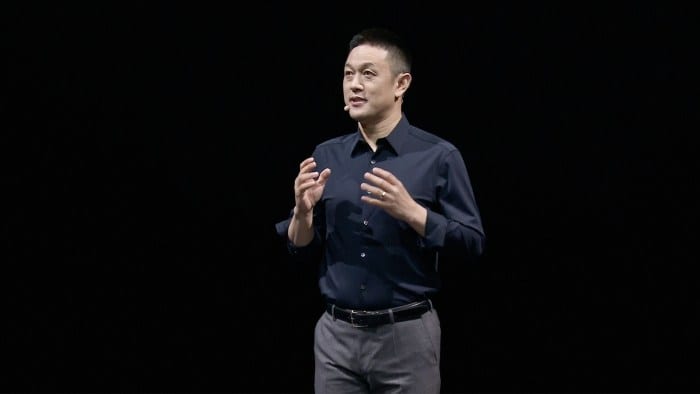

AI is advancing “an order of magnitude faster than the average person in society understands,” Rivian and Mind Robotics founder and Chief Executive Officer RJ Scaringe said, warning that the technology will touch every job in the economy.
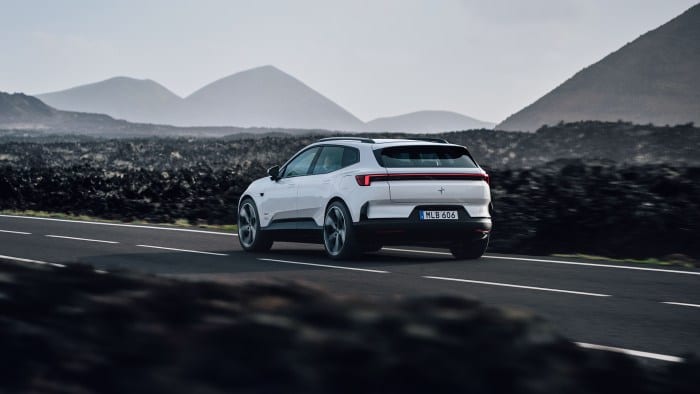
Scaringe made the comments at a June 3 media roundtable reported by Inc., days before the R2 SUV’s public launch, arguing that policymakers and schools are nowhere near ready for the shift.
No job in the economy, he said, is now untouched by AI — adding that US policymakers should prepare the next generation for the new scenario.
“Our policymakers need to actually get serious about this and recognize we can’t just ignore the fact that AI is coming. It’s going to come,” Scaring warned days before the R2 launch. It’s going to have enormous impacts on the fabric of society, and we need to prep our kids, and we need to prep the existing workforce.”
Putting AI Robots on the Assembly Line
The argument is not abstract for Scaringe, who late last year spun a robotics venture out of Rivian and has watched it scale at startup speed.
Mind Robotics is already training and deploying machines on the EV maker’s factory floor, and Scaringe has said he plans to put them inside Rivian‘s plant in Normal, Illinois — its only operating factory, ahead of a second site in Georgia due in 2028 — within a year.
His pitch rests on a claim about what AI has finally unlocked.
Walking the roundtable through a modern plant, as Inc. reported, Scaringe described two worlds: a body shop where six-axis arms weld and shape metal with near-total automation, and a general-assembly line where workers still fit seats, trim and upholstery that never sit in quite the same place twice.
Factory robots today run on fixed programming with “zero AI,” he said, precise at repeatable welds but unable to handle the soft, shifting parts — wiring, trim, upholstery — that still need human hands.
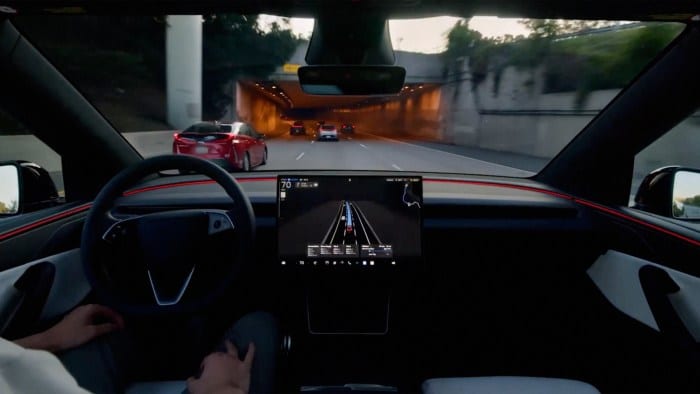
The breakthrough, in his telling, is that the AI models steering self-driving cars can give machines the dexterity to manage those parts, a capability Rivian already uses in the R2’s Universal Hands-Free system.
Where much of the robotics field is chasing humanoids for the home, Mind Robotics has stayed in the factory, building industrial robots and cobots — machines meant to work next to people rather than replace them.
Once the robots reach the line, he said, there will be no hiding them: “my co-worker’s name is Phil, and he’s a robot.”
Inside Mind Robotics
Little is publicly known about Mind Robotics, which still operates in near-stealth mode.
What is known is the money, which has arrived at an extraordinary pace.
The startup began inside Rivian under the code name “Project Synapse” before spinning out as a standalone company late last year.
Eclipse led a $115 million seed round at that launch, followed by a $500 million Series A in March that valued the company at about $2 billion.
Two months later, a $400 million round led by Kleiner Perkins lifted the valuation to $3.4 billion — a jump of roughly 70% — and pushed total funding past $1 billion in around six months.
That pace makes Mind Robotics one of the fastest-growing industrial-robotics startups by capital raised.
The venture arms of Volkswagen, which runs a software joint venture with Rivian, and Salesforce joined the latest round, alongside new investors including Meritech Capital, Redpoint Ventures, SV Angel and Garuda Ventures.
Earlier backers Accel, Andreessen Horowitz, Eclipse, Bain Capital Ventures and Greenoaks have taken part across the rounds.
Ilya Fushman, the Kleiner Perkins partner who led the financing, framed robotics as the next great market as AI software and hardware converge, calling it “the ultimate frontier.”
Based in Irvine, California, Mind Robotics is led by Scaringe as founder and acting chief executive, a role he holds while still running Rivian.
The company pitches investors on an edge few rivals hold: access to a live, high-volume factory floor to train its systems.
Scaringe has described a two-part strategy — a foundation model that acts as “a brain for how to operate inside of a plant,” paired with the “mechatronic embodiments,” or robots, that carry out what the brain decides.
Mind has said it expects to reveal its first product in less than a year and is hiring quickly, with roughly 20 open roles spanning software, hardware and data engineering.
Rivian’s Second Spinout
Mind Robotics is the second standalone company Scaringe has carved out of Rivian, and the move is becoming a signature.
The first, Also, is an electric micromobility venture unveiled earlier in 2025 that has raised more than $300 million and is preparing to deliver its first US products this year.
Eclipse, a lead backer of both, has tied its bet to Scaringe himself, who now splits his time between Rivian‘s operations and two fast-growing startups.
The EV maker remains a shareholder and strategic partner in Mind, and will be the robotics firm’s first customer once its machines reach the line.
A Bigger Argument About Workers
Scaringe rejected the idea that factory automation must mean lost jobs.
He said Rivian and other advanced manufacturers already cannot find enough people to staff their lines, often competing with the hospitality industry for workers, and frequently train newcomers who have never used a torque tool in roughly three weeks.
The country, he argued, has the message backwards, with the real constraint a shortage of labor rather than a surplus of it.
Impact on Education
To assume schooling can carry on unchanged, he said, is “wildly naive,” likening the shift ahead to a jump “from a typewriter to a computer on steroids.”
He said he has earmarked part of his robotics startup’s equity for science and engineering education, and pointed to Rivian‘s partnership with CrunchLabs, the venture founded by former NASA engineer and YouTube creator Mark Rober.
Governments, he added, must prepare both children and the existing workforce rather than pretend the change is not coming.
Within the past three months he has ruled out a takeover by Volkswagen and, in a separate UK interview, deflected questions about selling to Elon Musk, now the world’s first trillionaire after SpaceX listing.
Musk has taken a different path on robots, pouring resources into Tesla‘s humanoid Optimus and predicting that paid work will one day be optional.