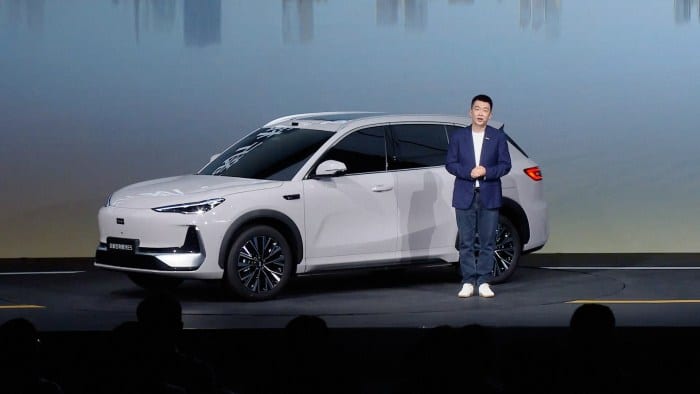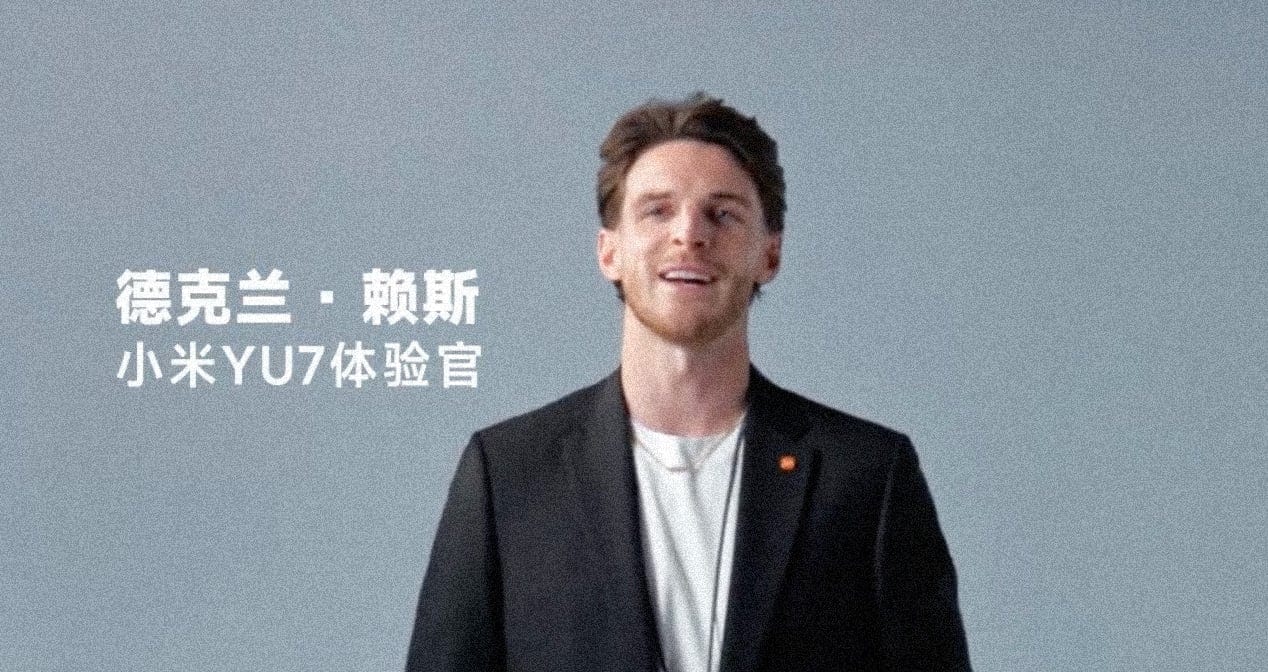

Xiaomi has signed Arsenal midfielder Declan Rice as an ambassador for its YU7 SUV — the second major European football star recruited by a Chinese automaker in less than a month, after Chery named Robert Lewandowski its global brand ambassador.
The Beijing-headquartered brand announced the deal on Weibo on Friday, presenting the England international as a “new colleague” who has become the Xiaomi YU7’s “experience officer” — a brand-ambassador title the company has used for other celebrity partnerships.
Xiaomi prepares to enter the European market in 2027.
Rice commented on the partnership with the tech giant and carmaker on his Weibo account.
“I’m delighted to become the experience officer for the Xiaomi YU7,” the 27-year-old wrote. “The YU7 is smart, the chassis is solid, and the performance is strong — a truly stunning SUV. A great journey — let’s set off together.”
Rice anchored Arsenal’s 2025/26 Premier League title — the club’s first English championship in 22 years — as the team’s midfield core.
However, Arsenal’s official automotive partner since January 2024 has been MG, the brand owned by Shanghai-based SAIC Motor.
Two Stars in One Month
The signing comes weeks after Chery, the Wuhu-based group that has built its international brand on football sponsorships for over a decade, signed FC Barcelona striker Lewandowski as its first individual athlete ambassador in a decade-plus of football marketing.
Together, the two deals bookend a strategic shift. Chinese automakers have historically bought visibility through team and league partnerships; within a month, two of them have moved to the face-and-name model long favored by Western consumer brands.
Their positioning differs tellingly. Chery staged Lewandowski’s signing under a “CHERY FOR FAMILY” tagline beside a scale model of its Tiggo 9 flagship SUV, anchoring the 37-year-old striker to family-oriented marketing across its European, Latin American, Middle Eastern and African markets.
A Crowded Pitch
The athlete signings extend a wave of Chinese automotive investment in European football that has accelerated sharply since 2024.
BYD, the world’s largest EV maker in 2025, signed a multi-year partnership with Manchester City in February — valued at approximately £5 million a year according to British media reports — replacing Nissan as the Premier League club’s official automotive partner, with branding on training kit sleeves and dugout headrests at the Etihad Stadium.
That deal followed BYD‘s sponsorship of UEFA Euro 2024, where the Shenzhen-based company displaced Volkswagen as official mobility partner, and a three-year Inter Milan partnership announced in July 2024 that supplied roughly 70 vehicles to the Italian club.
Polestar, the Geely-backed Swedish-Chinese EV maker, became Borussia Dortmund’s official mobility partner for the 2025/26 season, while Chery’s Omoda and Jaecoo sub-brands signed with ACF Fiorentina in August 2025 and added a league-wide partnership with Israel’s professional football leagues the same month.
Xiaomi currently sells its EVs only in China, where the YU7 — its second model, launched last year as a direct challenger to Tesla‘s Model Y — has become one of the market’s most sought-after SUVs.
The company plans to enter the European market in 2027, making brand-building with a Premier League champion a down payment on an entry still in preparation.
Chery’s Sports Bet
Chery‘s Lewandowski signing drew on the longest football resume among Chinese carmakers.
The group has used the sport as a global brand-building pillar since at least 2013, beginning with Latin American sponsorships — Chile’s national team, Santos FC in Brazil and Argentine clubs — that built credibility in early export markets.
Later partnerships spanned Ecuador’s Independiente del Valle, Chile’s Universidad Católica, South Africa’s Mamelodi Sundowns, the Spanish national team through the revived Ebro brand, and the UK’s Soccer Aid for UNICEF, where Chery served as principal partner for the charity match’s 20th anniversary at London Stadium on May 31.