
China’s state-owned automaker Dongfeng Motor Corporation is preparing to enter the Canadian market under Canada’s low-tariff import quota for Chinese-made EVs.
The Wuhan-based company will display several EV models at an event in Montreal on Tuesday, according to a Bloomberg report on Monday.
Dongfeng is certifying its vehicles with Canadian regulators and aims to introduce its first two models as early as next year.
The information was revealed by North World Industry, the designated distributor for Dongfeng vehicles in Canada.
“We are working hard on that, and maybe next year we’ll be ready to introduce the first two models,” North World Industry’s Director Julie Mazorra Fernández told Automotive News.
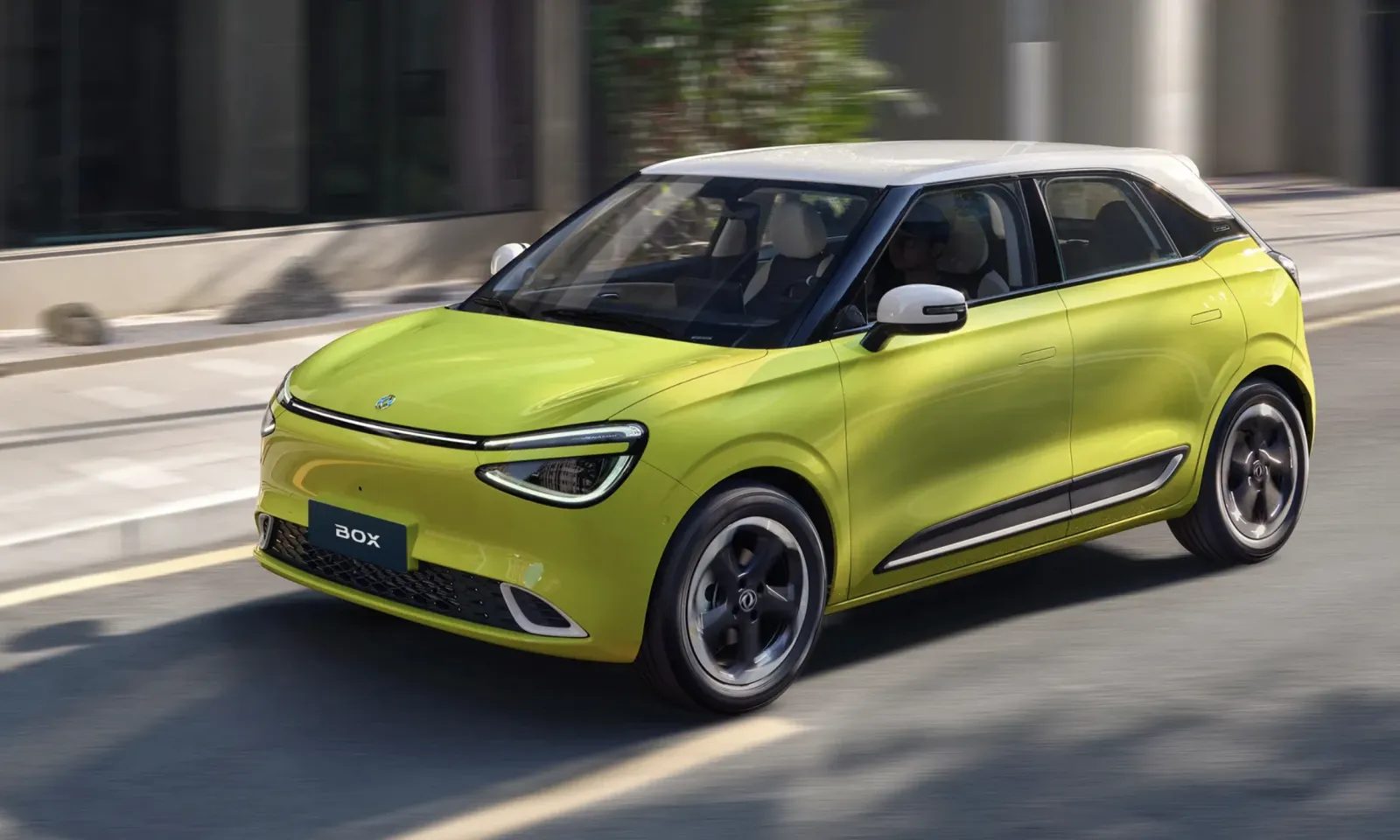
Models on display at the Old Port of Montreal include the Vigo and the Nammi Box 01.
Mazorra Fernández described the event as a brand-awareness exercise ahead of any commercial launch, designed to familiarize Canadian consumers with the products before sales begin.
A Familiar JV Partner
Dongfeng is no obscure entrant.
The state-owned group already operates joint ventures with two of the world’s largest automakers — Stellantis and Nissan — and both partnerships have direct Canadian implications.
Nissan disclosed in May that it is considering exporting vehicles built at its Dongfeng joint venture in China to Canada.
Christian Meunier, chairman of Nissan America, said the company aimed to leverage low-cost EVs manufactured through the Dongfeng partnership across several markets, including Brazil, Mexico, and potentially Canada.
Meunier did not specify which models were under consideration or when shipments might begin.
Stellantis signed a strategic cooperation agreement with Dongfeng earlier in May to produce new energy vehicles under the Peugeot and Jeep brands at the Dongfeng Peugeot Citroën Automobile Co. (DPCA) joint venture plant in Wuhan.
Combined investment for the project exceeds 8 billion yuan ($1 billion), with production expected to begin in 2027.
Jeep models under that deal are intended for global distribution.
Manufacturing in Canada may also be part of Dongfeng‘s longer-term plans, Mazorra Fernández said, pointing to the company’s existing joint-venture factory footprint in Europe and South America as a template.
“They are very interested not only to bring the cars, but also to have the opportunity to have more commercial relations here with Canadian companies,” she told Bloomberg.
However, none of these plans have yet been confirmed.
Quota Filling Faster Than Expected
Dongfeng‘s Canadian push arrives as Ottawa’s import quota for Chinese-built EVs fills at an accelerating pace.
Government data published on July 10 showed 6,531 vehicles had been imported under the framework by mid-year, equal to 26.7% of the 24,500 vehicles permitted in the first six-month window that closes on August 31.
The figure more than doubled from late May levels.
Almost all of the early volume consists of Tesla Model 3 sedans built at the company’s Shanghai factory.
Tesla moved first to exploit the framework after slashing its Canadian Model 3 price to C$39,490 on May 1, taking advantage of the 6.1% tariff rate — well below the 25% national-security tariff applied to US-built vehicles entering Canada.
The first shipment of a Chinese-controlled brand arrived last week, when 18 Lotus Eletre SUVs — built at the Geely-controlled brand’s plant in Wuhan — docked in Canada.
Lotus launched the Eletre in Canada in April at C$119,900, down from C$313,500 under the old surtax.
BYD and Chery have not yet shipped their first vehicles for Canadian sale, with both still completing regulatory steps.
China’s ambassador to Canada, Wang Di, said in late June that BYD and Chery were still completing steps with Canadian agencies and expressed hope they would enter in the autumn.
BYD Executive VP Stella Li has said the company would likely begin Canadian sales next year, with plans for about 20 dealerships and a local factory — though Li specified the factory would not operate through a government-backed joint venture.
Chery has been the more active of the two in laying groundwork, hiring Canadian engineers since January and filing trademarks for sub-brands including Omoda & Jaecoo, Exeed, iCaur, Lepas and Luxeed.
Dongfeng‘s entry would add yet another Chinese-headquartered automaker to the queue alongside BYD, Chery, and Geely.
Ottawa is debating whether to impose per-company caps on the quota to prevent any single brand from absorbing too much of the allocation.
Ottawa’s Investment Conditions
Canada agreed in January to admit up to 49,000 Chinese-built EVs a year at the 6.1% most-favoured-nation tariff rate, replacing the 100% surtax imposed by former Prime Minister Justin Trudeau in late 2024.
Beijing, in return, eased retaliatory duties on Canadian canola and other agricultural exports.
Carney has been explicit about what he expects in exchange.
At the G7 summit in France last month, the prime minister said Canada is “only interested in Chinese investment in Canada when it’s material Canadian production,” drawing a hard line against low-value assembly of imported kits.
Conditions he set out include joint-venture partnerships, Canadian control, substantial value-add, and Canadian labour standards.
Industry Minister Mélanie Joly visited China from June 14 to 23, courting automakers to build EVs on Canadian soil. Trade Minister Maninder Sidhu separately met executives from BYD, XPeng and GAC in Guangzhou.
Joly has said the only routes for Chinese automakers into Canada are the quota system or a joint venture with a Canadian company.
Dongfeng‘s existing joint-venture structures with Stellantis and Nissan could position the company favourably under Ottawa’s framework — more so than rivals entering as standalone brands.
Both partnerships involve shared manufacturing, co-investment, and global export mandates, the kind of arrangements Carney has said he wants to see replicated in Canada.
Quota Access
Chinese automakers have been ramping up marketing efforts to build brand recognition in Western markets, and Dongfeng‘s Montreal showcase fits the pattern.
Brand awareness remains a significant barrier for Chinese entrants in North America, where consumer familiarity with Dongfeng, BYD, or Chery is minimal compared to established marques.
The competitive landscape for Canadian quota access is intensifying. Tesla has used the framework aggressively since May.
Lotus began deliveries last week. BYD and Chery are expected to follow in the autumn. Nissan is weighing Dongfeng-built exports.
The annual quota is set to rise toward roughly 70,000 vehicles by 2030, but the first-year cap of 49,000 — with more than 17,900 first-window permits still available before the August 31 cutoff — is already attracting more entrants than the framework’s architects anticipated.
Carney has said he expects the deal to lead to new Chinese joint-venture investment in Canada.
Dongfeng‘s stated interest in manufacturing on Canadian soil, combined with its track record operating shared production with Western partners, makes the state-owned group one of the more plausible candidates to test that proposition.
The annual quota’s second window opens on September 1, carrying any unused first-half volume forward.