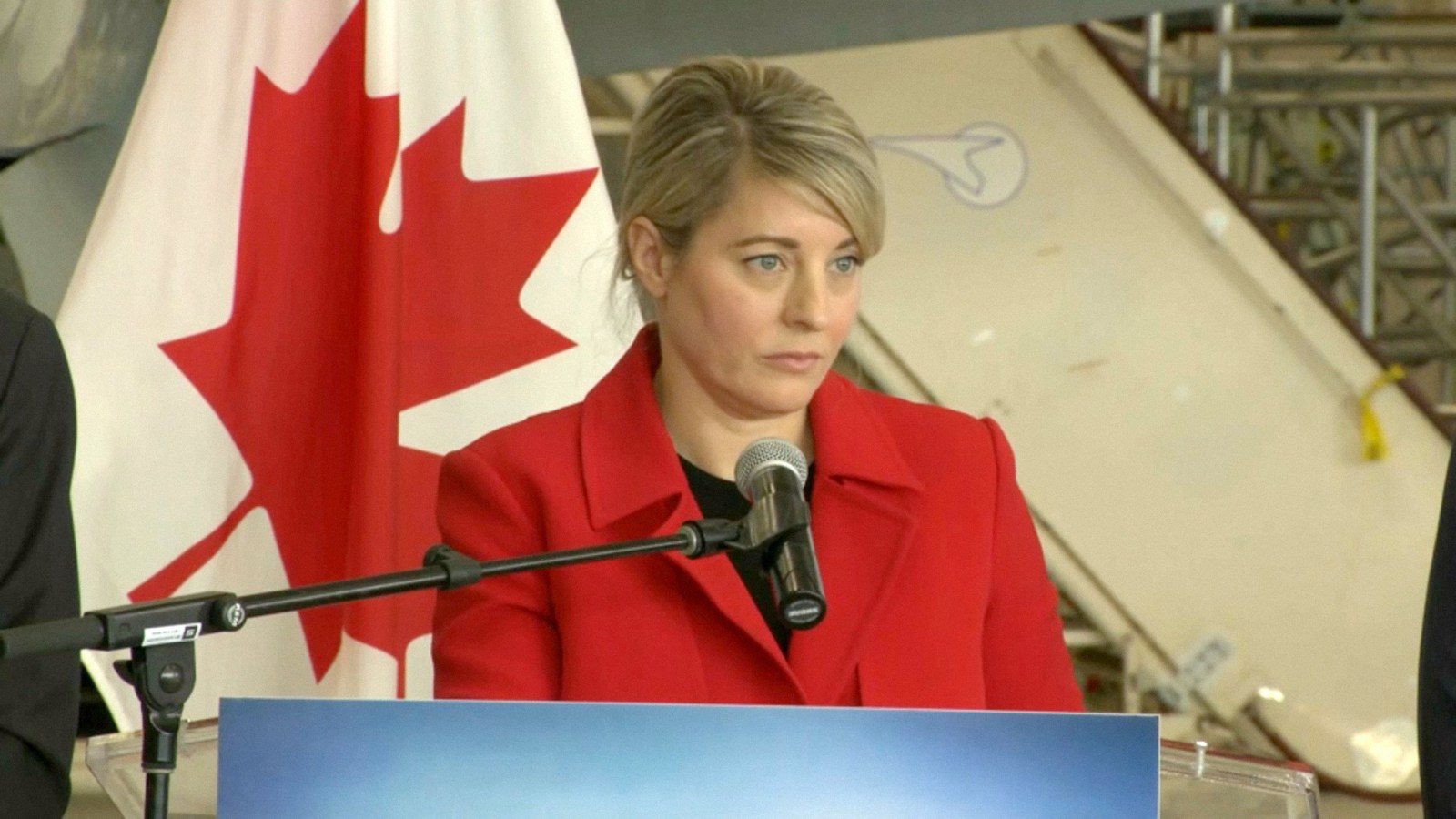

Canada’s Industry Minister Mélanie Joly is in China this week courting four Chinese automakers she wants to build electric vehicles on Canadian soil, the clearest test yet of whether Ottawa can convert tariff relief into local factories.
Joly is meeting BYD, Chery, Geely and Shanghai Launch Automotive Technology, each of which has been weighing a Canadian investment, she told The Globe and Mail.
Shanghai Launch’s proposal involves a tie-up with British automaker Austin Motor Co.
Her four-day itinerary opens in Shanghai with stops at BYD‘s manufacturing base in Changzhou and Shanghai Launch’s Wuxi site, followed by Chery and a visit to Geely‘s Shanghai research and development centre, before a Beijing leg later in the week.
The objective is manufacturing, not imports, and Joly casts it as a balancing act.
“What is important is how can we make sure that we offer great vehicles to Canadians that are actually affordable, and with the latest technology, while keeping and protecting our 500,000 auto workers,” she told the newspaper.
“My job is to square that circle, and the Prime Minister has given me the mandate to really be able to work with the sector and work with the Chinese automakers.”
The Terms She’s Carrying In
Joly is holding to four conditions, unchanged for these talks, that any Chinese EV investment must satisfy.
The deal must be structured as a joint venture that is majority Canadian-owned, meet Canadian labour standards, use Canadian parts, and run on software that is secure and protects user data.
Joly also wants Canadian firms doing contract manufacturing for Chinese brands, pointing to Magna International, which already assembles vehicles for XPeng at a plant in Graz, Austria.
What the Automakers Have Said
The three biggest names on Joly’s list have staked out sharply different positions.
BYD has been the most direct, and the most at odds with Ottawa.
Executive VP Stella Li told Bloomberg the company is studying a Canadian plant but would insist on owning and operating it outright, rejecting the joint-venture model Joly has set as a condition.
“I don’t think a JV will work,” Li said, pointing to BYD‘s vertical integration, since the company builds its own batteries, motors and chips.
Li also signalled openness to buying an established carmaker rather than starting from scratch, telling Bloomberg that “we’re open to every opportunity we have” and “we’ll see what benefits us,” while noting no deal was in the works.
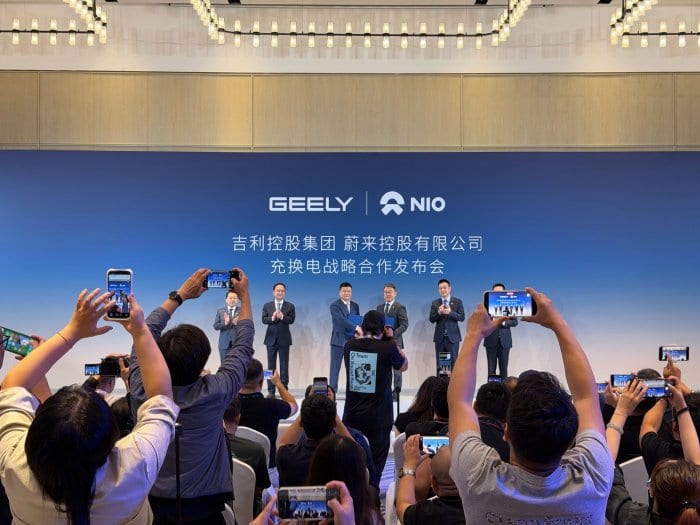
Geely has struck a warmer note. The group’s chief executive confirmed at the executive level that Geely is entering the Canadian market, said certification for its Geely-branded vehicles should come “soon,” and pointed to local production — a stance that fits Joly’s framework more comfortably.
Geely also starts from a foothold its rivals lack, already operating in Canada through Volvo and Polestar, and has begun hiring in Toronto while trademarking its Zeekr brand there.
Chery, the third name, has said the least on the record, and did not respond to the Globe’s emailed questions. The Wuhu-based exporter’s recruitment messaging seen by the newspaper framed its Toronto hiring as a “long-term decision to invest and grow its business in Canada,” with its Omoda and Jaecoo brands leading the push.
A Deal Built on Canola
The visit grows out of a January reset.
Prime Minister Mark Carney, the first Canadian leader to visit China since 2017, agreed in Beijing to cut Canada’s 100% tariff on Chinese-made EVs to 6.1% on an annual quota of 49,000 vehicles, in return for Beijing easing the retaliatory duties that had shut Canadian canola out of the Chinese market.
Ottawa cast the quota as leverage, saying it expected Chinese joint-venture investment within three years.
How swiftly Ottawa’s posture turned is striking.
Former industry minister François-Philippe Champagne told Canadians in May 2024 that Canada would “never” serve as a backdoor for Chinese EVs into North America — a stance since reversed by the quota Joly now administers.
“We Can’t Bring Cars in a Kit”
Joly has already shown where her conditions bite.
In April, she rejected Stellantis‘s plan to assemble Leapmotor electric cars from kits shipped from China at the automaker’s idled plant in Brampton, Ontario, an arrangement that EV reported would have made Leapmotor the first Chinese brand to build vehicles in Canada.
“We can’t bring cars in a kit to Canada,” she said, adding that the plant’s output “needs to support the local supply chain.”
Ottawa cut Stellantis’s tariff-free import quota in half and filed a notice of default over the Brampton funding agreement, through which the company drew up to $529 million in federal subsidies to retool the plant for an electric Jeep Compass it later moved to Illinois.
“I’ve been clear with the company and we will get our money back unless they bring back production,” Joly said.
The Quota Keeps Moving
Even after that rejection, Joly confirmed the import quota would proceed.
“We’ll continue with what we’ve done, which is 49,000 electric vehicles coming from China. We already have companies approaching us,” she said, adding, “And we’ll make sure that we abide by our agreement with China.”
The early entrants are arriving.
Lotus, the Geely-controlled British marque, has shipped its first batch of Chinese-made Eletre SUVs into Canada, while Tesla became the first Western automaker to route a China-built model through the framework, pricing the Shanghai-made Model 3 in Canada from C$39,490.
Officials have separately weighed a cap on how much of the 49,000-unit quota any single automaker can claim.
The Latest in a Series
Joly’s Shanghai meetings are not Ottawa’s first approach to Chinese automakers since the January deal.
International Trade Minister Maninder Sidhu held Guangzhou meetings with BYD, XPeng and GAC in April, on the first visit by a Canadian minister to South China since 2018, discussing market-entry pathways under the import quota, supply-chain requirements and longer-term investment.
The trip widened the field beyond the names Joly has courted, drawing in Guangzhou-based XPeng — which runs two plants in the city and an eVTOL arm — and GAC, whose Aion marque leads its EV lineup.
“China makes some of the most advanced electric vehicles in the world,” Sidhu wrote on X, framing the outreach as a way to give Canadians affordable EVs by “working with global partners.”
He said he had met BYD, XPeng and Aion to discuss “utilizing the Canadian supply chains to build the very cars in Canada.”
A Wider Trade Mission
The China trip extends well beyond cars.
A large delegation of Canadian executives is joining Joly for the Beijing leg, among them Dominic Barton, the former ambassador to China and now chair of Rio Tinto, Canada Goose chief executive Dani Reiss, Cameco’s Tim Gitzel, Teck Resources’ Jonathan Price, CPP Investments’ John Graham, Sun Life’s Kevin Strain and Power Corp.’s Olivier Desmarais, with much of the agenda aimed at expanding Canadian exports to China.
In Beijing, Joly’s tentative schedule includes VP Han Zheng, economic-planning chief Zheng Shanjie and industry minister Li Lecheng, meetings her office said were not yet confirmed.
The Shadow of Washington
Courting Chinese automakers carries an obvious risk: irritating the United States as Canada negotiates the renewal of the trilateral trade pact governing continental commerce.
United States Trade Representative Jamieson Greer called Canada’s decision to let some Chinese EVs sidestep the steep tariffs “problematic” and suggested Canada would regret it.
The rethink was forced by Washington itself.
President Donald Trump’s tariffs on Canadian-built cars, and his suggestion that the United States does not need them, have pushed Ottawa to look elsewhere — and Canadian-made exports to the US now hinge on the outcome of the pact’s renewal.
Joly said Canada is also in talks with the European Union about exporting Canadian-built vehicles there, even as China’s largest automakers race to build EVs inside the bloc, at plants in Hungary and Spain, to dodge the EU’s own tariffs.
Then to Tokyo
From China, Joly travels to Japan on Friday to meet executives at Honda and Toyota, which together account for roughly 77% of Canada’s auto assembly.
Honda in May indefinitely suspended a planned C$15-billion EV complex in Ontario, a decision Japan’s ambassador to Canada, Kanji Yamanouchi, attributed to a slowing EV market rather than any cooling on Canada, telling the Globe on June 5 that the country has “enormous potential.”
Yamanouchi tied future Japanese investment to a successful renewal of the trade pact, known in Canada as CUSMA.
Japanese automakers “are doing business. They are not doing charity,” he said.
“The CUSMA is a very, very essential part of the consideration of Japanese businesses in Canada.”
Pushback at Home
Joly’s strategy faces resistance inside Canada.
Ontario Premier Doug Ford, whose province hosts every Canadian assembly plant, warned that “the federal government is inviting a flood of cheap made-in-China electric vehicles without any real guarantee of equal or immediate investments in Canada’s economy, auto sector or supply chain.”
Ford later eased his tone after meeting Joly, but kept a single demand: “build the vehicles here, protect the auto sector.”
Unifor, the country’s largest private-sector union, has warned that Chinese vehicles carry almost no Canadian content, and the auto lobby has backed Conservative leader Pierre Poilievre’s plan to scrap the quota outright.